

Basic Observation Buoy (BOB) III Workshop: A Collaborative Success
The BOB III Workshop, held December 13-14, 2010 at the Jacksonville University Marine Science Research Institute, expanded on the previous workshops by exploring applications of the BOB platforms. This workshop was a very successful mix of students, scientists and educators that resulted in broadening the pool of BOB aficionados, trouble shooting data collection issues, and sharing experiences and ideas in using BOB for educational opportunities. High school students from Beaufort High School, Hilton Head Preparatory School and Charleston’s Academic Magnet school interacted with scientists from a variety of organizations including University of Georgia, University of North Florida, University of North Carolina, Old Dominion University, North Carolina State University, Kennesaw State University, University of Connecticut and the Guana Tolomato Matanzas National Estuarine Research Reserve among others. This participant-driven workshop provided the opportunity to understand the range of sensor options, thanks to the input of two sensor vendors (YSI and Pasco) participating and was a forum for developing outreach strategies for broader communities.
BOB III builds on the efforts of two previous interactive workshops (BOB I-January 2009 and BOB II-March 2010) that introduced the concept of a scaled-down, functional platform for collecting information on water parameters in sheltered environments, i.e. bays, creeks and sounds.
Related news
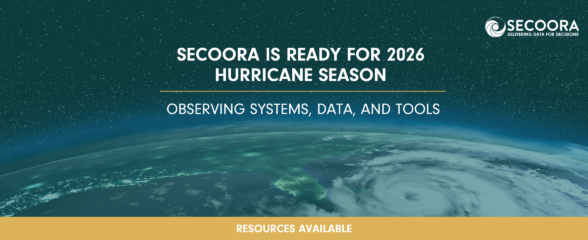
SECOORA Is Ready for the 2026 Hurricane Season
Hurricane season is here and SECOORA’s resources are available to help you stay informed. From real-time buoy data and live webcam feeds to ocean gliders and storm surge models, our network of observing systems is ready to support forecasters, emergency managers, researchers, and coastal communities throughout the Southeast.

Species Spotlight: Trichodesmium
Discover the remarkable role of Trichodesmium, a microscopic cyanobacterium that helps fuel life across the ocean. In this Species Spotlight, explore how researchers supported by the Marine Biodiversity Observation Network (MBON) are using imaging technology, genomics, and eDNA to better understand this “shape-shifting” organism and its influence on marine ecosystems, ocean health, and coastal economies.
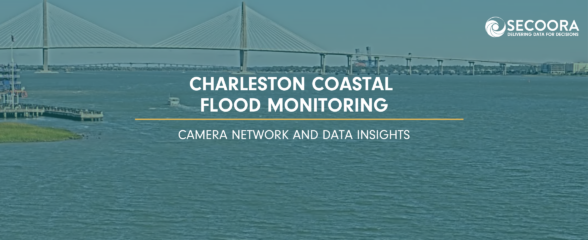
Charleston Coastal Flood Monitoring: Camera Network and Data Insights
A new story map explores how cameras in Charleston, South Carolina are helping communities monitor and respond to changing coastal conditions, from everyday weather impacts to flooding events. As a rapidly growing coastal city with a major working port, Charleston depends on an accurate understanding of water conditions to support transportation, public safety, infrastructure, and economic activity.