

A multi-agency effort to study Fall 2012 West Florida Shelf Red Tide outbreak
SECOORA member University of South Florida (USF) College of Marine Science Ocean Circulation Group (OCG) scientists are in the midst of an inter-agency, rapid response effort undertaken to monitor, sample and study in real time the Fall 2012 west Florida shelf red tide outbreak. This effort is a collaborative, multidisciplinary study done in cooperation with the USF OCG, USF Center for Ocean Technology (COT), USF Optical Oceanography Laboratory, Mote Marine Laboratory, Gulf of Mexico Coastal Ocean Observing System Regional Association (GCOOS-RA) and the Florida Fish and Wildlife Conservation Commission (FWC). This multi-agency response study leverages the expertise and resources of physical, biological and chemical oceanographers as well as engineers and resource management professionals. The monitoring and prediction effort takes a comprehensive approach in utilizing all resources available including ocean gliders, surface drifters, optical sensors, real time weather buoys, remote sensing, modeling and direct sampling. GCOOS-RA funded the glider missions of USF CMS glider Bass and MML glider Waldo. The glider, drifter tracks and associated data can be accessed via http://ooma.marine.usf.edu/CROW/ and http://ocgweb.marine.usf.edu/DrifterMaps/RedTideDrifters.php. The ability of these multiple agencies to quickly mobilize in a coordinated effort is essential to bringing all resources to bear on this unpredictable environmental issue.
Related news

Meet the new 2026 SECOORA Board Members
SECOORA welcomes three new members to its Board of Directors, effective July 1, 2026 - bringing fresh expertise in marine science, coastal geomorphology, and ecosystem restoration to guide our work across the Southeast.
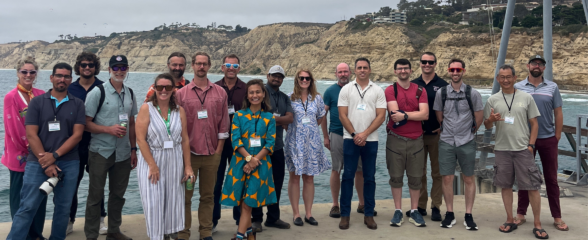
SECOORA Co-Hosts the 2026 WebCOOS Workshop In Person in La Jolla, CA
The 2026 WebCOOS Workshop convened in person on July 21-22, 2026 in La Jolla, CA. 45 attendees representing all 11 IOOS Regional Associations and national partners joined this collaborative workshop to discuss webcam-derived coastal products, stakeholder needs, and the network's transition into its next phase under IRA T2.

SET Webinar Series: Exploring Coastal Change: Digital Coast Resources
Join us on August 28, 2026, from 1:00 - 2:00 PM for the SECOORA SET Webinar Series, where we will explore coastal change using NOAA's Digital Coast resources. This webinar will bring together SET Community of Practice members and partners to learn how geospatial data and tools can support SET monitoring and place site-level observations within a broader landscape context.