

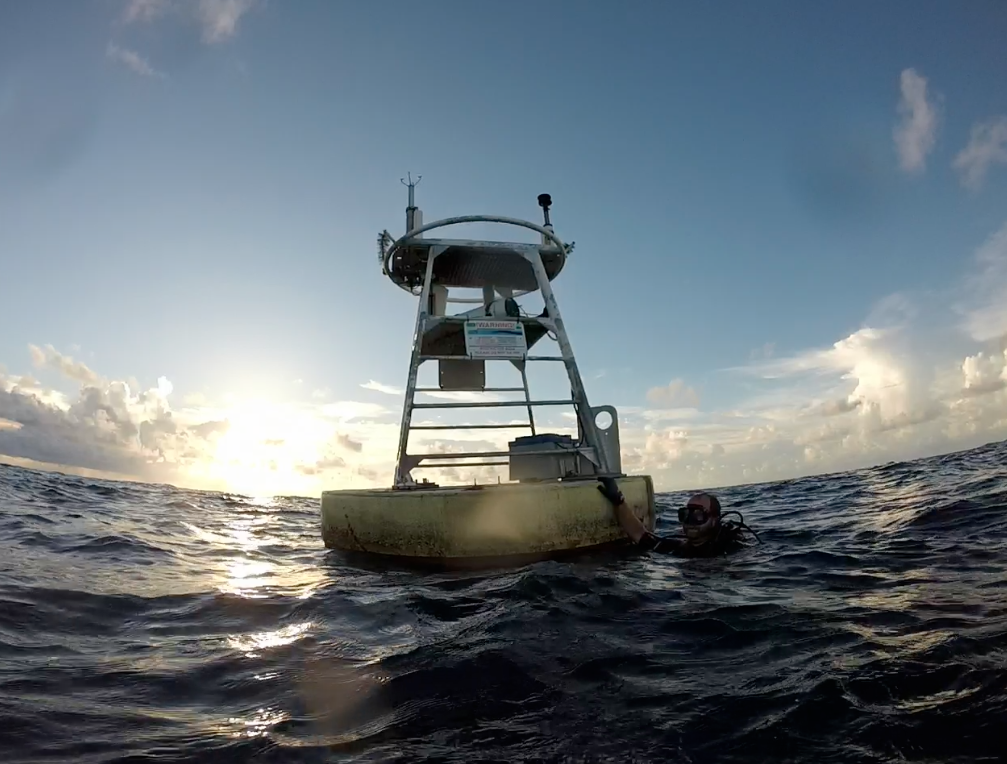
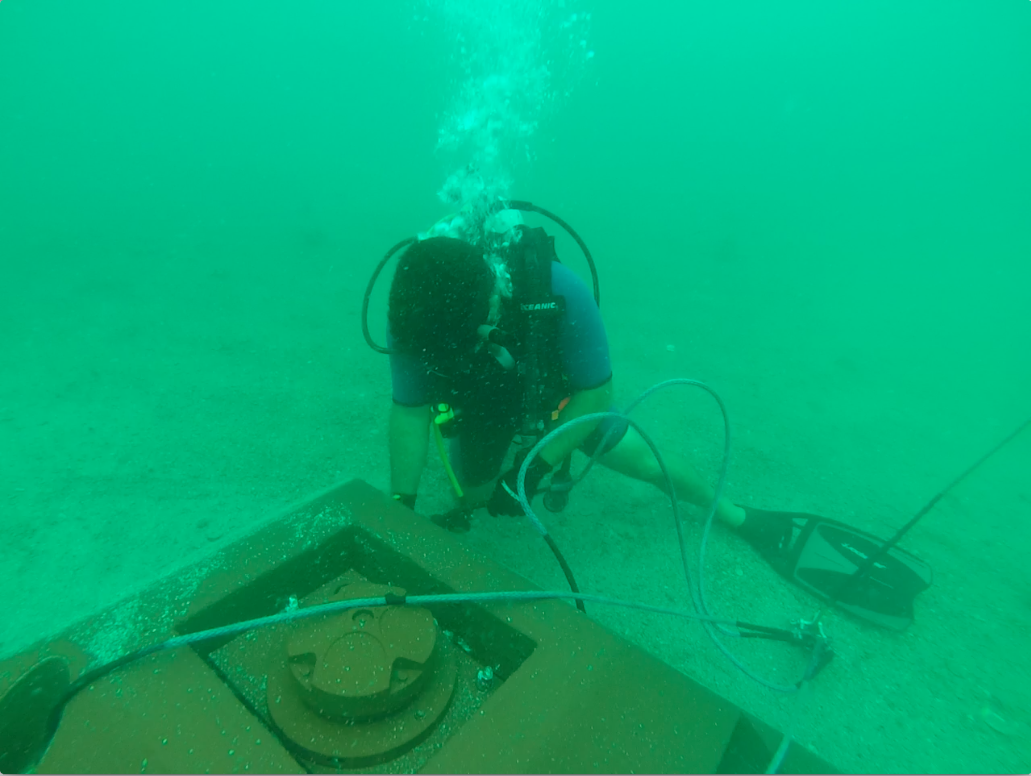
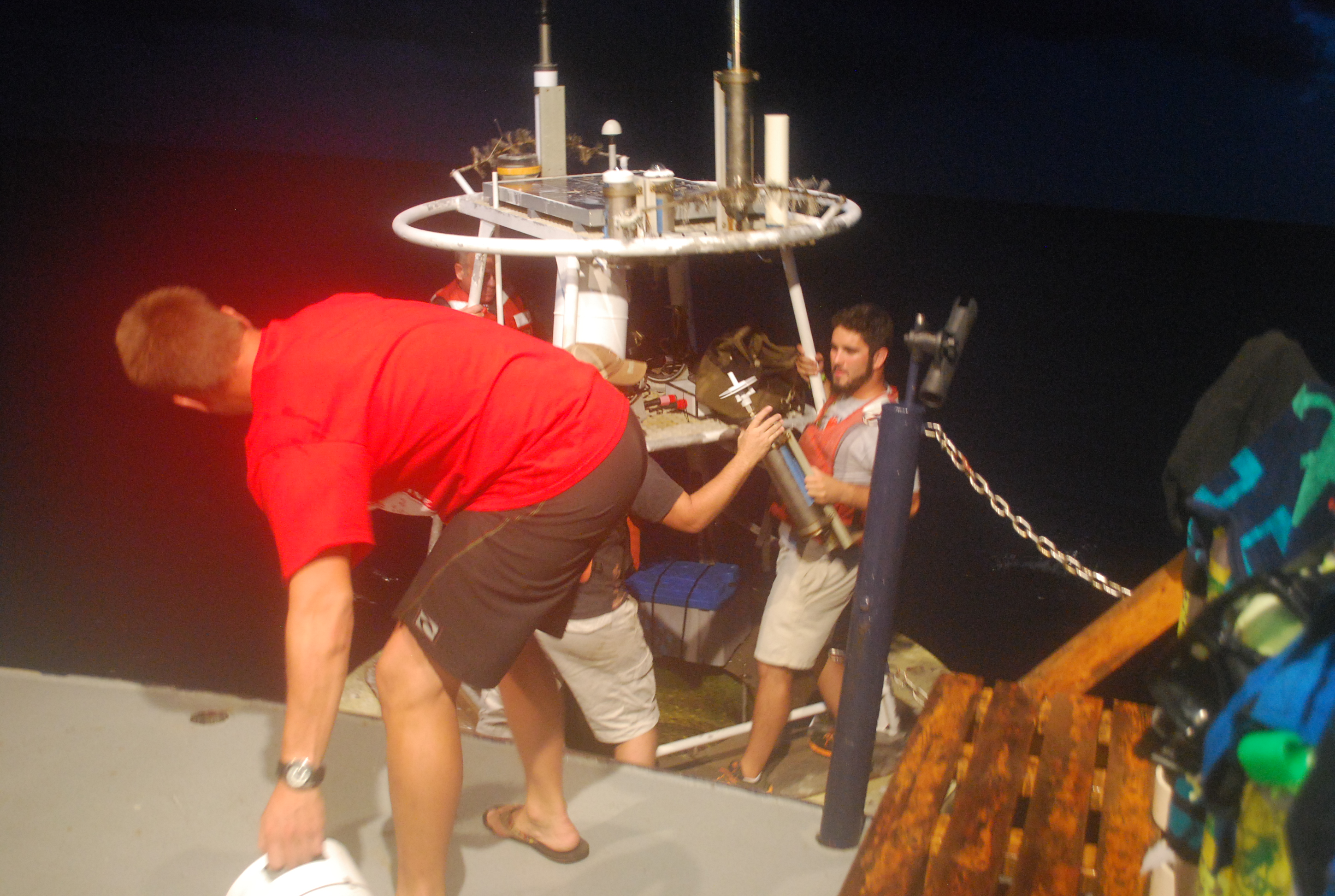
This summer SECOORA partners hosted Pedro Matos-Llavona from the University of Puerto Rico at Mayagüez for a summer internship as part of the NOAA Educational Partnership Program (EPP) and the Integrated Ocean Observing System (U.S. IOOS). The collaborative effort between SECOORA partners Dave Easter (U.S. IOOS), Felix Jose (Florida Gulf Coast University- FGCU) and Jay Law (University of South Florida College of Marine Science- USF CMS) provided Pedro the chance to practice as an oceanographer, gaining hands-on experience and knowledge in the field.
|
“I believe this internship opportunity helped Pedro to learn advanced methods in oceanographic data analysis, which would help him to pursue a career in coastal ocean monitoring”- Felix Jose, FGCU. |
During his internship Pedro spent half his time analyzing data under the mentorship of Felix Jose at Florida Gulf Coast University (FGCU). Pedro learned about time series data analysis. Using Harmonic Analysis, Pedro analyzed ADCP data from a USF COMPS Buoy off Fort Myers Beach for the duration June-July 2013. He filtered the data for tidal and non-tidal components and compared it with wind data collected from the same station. Pedro was trained in using matlab software for processing and plotting oceanographic data. The matlab program that he developed during his time at FGCU could help him to expand his research horizon; especially in the field of coastal circulation and monitoring.
Related news

Meet SECOORA’s 2026-2027 Executive Committee
Meet SECOORA’s 2026-2027 Executive Committee, five leaders in marine science, coastal engineering, and weather who guide ocean observing in the Southeast.

Investing in People and Communities Across the Southeast
SECOORA begins its 4th five-year award from U.S. IOOS to continue coastal and ocean monitoring across the Southeast.
Meet the Scientist Helping Answer: Are Our Marshes Gaining Elevation?
Meet Ches Vervaeke, the scientist bringing 20+ years of Surface Elevation Table expertise to SECOORA's marsh elevation monitoring work in the Southeast.