

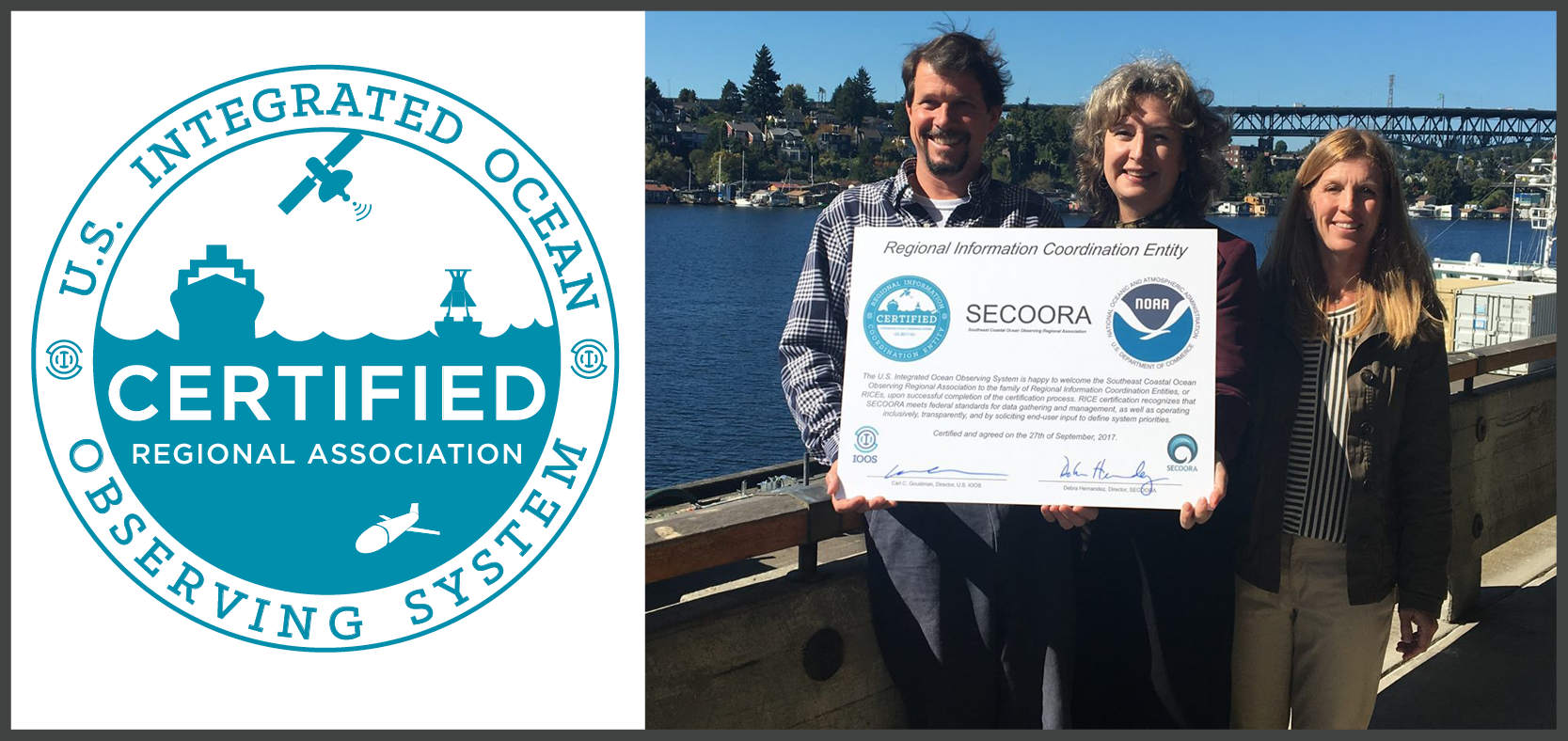
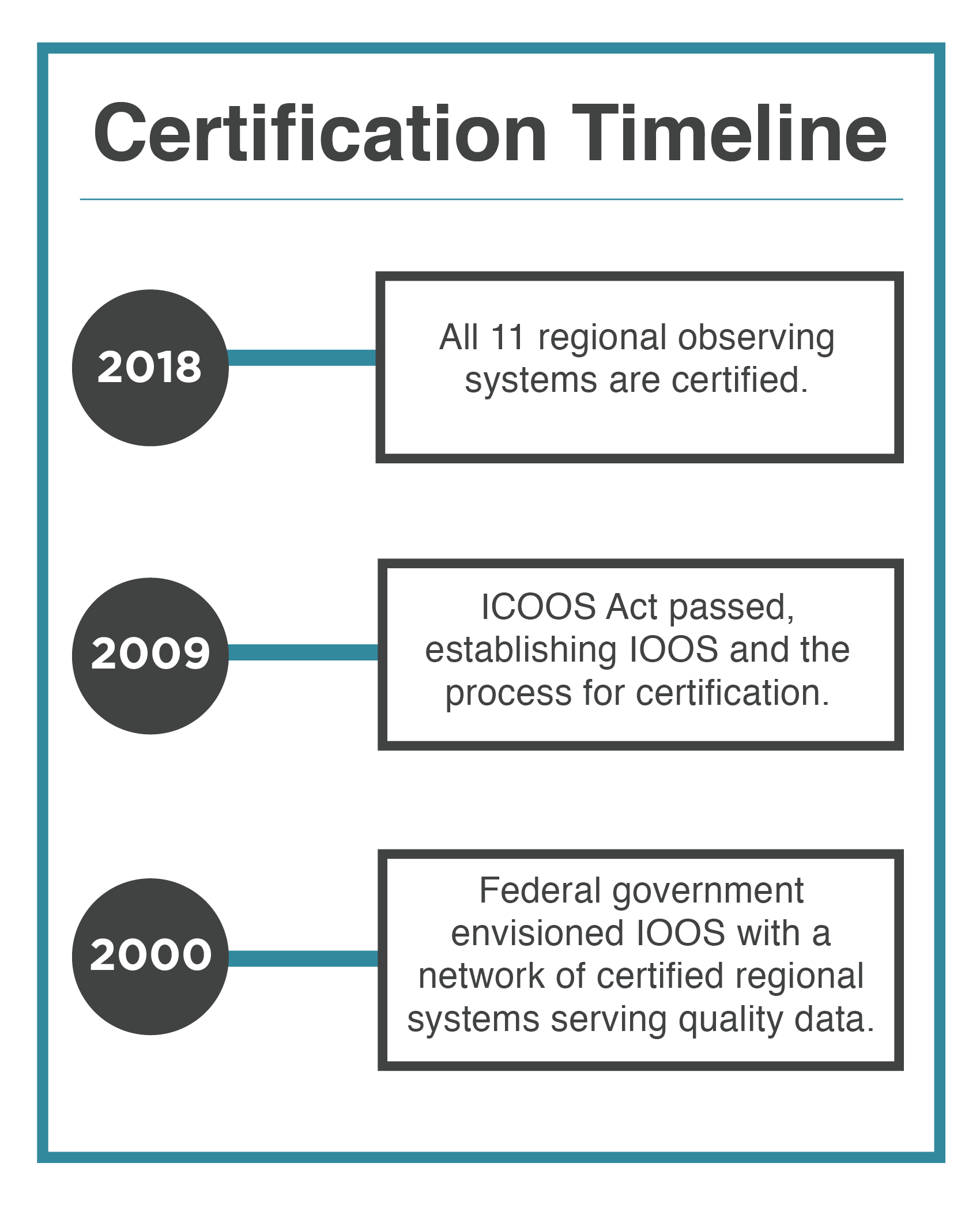
NOAA has now certified all 11 Integrated Ocean Observing System (IOOS) Regional Associations as Regional Information Coordination Entities. Data coming from the IOOS regions now adheres to common federal collection, storage and management standards. In other words, it can be integrated with other data, and help make “big data” research and development possible.

The data served by the Regional Associations are of the same high quality as those served by the federal government. Certification ensures that data are consistent and reliable.

Data served through IOOS regions are quality-checked and archived with NOAA’s National Center for Environmental Information for long-term storage and access.
 The regional structure promotes coordination and collaboration at the regional level, and ensures stable and long-lasting organizations.
Data products address the specific needs of regional users while conforming to national standards and requirements.
Gold Standard for Data
The Southeast Coastal Ocean Observing Regional Association (SECOORA), one of the 11 IOOS regional coordinating entities, was certified in 2017. Certification confirms that SECOORA provides federal quality data from the water, to the user, and to the archive. It allows us to create regional impacts with national data management consistency.
“The regional associations are at the very core of IOOS. Their community ties and local expertise are essential for keeping the national system performing for all users,” said U.S. IOOS director Carl G. Gouldman. “Completing the certification process allows all users to directly benefit from these great resources and strengthens the relationship between regional and national interests.”
Five Benefits of Certification
Why does certification matter? Below are just 5 of the ways that certified U.S. IOOS regions make a difference:
- Users have confidence in the data served by IOOS regions.
- Certification enhances efficient interagency coordination.
- Federal agencies rely on IOOS regions to access non-federal data and to disseminate integrated data on a regional level.
- Researchers and others can work with IOOS regions to fulfill data management requirements of publicly-funded grants.
- Certification provides liability protection for Regional Associations.
Next Steps
Certification opens doors for greater collaborations. SECOORA’s data management expertise and capacity provides a solid foundation to support member and stakeholder efforts – private, local, state or federal – to develop products and services for decision makers.
We can help ensure your data meets federal data sharing and archiving requirements, enabling the broad impact from collected data. Contact us today!
Related news

Longtime SECOORA Partner USF College of Marine Science Begins Recovery Efforts After Fire
Following the recent fire at the University of South Florida College of Marine Science, SECOORA is focused on supporting our partners and highlighting the importance of critical observing systems and maintaining the flow of coastal data. USF CMS plays an important role in delivering coastal data and observations that support communities across the Gulf and Southeast.
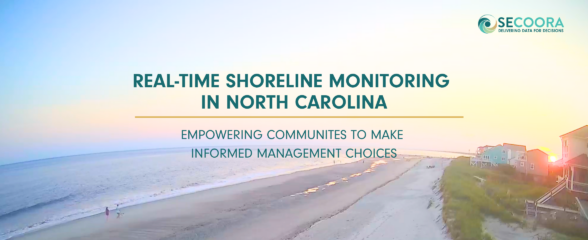
Empowering Communities: Real-Time Shoreline Monitoring in North Carolina
A new story map highlights how two cameras on Oak Island, North Carolina are being used to track changes along the coast from daily shifts in beach width to the impacts of major storms. These cameras provide continuous imagery that helps communities understand changing conditions and make informed management decisions.

FY2027 Presidents Budget Will Hurt the Southeast
The President’s Budget for NOAA proposes eliminating IOOS Regional Associations. This program provides critical data. Its elimination would have serious consequences for communities, businesses, and decision-makers across the nation and the Southeast.