

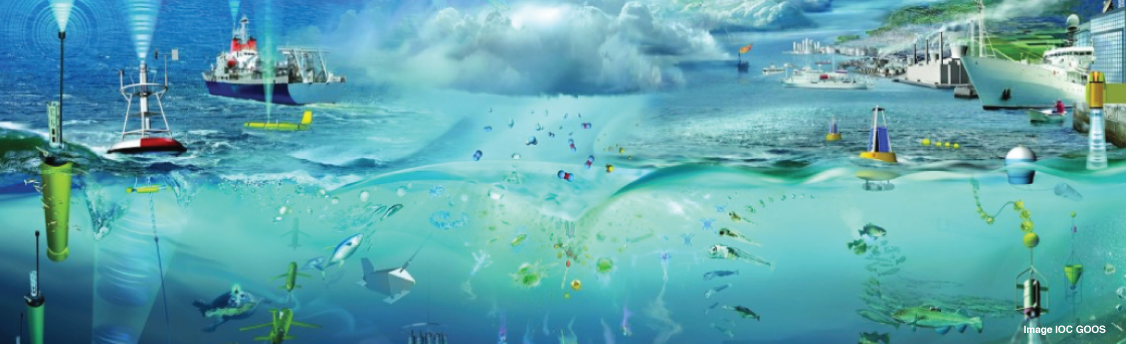
S.1425 – Coordinated Ocean Monitoring and Research Act passed by unanimous consent in January.
Reauthorization of the Integrated Coastal and Ocean Observation System (ICOOS) Act of 2009 was passed by unanimous consent in the Senate. The bill, S.1425 Coordinated Ocean Monitoring and Research Act, is a straightforward reauthorization of the Integrated Ocean Observing System (IOOS) program and re-initiates the ICOOS Act of 2009.
Reauthorization of this Act ensures uninterrupted collection and dissemination of ocean data and information.
Prior to the ICOOS Act of 2009, there was not a coordinated approach to a coastal ocean observing system. Coastal data collected Federal, state and local agencies, researchers and citizen groups did not have a standard format and the data was largely inaccessible by others. The ICOOS Act establishes a coordinated federal-regional program to integrate and share existing data, fills critical gaps in ocean observations, and produces information that is accessible to a range of users from mariners to fishermen to emergency managers and scientists.
In S.1425 there is language that addresses Regional Associations, IOOS, and NOAA’s Ocean Acidification Program. The language also includes a vulnerability and economic assessment on Ocean Acidification; thereby enhancing the already strong partnership that exists between IOOS and NOAA’s Ocean Acidification Program. Working together, the two programs are filling gaps in observations and working with industry partners to mitigate impacts. Additionally, regional networks are bringing together researchers and industry to assess local impact of ocean acidification and to identify priorities for moving forward.
Reauthorization ensures the continuation of the innovative partnership between Federal and non-Federal regional partners that make up U.S. IOOS.
Related news
SECOORA Request for Proposals for a Data System Development, Operations, and Maintenance Service Provider
SECOORA seeks a Data System Development, Operations, and Maintenance (DMAC) service provider to act as a strategic partner while maintaining the current SECOORA Data System. Proposals are due to SECOORA by 5:00 PM ET, March 31, 2026.

Plankton Perfect: Using Imagery to Document Microscopic Marine Life
Dr. Enrique Montes is working to understand how plankton respond to changes in the ocean by capturing high resolution imagery with advanced technology. This work is funded by the Marine Biodiversity Observation Network (MBON) to use novel techniques like the Continuous Particle Imaging and Classification System (CPICS).

SECOORA Community Spotlight: Craig Harris
When Craig Harris signed on as the Emergency Management and Resiliency Coordinator for the city of Wilmington, North Carolina, he brought with him knowledge of water level sensors. SECOORA worked with Craig to install a water level sensor at the Love Grove Bridge in Wilmington, a site prone to flooding.