

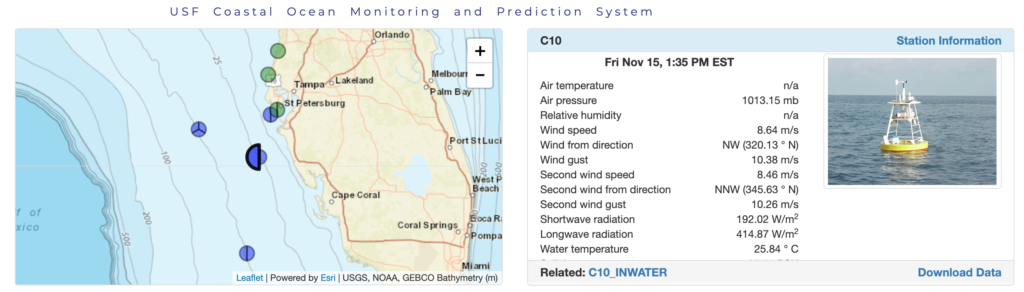
Since the early 1990s, sensors on offshore moorings have been collecting continuous, long-term measurements of physical oceanographic and meteorological variables on the west Florida shelf.
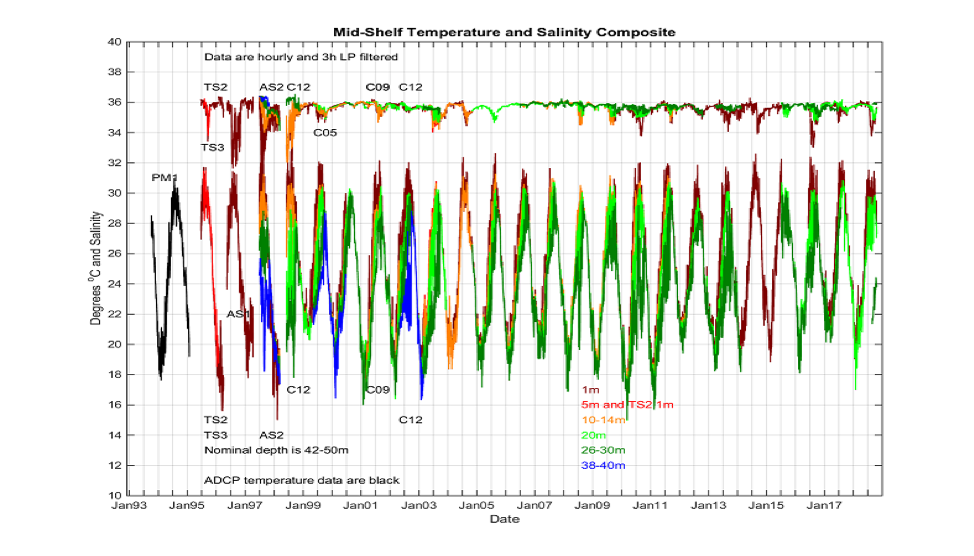
What do you with over 20 years of data collected by University of South Florida College of Marine Science Coastal Ocean Monitoring and Prediction System (USF-CMS COMPS)? The answer is quite a lot, but it all begins with creating climatologies which are used to analyze seasonal and long-term variability about the climatological averages. An example of this type of analysis is found in Liu and Weisberg (2012), a peer reviewed paper that analyzed the seasonal variability of circulation and sea level on the west Florida continental shelf using the first 10 years of USF COMPS data.
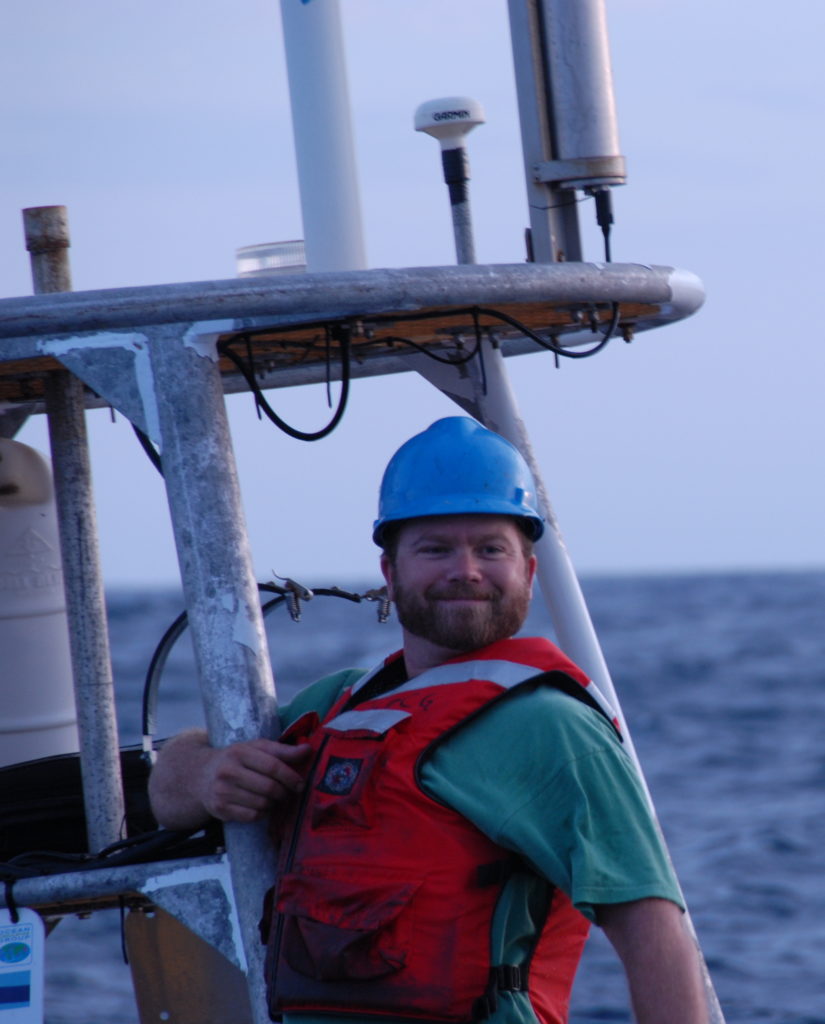
Mooring Technician, USF CMS COMPS
SECOORA is committed to continuing long-term observations off the west Florida shelf. These ever-lengthening datasets collected by USF-CMS are opening opportunities for students to look past seasonal cycles and into multi-decadal changes that may reflect a changing climate (Figure 1). As part of his PhD dissertation, USF CMS graduate student and mooring technician, Jay Law, is updating this prior 10-year climatology work to include the full, updated twenty-plus year data set, which will allow for long term changes to be studied.
Related news

Claire McGrath Joins SECOORA as Program and Development Manager
SECOORA welcomes Claire McGrath as Program and Development Manager, supporting the Southeast & Caribbean Coastal Disaster Resilience Partnership and membership growth.

Spotlight: Mobilizing to Save Florida’s Coral Reefs
Learn how scientists are racing to save Florida's Coral Reef through coral rescue, gene banking, reef restoration, and innovative conservation efforts after disease and marine heatwaves devastated one of America's most important marine ecosystems.
From a Whale’s Song to an Ocean’s Symphony: How AI Decodes Underwater Sound
Explore how SECOORA-funded research is using AI and machine learning to decode ocean soundscapes, detect boat noise, and support coral reef restoration efforts.