

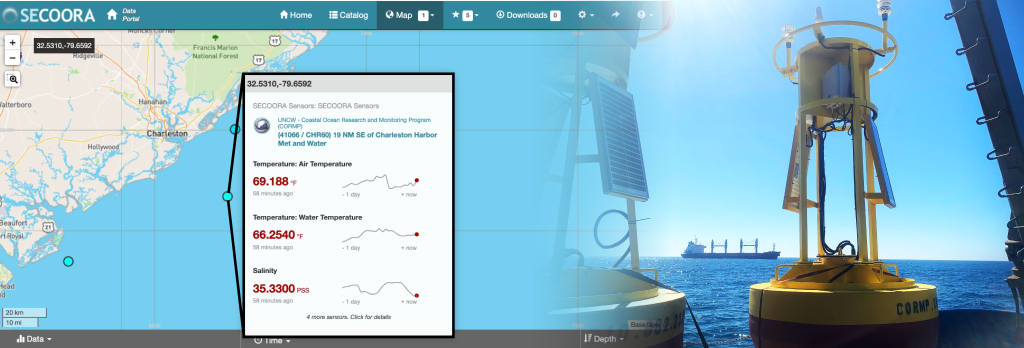
Two new buoys deployed near the entrance to the Port of Charleston are supporting ship operations and harbor pilots with much needed data. The buoys are maintained by UNCW Coastal Ocean Research and Monitoring Program and funded by IOOS and SECOORA.
Below is a list of data provided by the colocated buoys. Data is updated every hour.
- CHR60 (NDBC 41066): Wind speed, Wind gust, Wind from direction, Water temperature, Salinity, Air temperature, Air pressure, and Humidity
- GPS Location: 32°32.164’N, 079°39.355’W
- CHR60WAVE (NDBC 41076): Wave Height, Dominant Wave Period, Mean Wave Direction, and Water Temperature
- GPS location: 32°32.173’N, 079°39.531’W
Click here for CHR60 and CHR60WAVE data.
Partnerships to Fill Gaps
Ports, a major sector of the blue economy, rely on data provided by buoys. These new buoys are collecting valuable weather and sea state data for ships being moved into and out of the Charleston Harbor.
“The new buoys CHR60 and CHR60WAVE are already providing valuable weather and sea state data for ships transiting into and out of Charleston Harbor. This is important meteorological and oceanographic information to help aid in safe and efficient marine transportation.”
– Tom Boyle, Director, Vessel Operations, South Carolina Ports Authority
Utilizing Low Cost Technology
The team deployed a cost effective SOFAR Spotter buoy to collect the wave data needed by the Charleston Branch Pilots.
The ability to access user-friendly, low-cost technology remains a limiting factor in coastal ocean observing. Ocean observing equipment is difficult to deploy, costly to operate, and requires specific technical skills (doi10.12681/mms.25060).
Related news
SECOORA is Hiring a Grants Manager
SECOORA is hiring a Grants Manager to lead grant and subaward management across a four-state coastal ocean observing network. Based in the Southeast US. Apply now.

Meet the new 2026 SECOORA Board Members
SECOORA welcomes three new members to its Board of Directors, effective July 1, 2026 - bringing fresh expertise in marine science, coastal geomorphology, and ecosystem restoration to guide our work across the Southeast.
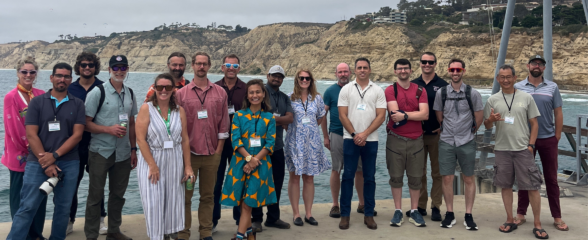
SECOORA Co-Hosts the 2026 WebCOOS Workshop In Person in La Jolla, CA
The 2026 WebCOOS Workshop convened in person on July 21-22, 2026 in La Jolla, CA. 45 attendees representing all 11 IOOS Regional Associations and national partners joined this collaborative workshop to discuss webcam-derived coastal products, stakeholder needs, and the network's transition into its next phase under IRA T2.