

Hiring A Part Time Pre/Post-Award Specialist
The Pre- and Post-Award Specialist will develop and execute comprehensive strategies for full life-cycle grant management. Submit a 1-page cover letter, resume to jobs@secoora.org. Application review begins November 17, 2023.

SECOORA is hiring a Pre- and Post-Award Specialist as a Part-Time Contractor.
As the Pre- and Post-Award Specialist you will be part of a trusted organization supporting coastal ocean resilience, marine safety, and a thriving blue economy. The Pre- and Post-Award Specialist must have excellent communication skills, strong attention to detail, and superb organizational skills.
In collaboration with the SECOORA management team, the Pre- and Post-Award Specialist will develop and execute comprehensive strategies for full life-cycle grant management. This will include managing grant proposal development, specifically grant budget development and individual Principal Investigator (PI) grant budget reviews, subaward and contract development, and award tracking. SECOORA manages multiple, but less than 10, grants annually and issues subawards and contracts to approximately 40-60 Principal Investigators (PIs) at approximately 20 institutions in the four-state region and beyond.
The Pre- and Post-Award Specialist is a 6-month contract position which will work an estimated 20-30 hours per week, with workloads varying based on grant cycles. After the 6-month period there is the potential for an extension if all parties agree. Compensation is between $45.00 – $50.00 per hour, depending on experience.
The Pre- and Post-Award Specialist will manage multiple grants with multiple subawardees and contracts per grant and is responsible for timely follow-up and day-to-day financial actions as needed. The Pre- and Post-Award Specialist must be able to interpret funding requirements, policies, and practices for SECOORA staff, PIs, and contractors and provide support on new information regarding funding increments, reporting deadlines, fiscal issues, and compliance.
The Pre- and Post-Award Specialist is responsible for monitoring accounts to ensure compliance with Cost Accounting Standards (Federal), must be able to act independently to make decisions and authorize actions throughout the life of the project (e.g., award extensions, allowability of expenditures).
How to Apply
Submit a 1-page cover letter, resume (2 pages maximum) to jobs@secoora.org. Application materials are due by 5:00 PM, November 16, 2023. Contact information for three professional references will be requested after interviews with the top candidates. The search committee will review applications beginning November 17, 2023, and will continue until the position is filled.
SECOORA provides equal employment and contractor opportunities. SECOORA prohibits discrimination and harassment of any type without regard to race, color, religion, age, sex, national origin, disability status, genetics, protected veteran status, sexual orientation, gender identity or expression, or any other characteristic protected by federal, state, or local laws.
Related news

Species Spotlight: Trichodesmium
Discover the remarkable role of Trichodesmium, a microscopic cyanobacterium that helps fuel life across the ocean. In this Species Spotlight, explore how researchers supported by the Marine Biodiversity Observation Network (MBON) are using imaging technology, genomics, and eDNA to better understand this “shape-shifting” organism and its influence on marine ecosystems, ocean health, and coastal economies.
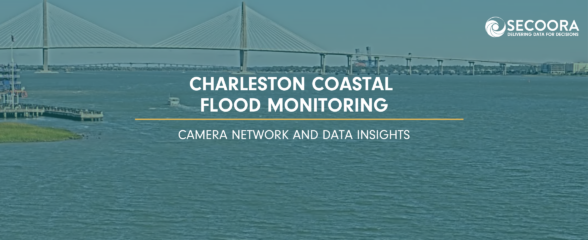
Charleston Coastal Flood Monitoring: Camera Network and Data Insights
A new story map explores how cameras in Charleston, South Carolina are helping communities monitor and respond to changing coastal conditions, from everyday weather impacts to flooding events. As a rapidly growing coastal city with a major working port, Charleston depends on an accurate understanding of water conditions to support transportation, public safety, infrastructure, and economic activity.

Scientist Spotlight: Dr. Frank Muller-Karger
Meet Dr. Frank Muller-Karger, a Biological Oceanographer and Distinguished University Professor at the USF College of Marine Science and co-lead of the U.S. Marine Biodiversity Observation Network. His research integrates satellite data, environmental DNA, and physical sensors to better understand how warming oceans are influencing marine populations.