2026 Annual Meeting

The SECOORA Annual Meeting was May 20 – 21, 2026 in Atlantic Beach, NC. 

Meeting Overview

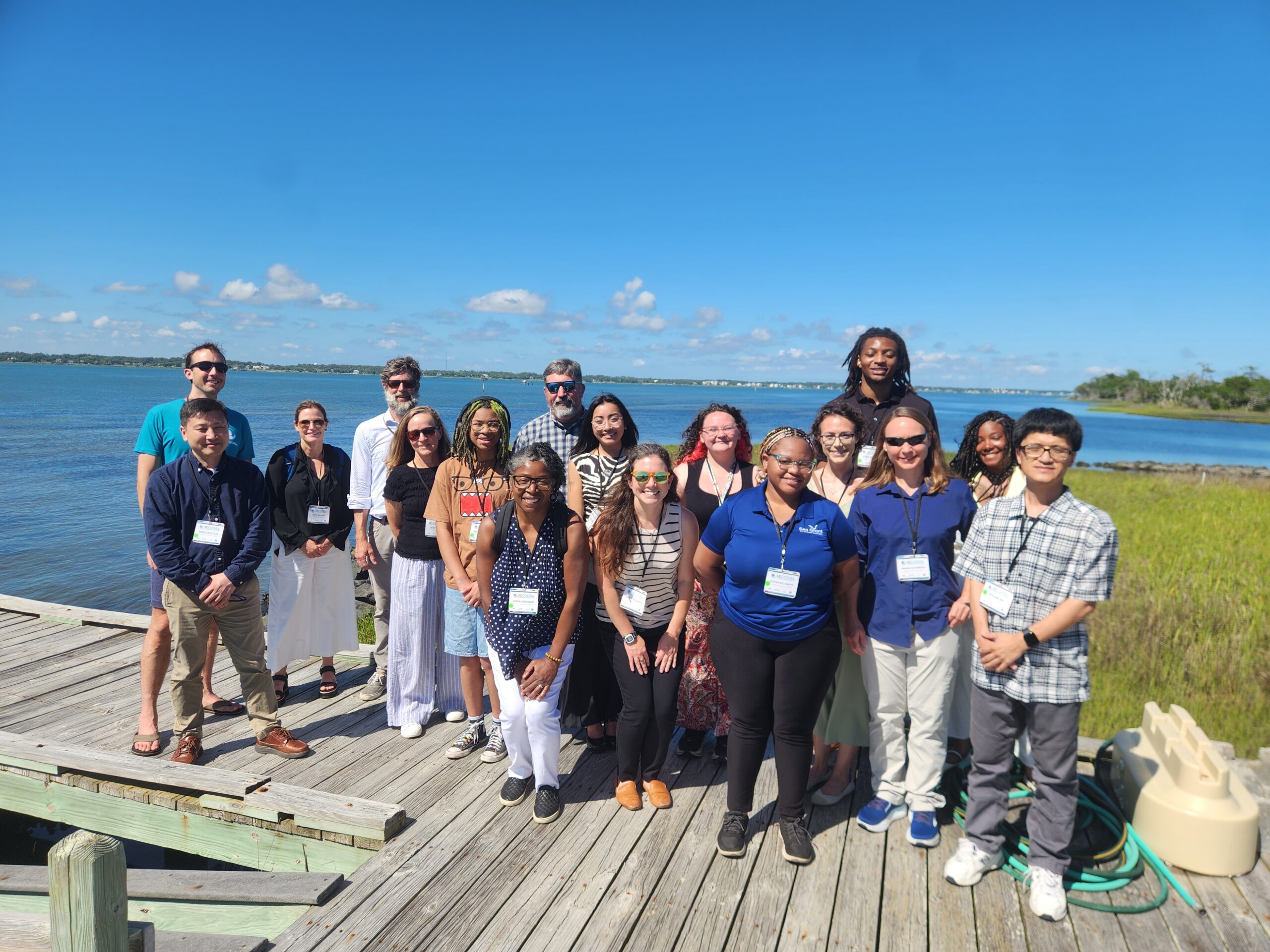
The 2026 SECOORA Annual Meeting was held in Atlantic Beach, North Carolina. on May 20 – 21. The meeting brought together coastal ocean scientists, community representatives, and students from around the Southeast to:

  • Learn about ongoing coastal observing activities
  • Provide professional networking opportunities
  • Prepare for new opportunities focused on community engagement and product development

Sponsors

Board Meeting and Members Business Meeting

2027 Annual Meeting: Celebrating 20 Years of SECOORA

The Board announced plans for SECOORA’s 20th Anniversary Meeting, which will be held in Charleston, South Carolina, on May 10-12, 2027. To mark this milestone, the meeting will feature a new format that includes solicited abstracts, engagement program-led sessions, and opportunities to reflect on accomplishments from the past two decades while exploring priorities for the future. Members interested in helping plan the event are encouraged to volunteer by emailing communications@secoora.org

Membership Program Modernization

SECOORA staff presented a proposed update to the membership structure designed to create a more sustainable and scalable model. The proposal includes transitioning away from individual SECOORA memberships in favor of institutional memberships while continuing to offer individual participation opportunities through engagement programs.

Because implementation would require updates to the organization’s bylaws, the Board  charged the Governance Committee with reviewing the proposed changes and recommending any necessary bylaw revisions. Volunteers for the committee will be solicited  this summer, with final committee membership approved by the Board.

Communications and Engagement Updates

SECOORA’s engagement programs are undergoing a comprehensive rebranding effort. Feedback gathered during outreach and communications reviews highlighted the need to better emphasize the people and communities served by SECOORA’s observing systems and services. Updates to branding, social media, and media engagement strategies are underway to better communicate the impact of SECOORA’s work.

High Frequency Radar Assessment

SECOORA provided an update on the High Frequency Radar (HFR) network assessment being conducted by Dusek Coastal Science & Consulting in collaboration with the US IOOS Program Office. The assessment will help identify priority coverage areas, establish performance metrics, and guide future investments in the regional HFR observing network.

Board and Membership Updates

The Board approved the nomination of Adam Greer to fill the Academic/Research/Education Board seat vacated by Bryan Franks.

The Chair also announced the results of the 2026 Board election:

  • Tom Frazer, University of South Florida (Academic/Research/Education)
  • Christy Swann, RCOAST (Industry / Private Sector)
  • Erin Hague, Tetra Tech (At Large – FL)

The Board meeting concluded with recognition and appreciation for outgoing Board members Gary Mitchum and Bryan Franks for their service and contributions to the organization.

Education and Outreach Committee Updates

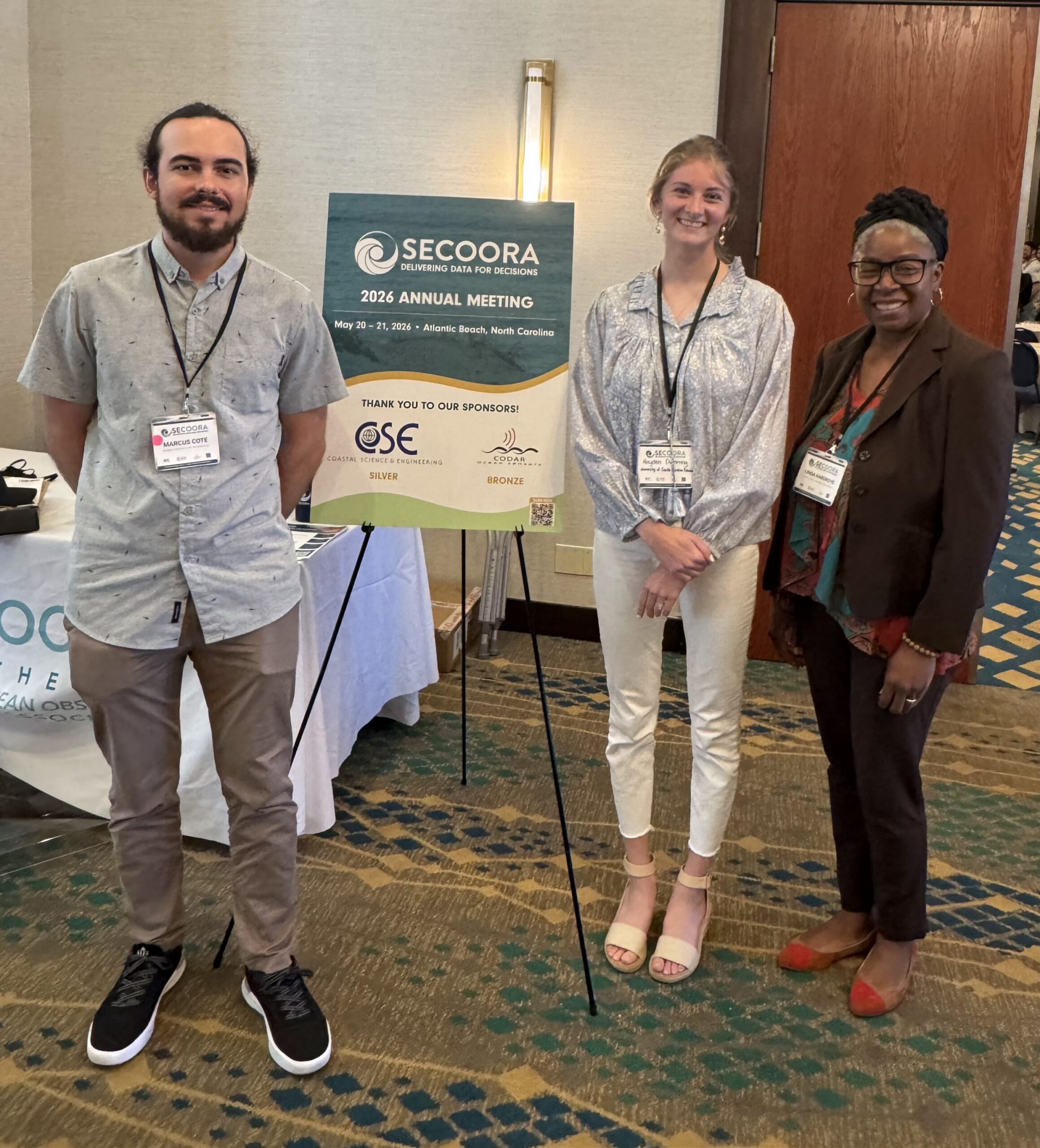
The Education and Outreach Committee announced the recipients of the 2026 Vembu Ocean Scholars Awards:

  • Marcus Cote, Florida Institute of Technology
  • Linda Hargrove, North Carolina State University
  • Hayden Dunning, University of South Carolina Beaufort

The committee is also exploring opportunities to engage past scholarship recipients as part of SECOORA’s 20th Anniversary activities.

[From left to right: 2026 Vembu Ocean Scholars Award Winners: Marcus Cote, Florida Institute of Technology; Hayden Dunning, University of South Carolina Beaufort; Linda Hargrove, North Carolina State University;]

Social

Following the meeting, attendees visited the North Carolina Aquarium at Pine Knoll Shores for an optional field trip before gathering back at the venue for the Annual Meeting Social.

More than 60 SECOORA members and partners participated in the evening networking event, which provided an opportunity to connect with colleagues from across the region, welcome new members, and launch the first round of Lightning Talks. During the session, SECOORA Principal Investigators shared highlights from their ongoing projects and research activities.

Stakeholder Meeting

The 2026 SECOORA Stakeholder Meeting brought together coastal managers, researchers, practitioners, and community leaders to explore emerging challenges and opportunities related to coastal resilience, observing systems, artificial intelligence, and decision support. Discussions highlighted the importance of long-term observations, community engagement, and innovative technologies in supporting coastal communities across the Southeast.

Building a Regional Community of Practice Around Surface Elevation Tables (SETs)

The meeting opened with a session focused on the growing regional Surface Elevation Table (SET) network and its role in informing marsh management and resilience planning. Debra Hernandez (SECOORA) provided background on how partnerships with coastal managers led to the development of a four-state SET network and Community of Practice (CoP), supported through Regional Ocean Data Sharing (RODS) funding.

Presentations from Wilhelmina Bradway (City of Jacksonville, NC), Jenny Davis (NOAA NCCOS Beaufort Laboratory), and Nisse Goldberg (Jacksonville University) highlighted how SETs are being used to measure marsh elevation change at millimeter-scale accuracy and assess whether wetlands are keeping pace with sea level rise. The regional SET CoP now includes more than 50 members and over 200 monitoring stations across North Carolina, South Carolina, Georgia, and Florida.

Key takeaways included:

  • Long-term SET observations provide critical information for marsh restoration and management decisions.
  • Many monitored marshes across the Southeast are not keeping pace with current sea level rise rates.
  • Living shoreline projects are showing promising results, with some sites experiencing increased marsh elevation gain.
  • Regional collaboration is helping standardize monitoring approaches, improve data accessibility, and identify research priorities.
  • Understanding marsh transition zones and the impacts of episodic events remains an important area for future research.

Updates from U.S. IOOS and the IOOS Association

The second day began with updates from representatives of the U.S. Integrated Ocean Observing System (IOOS) Program Office and the IOOS Association. Presentations highlighted FY26 accomplishments, federal funding updates, congressional outreach efforts, and priorities for FY27.

Speakers discussed leadership transitions within the IOOS Program Office, implementation of Inflation Reduction Act-funded initiatives, regional successes, and ongoing advocacy efforts to support ocean observing programs. Participants also discussed the importance of building relationships with policymakers and communicating the value of ocean observations to decision-makers at both the state and federal levels.

Water Level Observations Supporting Community Resilience

A panel focused on water level observations and coastal flooding brought together researchers and community practitioners working to improve resilience planning throughout the Southeast.

Cotie Alsbrooks (SECOORA) provided an overview of the expanding Southeast Water Level Network and ongoing efforts to improve decision-support tools, evaluate sensor performance, and strengthen partnerships with communities experiencing recurrent flooding.

Additional presentations explored community-driven resilience planning and localized flood monitoring efforts:

  • Meredith Hovis (University of North Carolina Wilmington) discussed lessons learned from community engagement and flood resilience planning in Wilmington, North Carolina, emphasizing trauma-informed engagement and co-production of knowledge.
  • Miyuki Hino (University of North Carolina) presented research demonstrating how localized water level sensors and cameras can better capture the impacts of chronic coastal flooding than traditional tide gauges alone.
  • Lynn Davis (Town of Belhaven) shared Belhaven’s experience addressing both storm-related and nuisance flooding through planning, education, infrastructure improvements, and community partnerships.

Several common themes emerged during the discussion:

  • Community trust is foundational to successful resilience planning.
  • Information must be timely, relevant, and easy to access for residents and decision-makers.
  • Localized observations are essential for understanding flooding impacts at the neighborhood scale.
  • Standardization of water level data and integration with forecasting systems remain important priorities.

Practical Applications of Artificial Intelligence in Ocean Science and Resilience

One of the most highly attended sessions focused on the rapidly evolving role of artificial intelligence (AI) in ocean science and coastal resilience.

Greg Dusek (Dusek Coastal Science & Consulting), Kelly Knee (Tetra Tech), and Taylor Shropshire (Fathom Science) explored current and emerging applications of AI across ocean observing systems, forecasting, data management, and decision support. Speakers emphasized that while generative AI has attracted significant attention, many of the most impactful applications today involve machine learning techniques that improve data processing, quality control, forecasting, and information discovery.

Key discussion points included:

  • AI can accelerate repetitive workflows such as quality control, metadata generation, data formatting, and imagery analysis.
  • AI has the potential to improve access to ocean observing data by allowing users to interact with datasets through natural language interfaces.
  • Machine learning approaches are increasingly being used to supplement environmental forecasting and identify patterns in large observational datasets.
  • Human expertise remains essential for validating outputs and ensuring scientific rigor.
  • The ocean community must continue developing ethical frameworks, transparency standards, and best practices for AI implementation.
  • Improving data accessibility and usability may represent one of the most valuable near-term opportunities for AI adoption within SECOORA and the broader IOOS enterprise.

Participants also discussed how AI could help improve user access to SECOORA products and data services through conversational interfaces and more intuitive discovery tools.

Lightning Talks Highlight Emerging Research and Applications

The afternoon lightning talk session showcased a diverse range of projects from across the Southeast region. Presenters represented universities, state agencies, nonprofits, and private-sector organizations, highlighting topics ranging from coastal observations and workforce development to ecosystem monitoring and community engagement.

Speakers included Frank Lopez (North Carolina Sea Grant), Natalie Cohen (University of Georgia), Mike Parsons (Florida Gulf Coast University), Joy Young (FACT Network), Eric Montie (University of South Carolina Beaufort), Sheri Schwartz (Tetra Tech), Claire McGrath (SECOORA), and Catherine Edwards (UGA Skidaway Institute of Oceanography).

Beach and Dune Restoration, Renourishment, and Coastal Adaptation

The final panel of the meeting focused on the observations, data, and science needed to support beach nourishment, dune restoration, and coastal adaptation efforts throughout the Southeast.

Panelists included Patrick Barrineau (Coastal Science & Engineering), Christy Swann (RCOAST), Reide Corbett (Coastal Studies Institute), and Chase Davis (Coastal Protection Engineering).

Discussion centered on the physical and human factors driving coastal change, including sea level rise, storms, sediment transport, infrastructure development, and policy decisions. Panelists highlighted the growing need for improved observations and monitoring systems to support coastal management decisions.

Key takeaways included:

  • Long-term observations provide critical information for evaluating the effectiveness and return on investment of adaptation projects.
  • Expanded nearshore monitoring and higher-resolution bathymetric data are needed to better understand coastal change processes.
  • Cameras, water level observations, remote sensing, and emerging technologies can help improve assessments of shoreline change and storm impacts.
  • Community priorities should help guide future observing investments and adaptation strategies.
  • Strong partnerships among academia, government agencies, industry, and local communities are essential for successful coastal resilience efforts.
  • Communicating risk and demonstrating the economic value of adaptation measures remain major challenges for coastal decision-makers.

The discussion concluded with a reminder that while coastal observations require investment, they provide valuable information that can help communities make more informed decisions and reduce long-term costs associated with coastal hazards and disasters.

Meeting Agenda

Wednesday May 20, 2026

Board Meeting | 10:30 AM – 12:10 PM

Location: Hatteras/Pamlico

10:30 – 10:40 AM
Welcome
Patrick Barrineau, SECOORA Chair
  • Introductions / Roll Call
  • Approval of Agenda
  • Minutes Approval | March 24, 2026
  • 20th Anniversary Annual Meeting (2027)
10:40 – 10:45 AM
Board Meeting – Treasurer Report
Jeff Copeland, SECOORA Treasurer 
  • Review of FY26 Budget as of March 31, 2026
  • Audit Review
10:45 – 10:50 AM
Special Election – Academic / Research / Education Seat (vote)
10:50 – 11:35 AM
SECOORA Progress and Plans
Debra Hernandez, SECOORA
  • Branding Updates (feedback)
  • Fundraising Strategy
    • Grants and Proposals
    • Membership Drive / Structure (feedback)
    • Brainstorm connections to major donors/foundations
11:35 – 12:05 PM
Board Executive Session (closed)
12:05 – 12:10 PM
Closing Remarks and Adjourn
Patrick Barrineau, SECOORA Chair

Members Meeting | 12:10 – 1:30 PM

Location: Hatteras/Pamlico

12:10 – 1:00 PM Lunch (open to all)
1:00 – 1:05 PM Welcome
Patrick Barrineau, Board Chair
1:05 – 1:10 PM SECOORA Status Update
Debra Hernandez, SECOORA
1:10 – 1:15 PM Strategic Plan Updates
Debra Hernandez, SECOORA
1:15 – 1:20 PM Fundraising Updates
Debra Hernandez and Claire McGrath, SECOORA
1:20 PM – 1:26 PM Committee Updates 

  • Education and Outreach – Dwayne Porter, Chair
  • Executive Committee – Patrick Barrineau, Chair
1:26 – 1:30 PM Election and Voting Results

  • Election Results
  • Operational Budget
  • Board Member Recognition

Stakeholder Meeting | 1:45 – 5:00 PM

Location: Hatteras/Pamlico

1:45 – 2:00 PM Welcome
Patrick Barrineau, Board Chair
2:00 – 2:45 PM Using Surface Elevation Table (SET) Data to Guide Decision-Making
Objective: Provide a broad overview of the role of SETs in coastal management, prioritizing investments, and local decision-making.

Moderator: Brandon Puckett, NOAA NCCOS

Speakers (confirmed): 

  • Debra Hernandez, SECOORA 
  • Dr. Nisse Goldberg, Jacksonville University
  • Jenny Davis, NOAA NCCOS 
  • Wilhelmina Bradway, City of Jacksonville, NC
2:45 – 5:00 PM  Optional Field Trip: North Carolina Aquarium at Pine Knoll Shores (pre-registration required)

Social | 5:30 – 7:30 PM

Location: Hatteras/Pamlico and Foyer

5:30 – 6:30 PM Social
6:30 – 7:30 PM Principal Investigator Lightning Talks
Moderator:  Patrick Barrineau, Board Chair

  • Emily Hall, Mote Marine Laboratory
  • Dwayne Porter, Arnold School of Public Health, University of South Carolina
  • David Kochan, Fish and Wildlife Research Institute
  • Yonggang Liu, University of South Florida
  • Lynn Leonard, University of North Carolina Wilmington Center for Marine Science
  • Theo Jass, SECOORA
  • Yuyuan Xie, University of South Florida
  • Amanda Kaltenburg, Savannah State University
  • Nicole Elko, American Shore and Beach Preservation Association
  • Steven Lazarus, Florida Institute of Technology
 7:30 PM Social Closing Remarks

Thursday May 21, 2026

Stakeholder Meeting Continued

Location: Hatteras/Pamlico

8:15 – 9:00 AM Registration
9:00 – 9:10 AM Welcome & Overview of Day 2
9:10 – 10:00 AM Updates from U.S. IOOS and the IOOS Association

Speakers (confirmed): 

  • Kristen Yarincik, IOOS Association (virtual) 
  • Krisa Arzayus, IOOS Program Office (recorded) 
  • Susan Fox, IOOS Program Office (virtual)
  • Emily Patrolia, ESP Advisors (virtual)
10:05 – 10:15 AM  Break
10:15 – 11:15 AM Water Level Impacts on Infrastructure in the Southeast
Objective: Examine the ways water level impacts various infrastructure systems in coastal communities, discuss how water level data is being collected in the Southeast, and ways to improve coastal infrastructure planning.

Moderator: Jennifer Dorton, SECOORA

Speakers (confirmed): 

  • Cotie Alsbrooks, SECOORA
  • Miyuki Hino, UNC Chapel Hill 
  • Lynn Davis, Town of Belhaven
  • Meredith Hovis, University of North Carolina Wilmington
11:20 – 12:15 PM Practical Applications of AI to Ocean Science & Resilience
Objective: Address how the field of oceanography and coastal resilience is evolving to incorporate the use of AI, and how coastal researchers and practitioners can take advantage of advances in AI in their work moving forward.

Speakers (confirmed): 

  • Taylor Shropshire, Fathom Science
  • Greg Dusek, Dusek Coastal Science & Consulting
  • Kelly Knee, Tetra Tech
12:15 – 1:00 PM Lunch (provided)
1:15 – 2:00 PM Principal Investigator Lightning Talks

  • Frank Lopez, North Carolina Sea Grant
  • Natalie Cohen, University of Georgia
  • Mike Parsons, Florida Gulf Coast University
  • Joy Young, FACT Network
  • Eric Montie, University of South Carolina Beaufort
  • Sheri Schwartz, TetraTech
  • Claire McGrath, SECOORA
  • Catherine Edwards, UGA Skidaway Institute of Oceanography
2:00 – 3:00 PM Beach and Dune Restoration and Renourishment
Objective: Survey subject matter experts in different types of beach-dune work for ways buoy data can be used to augment projects/studies in nearshore/onshore environments.

Speakers (confirmed):

  • Patrick Barrineau, Coastal Science & Engineering
  • Christy Swann, RCOAST
  • Reide Corbett, Coastal Studies Institute
  • Chase Davis, Coastal Protection Engineering
3:00 – 3:30 PM Closing Remarks and Adjourn

Meeting Materials

Annual Meeting

2026 Board of Elections and Budget

Presentations