

The Gulf Research Initiative has published their request for proposal for the $50 million in funds from BP. Information is available at http://www.gulfresearchinitiative.org/request-for-proposals/.
You may download the RFP at: http://www.gulfresearchinitiative.org/wp-content/uploads/2011/02/GRI_RFP_I.pdf
Important dates to note:
9 pm EDT, 9 May 2011: Letters of Intent must be submitted to the Consortium for Ocean Leadership
9 pm EDT, 6 June 2011: Status update on letters of intent due
9 pm EDT, 11 July 2011: Complete proposals are due
BACKGROUND:
The purpose of RFP I is to select the research activities for GRI Years 2-4 (1 June 2011-31 May 2014) involving Research Consortia. For this solicitation, a Research Consortium is defined as having four or more institutions. The second RFP (RFP II) will focus on activities involving less money and less internal management than a Research Consortium; RFP II will be issued at a later date. RFP II will request proposals from individual or collaborative efforts involving a principal investigator (PI) and co principal investigators (co PIs) from up to three additional institutions and will be focused on the same research themes described in RFP I. RFP II will fund activities for GRI Years 2-4.
The annual funding level for all GRI activities is expected to be $50 million per year. The total funds available for distribution to Research Consortia through RFP I will be a minimum of $37.5 million per year. Four to eight Research Consortia will be selected, and funding for each is estimated to be between $1 million (minimum) and $7.5 million (maximum) per year. The total funds available for distribution through RFP II will be up to a maximum of $7.5 million per year; and funding for each is estimated to be between $100,000 (minimum) and $1 million (maximum) per year.
The GRI emphasizes interdisciplinary science and technology involving experts in physical, chemical, geological, and biological oceanography; marine biology; coastal and reef ecosystems, fisheries and wildlife ecology; public health; and associated development of physical, chemical, and biological instrumentation, advanced modelling, and informatics.
All activities selected for GRI funding will combine state of the art research with deep scientific knowledge of the ecosystems of the Gulf of Mexico to create fundamental advances in understanding the interactions that occurred and continue to occur among the marine and coastal ecosystems, oil, and oil dispersants produced by the catastrophic loss of the DWH oil drilling platform. The success of the GRI depends on a combination of regional knowledge with regional, national, and international research innovation.
Related news
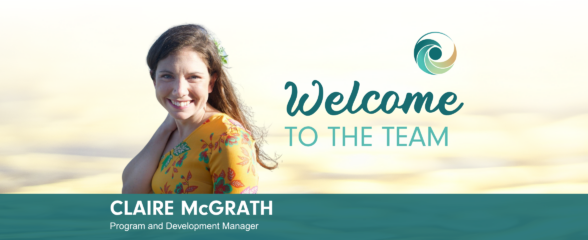
Claire McGrath Joins SECOORA as Program and Development Manager
SECOORA welcomes Claire McGrath as Program and Development Manager, supporting the Southeast & Caribbean Coastal Disaster Resilience Partnership and membership growth.

Spotlight: Mobilizing to Save Florida’s Coral Reefs
Learn how scientists are racing to save Florida's Coral Reef through coral rescue, gene banking, reef restoration, and innovative conservation efforts after disease and marine heatwaves devastated one of America's most important marine ecosystems.
From a Whale’s Song to an Ocean’s Symphony: How AI Decodes Underwater Sound
Explore how SECOORA-funded research is using AI and machine learning to decode ocean soundscapes, detect boat noise, and support coral reef restoration efforts.