

For the past eight months, Dr. Meredith Hovis has served as Southeast and Caribbean Disaster Resilience Partnership’s (SCDRP) Program Coordinator. She co-hosted SCDRP’s Annual Meeting this past January, worked closely with the board on funding and partnership development efforts, and maintained all communications on behalf of SCDRP. Recently, Dr. Hovis was promoted to the role of SCDRP’s Executive Director.
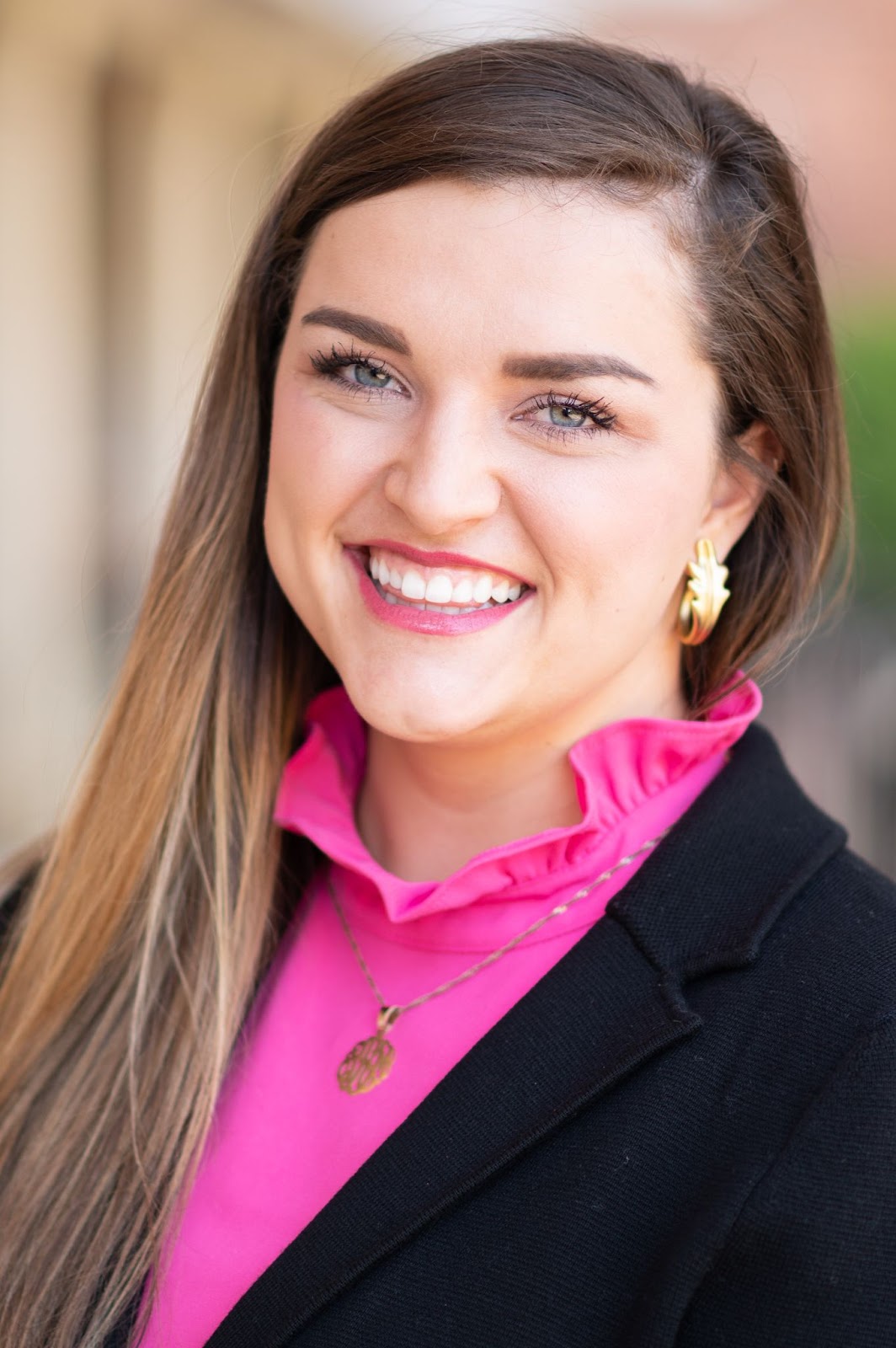
Dr. Hovis successfully defended her doctoral dissertation in the Department of Forestry and Environmental Resources at North Carolina State University in March 2022. You can read Dr. Hovis’s dissertation on using nature-based solutions for flood mitigation in rural, Eastern North Carolina, here. Dr. Hovis’s work with landowners in Eastern North Carolina has recently been published in Nature-Based Solutions, here. Dr. Hovis’s current research seeks to help rural communities mitigate the impacts from future floodwater. Dr. Hovis has named her line of work, “FloodWise”, which is a pilot program that would assist rural communities financially and technically to adopt nature-based solutions on their properties. Dr. Hovis’s work can be transferable to other areas in the U.S. Southeast and the Caribbean with similar landscapes and chronic flooding issues, and she looks forward to further exploring nature-based solutions for hazard mitigation efforts within the Partnership.
“As SCDRP’s Executive Director, I’m excited to continue to assist with meaningful strategies that will help further the Partnership’s mission to strengthen community resilience.”
Dr. Meredith Hovis, SCDRP Executive Director
In the next few months, Dr. Hovis will be working to hire a new Program Coordinator to assist with organizing the SCDRP Annual Meeting and other communication responsibilities. Dr. Hovis will also be working closely with SECOORA and NOAA under a new Department of State grant funding opportunity to collaborate and extend the SCDRP mission and vision to the greater Caribbean. SCDRP currently works with partners in U.S. territories, like Puerto Rico and U.S. Virgin Islands, and will now expand its network to other nations in the Caribbean, which will diversify SCDRP’s insight on disaster-resilient strategies and conditions in the region.
Related news
SECOORA is Hiring a Grants Manager
SECOORA is hiring a Grants Manager to lead grant and subaward management across a four-state coastal ocean observing network. Based in the Southeast US. Apply now.

Meet the new 2026 SECOORA Board Members
SECOORA welcomes three new members to its Board of Directors, effective July 1, 2026 - bringing fresh expertise in marine science, coastal geomorphology, and ecosystem restoration to guide our work across the Southeast.
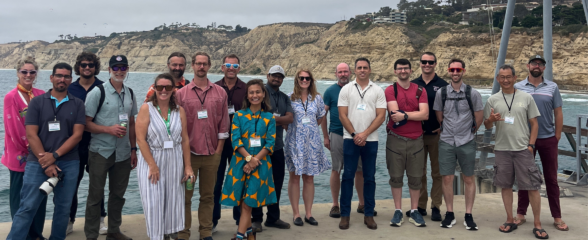
SECOORA Co-Hosts the 2026 WebCOOS Workshop In Person in La Jolla, CA
The 2026 WebCOOS Workshop convened in person on July 21-22, 2026 in La Jolla, CA. 45 attendees representing all 11 IOOS Regional Associations and national partners joined this collaborative workshop to discuss webcam-derived coastal products, stakeholder needs, and the network's transition into its next phase under IRA T2.