

Fish and Ships: Standardizing Marine eDNA Surveillance
Standardization across the eDNA metabarcoding workflow—from field sampling to laboratory sequencing and bioinformatics—is rapidly transforming marine observation.
By Zoraida Díaz
In 2021, NOAA published a five-year ‘Omics Strategic Plan to integrate eDNA methodologies into marine observation, enhance infrastructure to manage massive data sets, advance research to support biosurveillance and biodiversity protection, and expand multi-agency partnerships.
Building on these objectives, the Marine Biodiversity Observation Network’s (MBON) Genomics & eDNA Working Group connects field-level discoveries with national standards. Through joint scientific initiatives, multi-modal observations from net trawls, acoustic telemetry, and eDNA metabarcoding translate into reliable functional frameworks for fisheries managers and coastal monitoring programs.
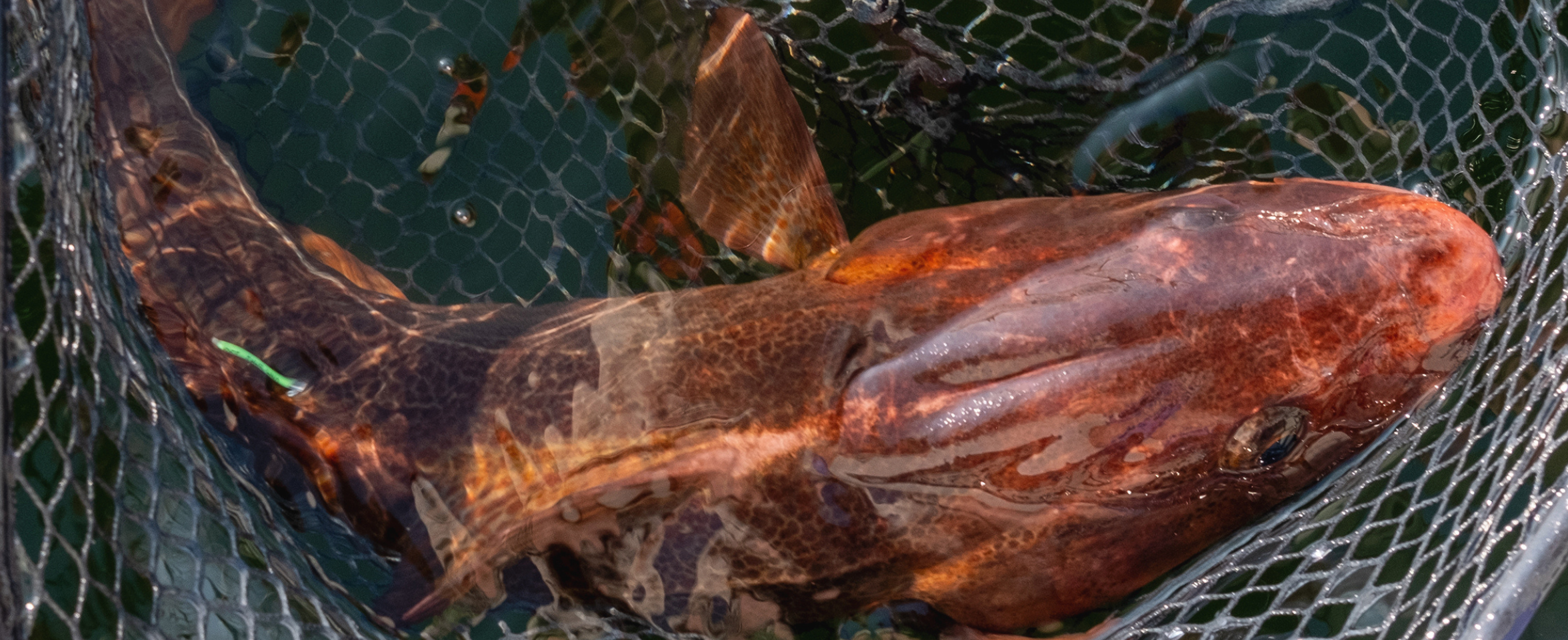
One such initiative—representing the Coastal New England node of MBON—was led by Dr. Nathan Furey, Associate Professor at the University of New Hampshire (UNH) and head of the Fish and Movement Ecology Lab, with Dr. Alison Watts, Research Assistant Professor in the Department of Civil and Environmental Engineering and UNH’s School of Marine Science and Ocean Engineering, as a co-investigator. The project focused on the movement ecology of coastal New England marine life, with a major emphasis on Atlantic cod (Gadus morhua). Furey oversaw the acoustic telemetry and fish-tagging efforts to track Atlantic cod movement and diet, and Watts led the eDNA working group.
Furey’s team was sampling habitats known for strong, consistent Atlantic cod presence. “They are homebodies,” explained Furey, “our telemetry results imply they stay in the same spot for months at a time.”
When Watts’ lab ran Furey’s water samples through standard short-read 12S eDNA metabarcoding—a molecular tool targeting the 12S ribosomal RNA gene to detect marine vertebrates—the bioinformatics pipeline kept returning a puzzling result: Pacific cod (Gadus macrocephalus).
When more than half the samples came back positive for Pacific cod—suggesting the improbable presence of a species normally found an ocean away—the researchers knew the issue went beyond cross-contamination.
Though feasible for foreign DNA to be found in coastal Atlantic waters (in the same way that discarded rainbow trout being fed to aquarium mammals ended up in Biscayne Bay, or from discarded seafood meals eaten on boats or docks), it was highly unlikely that Pacific cod had found a new home in coastal New Hampshire.
The results then pointed to the limitations of existing eDNA metabarcoding workflows. For instance, closely related species within the same genus—such as cod (Gadus)—share nearly identical genomes, and short eDNA barcode markers like the standard 12S gene can struggle to differentiate species. In these cases, the bioinformatic pipeline may default to generic assignments or nearest matches—likely what happened with the cod’s mismatched genetic footprint.
Researchers can use more precise methods, such as pairing the standard 12S primer with secondary targeted markers like COI (Cytochrome c Oxidase Subunit I)—a protein-coding gene with much higher sequence variation between closely related species—or incorporating geographic metadata, to reduce false positives and inaccurate species identification.
“Once you tell environmental managers on the Atlantic coast that they have Pacific cod, there’s an immediate distrust of the data,” says Watts, explaining how technical uncertainty is anathema to regulatory policy.
The project’s discoveries, along with those of other researchers, led to an MBON-supported multi-author study titled Guidance and best practices for species identification using eDNA metabarcoding – When do you call a cod a cod? The study offers a practical operations roadmap to improve primer selection, standardize strict contamination and bioinformatic filtering protocols, and use curated reference databases with clear identity thresholds.
The study also urges researchers to inform resource managers of the data’s limitations. As eDNA transforms marine conservation and fisheries management, unified research and reporting standards are vital.
Interdisciplinary Collaborations
Watts’ early work as an environmental engineer focused heavily on estuarine ecosystem health; a serendipitous encounter with genomics led her to incorporate eDNA monitoring into her research.
A decade ago, Watts, whose PhD research focused on chemical transport in water, was sampling for bio-indicators in eutrophic bodies of water (where excess nutrients lead to toxicity and harmful algal blooms).
“We were working with a kind of low-tech method where you put a glass slide in the water, leave it there for a week, and then come back, and you count the algae,” she recounts.
And by chance, as reinvention often works, Watts, whose office was in the same building that houses the UNH Hubbard Center for Genome Studies, was riding the elevator with the “genomics people” and talking about the glass slide under the microscope.
“And ‘Why are you doing that?’” she says they said. “‘Why don’t you send it to us and we’ll sequence it?’”
“I think this is a theme in eDNA,” she says, “If you have access to technical resources, then you’re just way ahead of the game.”
Watts, who has also served as lead principal investigator on eDNA projects across the National Estuarine Research Reserve System (NERRS), is moving beyond simple species detection to population-level genetics. She leads projects that study different river herring runs across the Northeast, as well as a New Hampshire Sea Grant project looking for blue crabs (Callinectes sapidus) in the Great Bay due to climate-change-driven migrations.
“The herring that comes into the rivers in Maine is genetically a little bit different from the herring that comes into rivers in Massachusetts,” says Watts excitedly, “so instead of having to go out and capture a bunch of herring and run genetic information on them, we just test the water.”
She uses the same eDNA sampling regime to look for blue crabs crossing into New Hampshire waters, which, although not technically invasive, are changing habitats in ways not seen before.
“The crabs are in the Chesapeake, and in Massachusetts, and when we have a warm summer, they creep up into New Hampshire,” she adds, “and when there’s a cold winter, they go away again.” eDNA sampling is done alongside traditional crab trapping, which requires going out in boats, setting traps, leaving them for a week, and hauling them back up. “You also need someone who can tell crabs apart,” Watts points out, “which is not me!”
Watts says what’s most exciting about eDNA research is its versatility. “There’s this whole time capsule aspect to it,” she says. “If you’re interested in fish, you run [use primers specific to] fish, and if you’re interested in harmful algal blooms, you run it for that, and if 10 years later, you look for another species, you can go back to the original sample.”
Watts’ research shows that eDNA data can give fisheries managers actionable information for stock assessment and habitat restoration in estuarine ecosystems, as well as insights into population expansion into New Hampshire waters as Gulf of Maine waters continue to warm.
Detecting Asian carp in the Great Lakes
An author in the study When do you call a cod a cod? Dr. Erin Grey, an Associate Professor of Aquatic Genetics at the University of Maine’s School of Biology and Ecology, also supports the study’s guidance on standardizing eDNA metabarcoding and sampling protocols.
Grey first encountered the potential of eDNA during her early postdoc work at Notre Dame University’s Environmental Change Initiative. Grey witnessed the trailblazing work of Notre Dame researchers who used novel water-filtering methods to detect eDNA from invasive Asian carp in the Chicago Area Waterway Systems in 2009 and 2010.
A pressing question regarding those first surveys was: What do you do with the information?
“That was my first introduction to eDNA, and that was very early on,” says Grey, who then began broad-scale studies, eventually linking sample processing and data analysis to actionable biosecurity management initiatives.
“You haven’t physically caught a carp; you’ve only detected its DNA,” says Grey. “It raised fundamental questions about how a regulatory agency should respond to sequence-based detections alone.”
Finding the genetic material of Asian carp past the electric dispersal barriers designed to stop non-native species from reaching Lake Michigan triggered a resolute, unprecedented state, federal, and scientific response: the U.S. Fish and Wildlife Service, U.S. Army Corps of Engineers, and Illinois Department of Natural Resources applied the piscicide rotenone to a 5.7-mile stretch of the Chicago canal, killing thousands of fish.
“The dead fish floated to the surface, allowing for the physical inspection of every carcass,” recounts Grey, “it’s obviously not an ideal solution, but it was the only way to verify what was there.”
State and federal agencies also launched an intensive monitoring and capture campaign using traditional electrofishing and commercial gillnetting sampling techniques spanning miles of the canal system.
Although Asian carp were not found in the massive kill, the eDNA signals were validated six months later when a live 19-pound carp was netted in Lake Calumet, six miles from Lake Michigan and past the electric barrier.
Riding on the Hulls of Ships
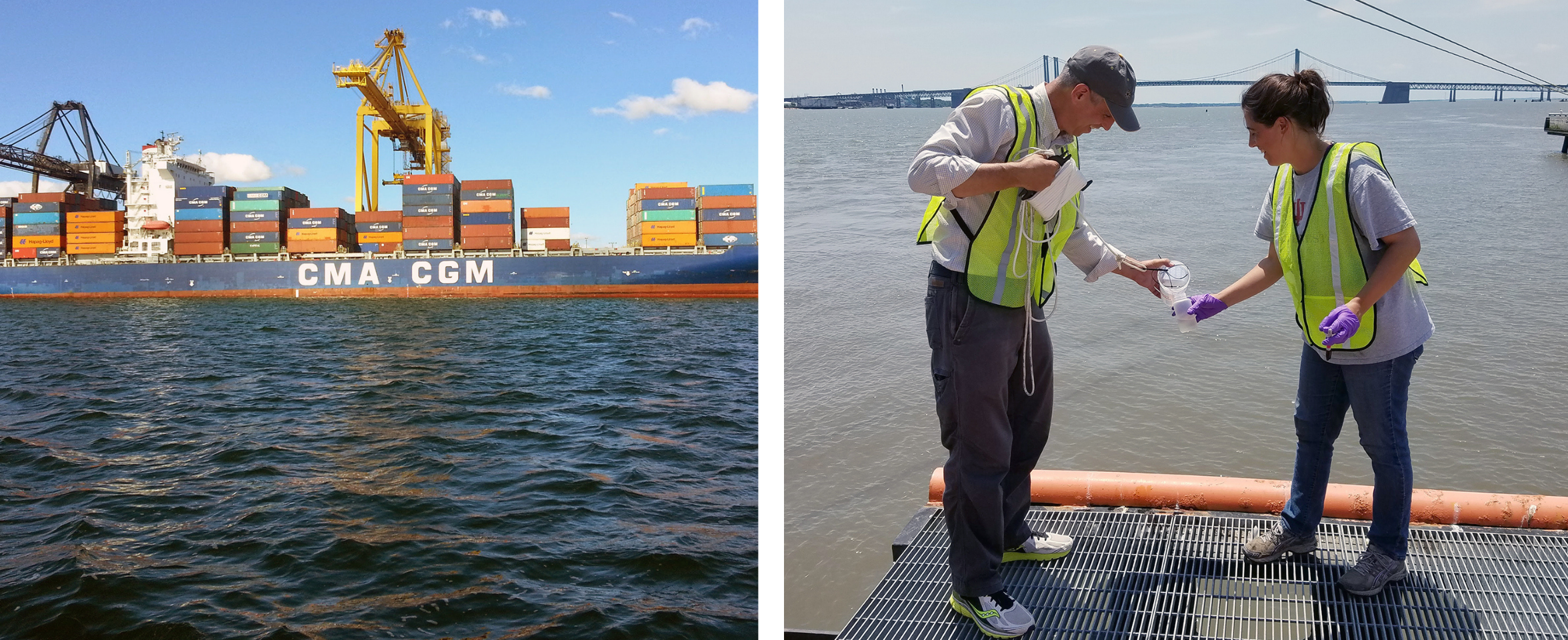
In 1991, a cholera epidemic broke out in Peru and quickly spread through Latin America. The microscopic cholera bacteria (Vibrio cholerae) arrived in Gulf ports a year later. The Food and Drug Administration (FDA) determined it came from ballast water from ships arriving from South American ports.
To prevent further such invasions, the International Maritime Organization (IMO) adopted the “International Convention for the Control and Management of Ship’s Ballast Water and Sediments” in 2004. The convention introduced ballast water management standards for all international maritime traffic, including strict discharge limits. Still, it took another 13 years to ratify in 30 countries representing 35% of the gross tonnage of the world’s merchant shipping fleet.
Grey’s work has centered on developing global port surveillance strategies to monitor biodiversity, model invasion risks, and track Non-Indigenous Species (NIS) transferred through ballast water (origin water with species caught in ship ballast tanks and discharged in port waters) and hull biofouling (organisms attaching to the ship’s underwater surface).
Many of the most infamous invasive marine species carried by ships from one side of the world to the other have devastated commercial fisheries, decimated shellfish populations, and triggered public health crises. Examples include the Comb Jelly (Mnemiopsis leidyi), the European green crab (Carcinus maenas), and Asian kelp (Undaria pinnatifida).
Transported from coastal waters in the Americas to the Black Sea in the 1980s, the comb jelly crashed commercial anchovy fisheries and continues to spread to the Mediterranean and Baltic Seas. The European green crab (Carcinus maenas)—an aggressive predator that decimates shellfish populations—reached the coasts of North and South America, South Africa, and Australia. The Asian kelp, native to East Asia, traveled far and wide, smothering native seagrasses in places including New Zealand, Argentina, and the US West Coast.
“We needed a standard survey to compare data sets across all these ports around the world,” she explains.
“There’s no way to do that with people going out with nets or trawls or any of the traditional ways because different countries have different capacities to carry out surveys,” recounts Grey. “Never mind that ports are difficult to access because of security concerns and how busy they are.”
In one of her first collaborative research papers, Grey and other researchers used eDNA metabarcoding surveys across international ports in Chicago (U.S.), Churchill (Canada), Singapore, and Adelaide (Australia), establishing standard eDNA methods for detecting both native biodiversity and unrecorded NIS.
Grey admits that, in general, eDNA matches well with the species’ range known from other survey methods, such as visual inspections.
“eDNA is reliable in that sense—we’re not getting crazy results,” admits Grey, “we’re getting more or less what we would expect, reaffirming what we know.”
Nonetheless, Grey’s samples and datasets from various coastal regions, including international ports and West Coast marine and estuary monitoring sites, have detected DNA from unrecorded, introduced non-native species.
“We have found DNA from a copepod in Oregon, and from an ascidian—a sea squirt—in California that people didn’t know about,” she says.
In tracking species movement near major maritime trade routes, Grey’s team also confirmed that a copepod known to be near Singapore had likely taken residence in the world’s leading global shipping hub. “We were able to say, ‘Yeah, that’s probably in Singapore now.’”
Dr. Erin Grey’s work aligns with the aims of BRIDGE (Bioinvasive Research Integration across Dynamic Global Ecosystems), another MBON-supported network that seeks to understand the patterns, drivers, and impacts of marine bioinvasions globally. Its research priorities focus on mapping invasion extent at scale, understanding invasion resistance and global invasion dynamics, and estimating invasion patterns using vector analysis.
In other studies that couple computable trade models with 2030 projected climate algorithms, Grey has identified high-risk regions for Arctic shipping and climate-driven spread, with the United States, China, and Japan facing the highest risk of increased reciprocal NIS bio-invasions due to high trading volumes and climate similarities.
In some of her most recent work and using satellite data from the automated tracking Automatic Identification System (AIS), which is used globally by commercial ships and vessel traffic authorities, Grey’s research showed that Ultra Large Container Vessels (ULCVs) spent significantly longer times in ports compared to smaller vessels, increasing the possibilities for the release of organisms from ballast water and for biofouling accumulation.
“My work shows that our models predicting how these species spread are actually working—in the sense that they accurately predict which ports share a lot of these non-native species,” she explains.
Grey adds that if you can’t prevent an introduction, early detection—before a population gets out of control—is probably your only hope of stopping it.
Grey’s work combines eDNA metabarcoding, computational network science—using Higher-Order Networks (HON) to track sequential vessel histories—and macro-economic policy. By linking molecular monitoring to global trade models, her research helps resource managers and global entities such as the International Maritime Organization (IMO) predict, detect, and mitigate the spread of marine invasive species.
This work was supported by the U.S. Marine Biodiversity Observation Network (MBON) co-organized by NOAA, NASA, BOEM, and ONR through the National Oceanographic Partnership Program (NOPP).
Related news
Fish and Ships: Standardizing Marine eDNA Surveillance
Standardization across the eDNA metabarcoding workflow—from field sampling to laboratory sequencing and bioinformatics—is rapidly transforming marine observation.

Meet the Scientist Turning Ocean DNA Into Open Data
Meet Dr. Luke Thompson, the NOAA AOML scientist building open tools that turn ocean eDNA sequences into data anyone can search and use.

SECOORA Receives $25,000 Grant from the Curtis & Edith Munson Foundation to Support South Florida Monitoring
New funding will help sustain coastal monitoring and provide people with the data needed to address challenges facing South Florida’s marine ecosystems.