

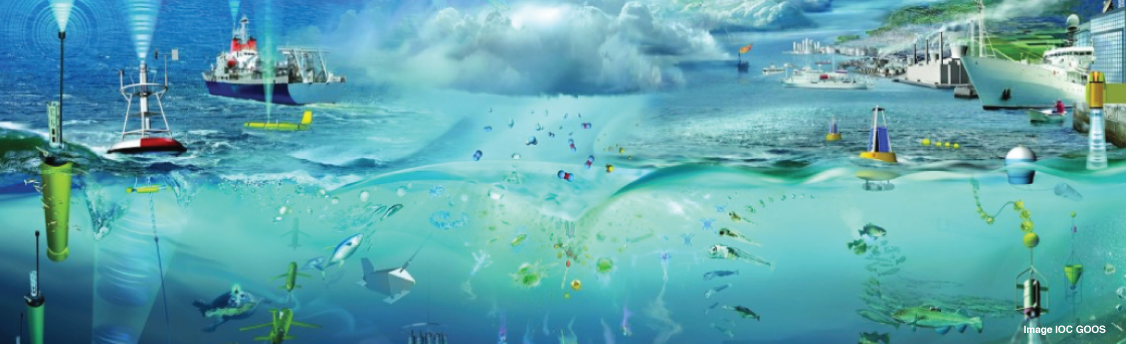
S.1425 – Coordinated Ocean Monitoring and Research Act passed by unanimous consent in January.
Reauthorization of the Integrated Coastal and Ocean Observation System (ICOOS) Act of 2009 was passed by unanimous consent in the Senate. The bill, S.1425 Coordinated Ocean Monitoring and Research Act, is a straightforward reauthorization of the Integrated Ocean Observing System (IOOS) program and re-initiates the ICOOS Act of 2009.
Reauthorization of this Act ensures uninterrupted collection and dissemination of ocean data and information.
Prior to the ICOOS Act of 2009, there was not a coordinated approach to a coastal ocean observing system. Coastal data collected Federal, state and local agencies, researchers and citizen groups did not have a standard format and the data was largely inaccessible by others. The ICOOS Act establishes a coordinated federal-regional program to integrate and share existing data, fills critical gaps in ocean observations, and produces information that is accessible to a range of users from mariners to fishermen to emergency managers and scientists.
In S.1425 there is language that addresses Regional Associations, IOOS, and NOAA’s Ocean Acidification Program. The language also includes a vulnerability and economic assessment on Ocean Acidification; thereby enhancing the already strong partnership that exists between IOOS and NOAA’s Ocean Acidification Program. Working together, the two programs are filling gaps in observations and working with industry partners to mitigate impacts. Additionally, regional networks are bringing together researchers and industry to assess local impact of ocean acidification and to identify priorities for moving forward.
Reauthorization ensures the continuation of the innovative partnership between Federal and non-Federal regional partners that make up U.S. IOOS.
Related news

Meet the new 2026 SECOORA Board Members
SECOORA welcomes three new members to its Board of Directors, effective July 1, 2026 - bringing fresh expertise in marine science, coastal geomorphology, and ecosystem restoration to guide our work across the Southeast.
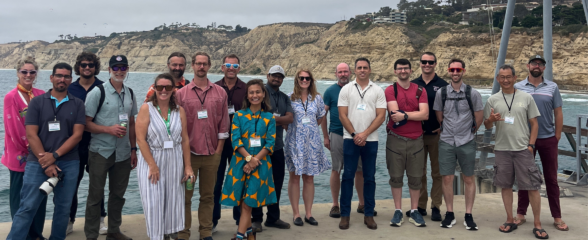
SECOORA Co-Hosts the 2026 WebCOOS Workshop In Person in La Jolla, CA
The 2026 WebCOOS Workshop convened in person on July 21-22, 2026 in La Jolla, CA. 45 attendees representing all 11 IOOS Regional Associations and national partners joined this collaborative workshop to discuss webcam-derived coastal products, stakeholder needs, and the network's transition into its next phase under IRA T2.

SET Webinar Series: Exploring Coastal Change: Digital Coast Resources
Join us on August 28, 2026, from 1:00 - 2:00 PM for the SECOORA SET Webinar Series, where we will explore coastal change using NOAA's Digital Coast resources. This webinar will bring together SET Community of Practice members and partners to learn how geospatial data and tools can support SET monitoring and place site-level observations within a broader landscape context.