

SECOORA is honored to announce the 2021 Vembu Subramanian Ocean Scholars – Lela Schlenker, East Carolina University, and Caroline Maria Tribble, University of Charleston. The annual award provides travel support to students to present their research at a meeting or conference.
Lela Schlenker, East Carolina University
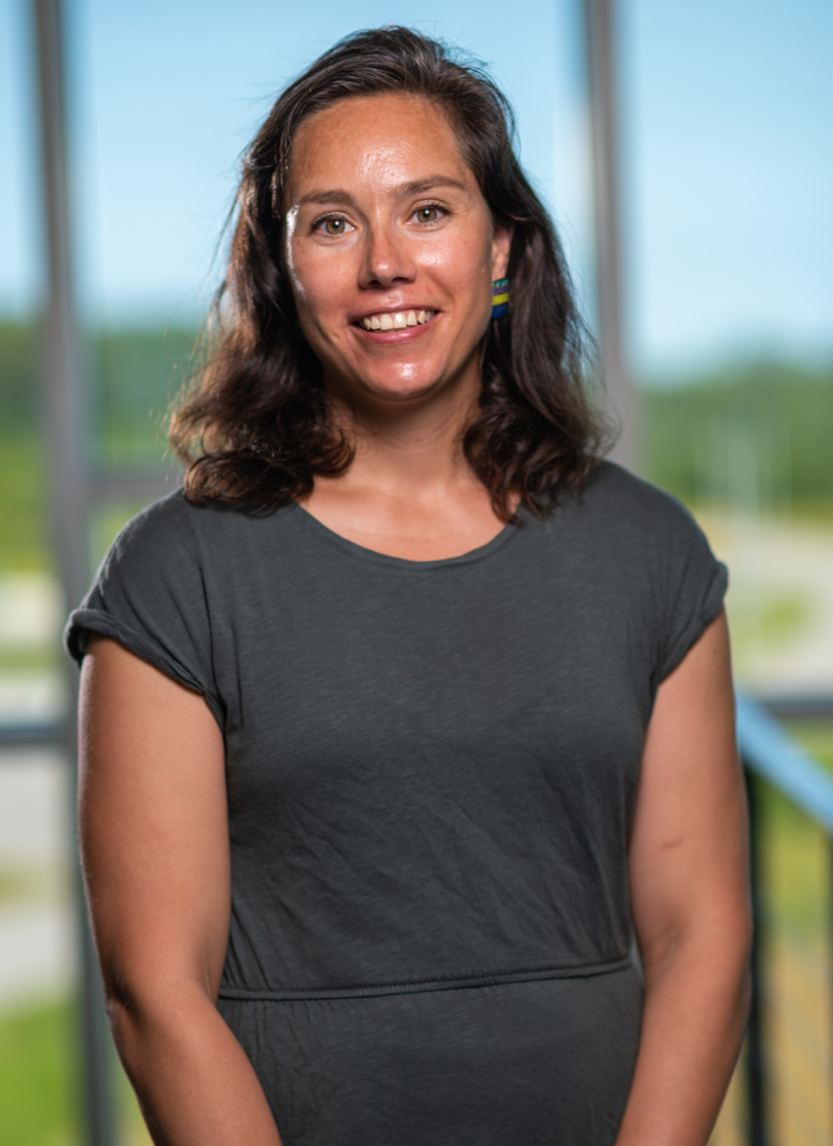
East Carolina University
“It is an honor to be awarded with the Vembu Subramanian Ocean Scholars Award. As an early career researcher, this critical support will allow me to communicate my research examining the impacts of climate on the North Carolina shrimp fishery, network with other researchers, and foster interdisciplinary collaborations. I am thrilled to join the other excellent scientists who have received this award in continuing Vembu’s mission of kindness, mentorship, and community in scientific research.”
The Vembu Subramanian scholarship will support Lela Schlenker’s participation at the 151st American Fisheries Society annual meeting. The meeting will take place in Baltimore, MD, November 6-10, 2021.
Lela will present her research on the effects of climate change and environmental variability on white (Litopenaeus setiferus), brown (Farfantepenaeus aztecus), and pink (F. duorarum) penaeid shrimp populations in North Carolina. Her study examines environmental drivers associated with shrimp recruitment, abundance, and population-level movements using numerical models. The research combines a 33-year dataset of shrimp catches from North Carolina trawl surveys in Pamlico Sound with environmental data from offshore buoys, stream gauges, and the North Atlantic Oscillation index.
These models will be used to predict how future environmental changes may impact North Carolina shrimp populations and will aid fisheries managers in determining climate-adaptive management strategies.
Presenting at the American Fisheries Society annual meeting allows Lela, an early career scientist, to network with researchers, discuss emerging ideas in the field, and learn new techniques and methodologies.
Caroline Tribble, University of Charleston
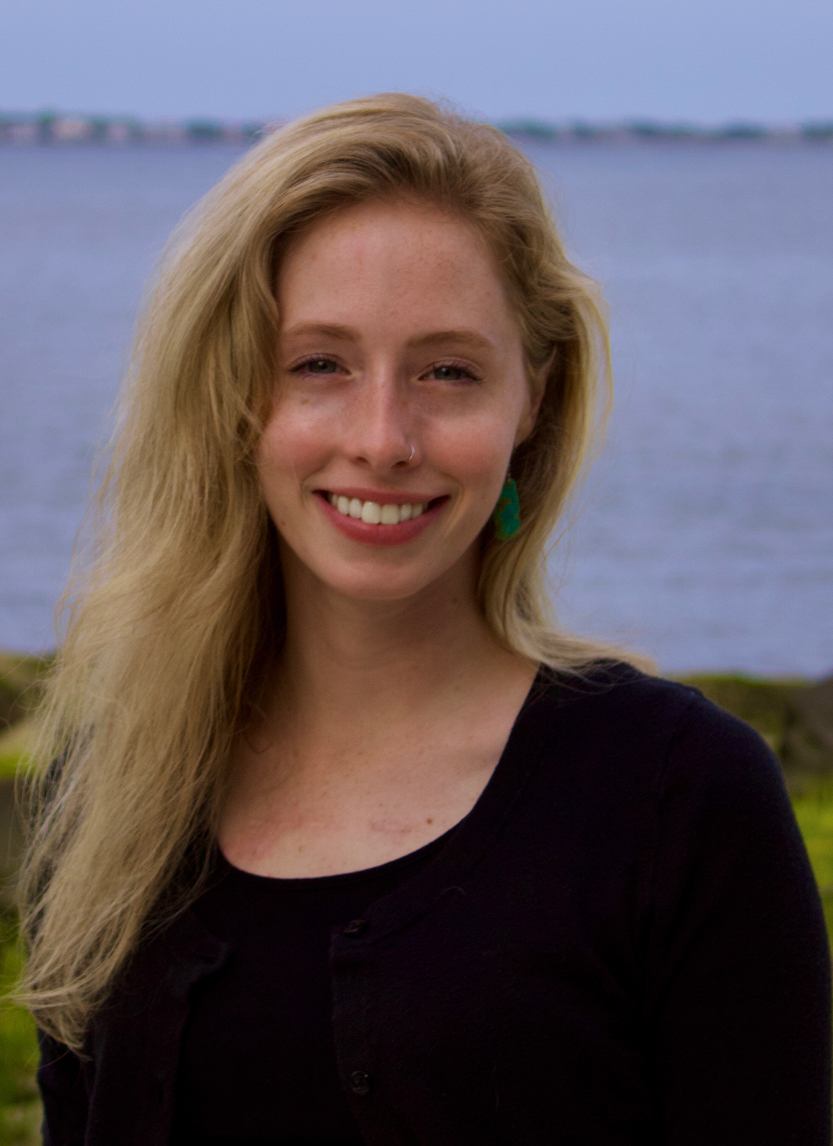
University of Charleston
“I am incredibly honored to have been selected for this award. Thank you so much to my advisor Dr. Eric Montie and SECOORA for this opportunity to share my thesis work at a national conference!”
The Vembu Subramanian scholarship will support Caroline Tribble’s participation at the 24th Biennial Conference on the Biology of Marine Mammals. The conference will be hosted in West Palm Beach, Florida, December 13-17, 2021.
Caroline will present her research on the effects of noise pollution on common bottlenose dolphins (Tursiops truncatus) residing in Charleston Harbor, South Carolina. Caroline’s research analyzes spatial (e.g., dolphin location within the study area) and temporal (e.g., seasonality, tide cycle) data along with environmental data, prey abundance, and passive acoustic monitoring data ( e.g. dolphin vocalizations, vessel noise) from December 2017 to June 2019. Results provide insight on the factors that influence dolphin vocalization and distribution patterns within Charleston Harbor.
This research is important for understanding the effects of noise pollution on dolphins living in an estuarine ecosystem and may support future management implications.
Presenting a poster at the Conference on the Biology of Marine Mammals allows Caroline, a masters student, to gain experience presenting at a national conference and exposure to different areas of marine mammal research.
Related news
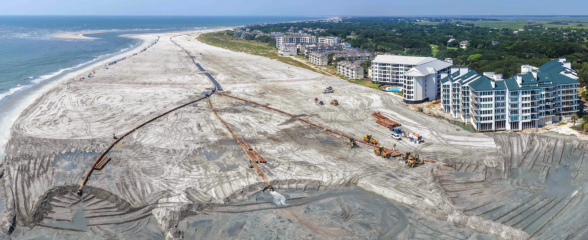
At the Water’s Edge: Lowcountry Coastlines in a Brave New World
A nor'easter's record storm tide. A stalled tropical storm. Two Lowcountry towns adapting to a new era of flooding, with SECOORA data in hand.

Above the High Tide: Water Level Sensors on the Front Line
SECOORA's Southeast Water Level Network has installed 100+ sensors across the Carolinas, Georgia, and Florida, giving communities real-time flood data.
SECOORA is Hiring a Grants Manager
SECOORA is hiring a Grants Manager to lead grant and subaward management across a four-state coastal ocean observing network. Based in the Southeast US. Apply now.