

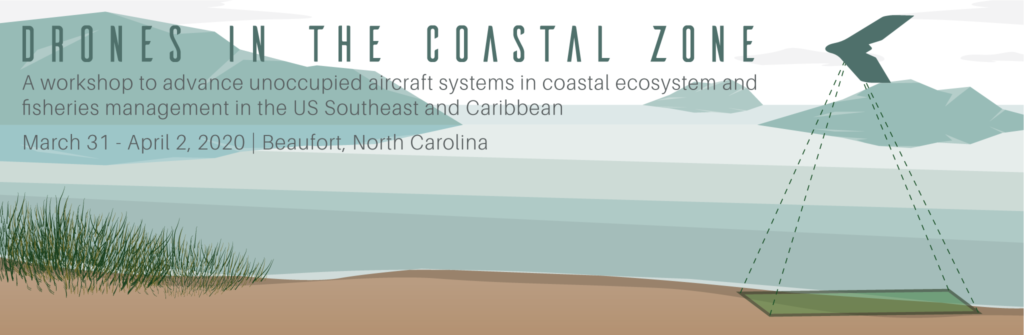
Update, July 1, 2020: Due to the uncertainty of traveling and hosting gatherings of over 100 people in October 2020, the workshop planning team has made the very difficult decision to cancel the Drones in the Coastal Zone workshop. Cancelling the workshop allows the planning team to start fresh and rethink a new format that permits for virtual and in-person participation. A few ideas discussed include a webinar series in fall 2020, online activities/ trainings, and the potential for an “air show” in 2021 (limited capacity workshops in different states). Click here for the workshop website.
Please save the date for a US Southeast and Caribbean regional workshop on applications of drones in coastal ecosystem management to be held March 31 – April 2, 2020 in Beaufort, North Carolina jointly hosted by NOAA at the Beaufort Laboratory and Duke University Marine Robotics and Remote Sensing Lab.
The workshop will cover aspects of drone technology including governmental policy and procedures, mission planning and data management, and demonstrations on emerging drone technologies, imaging and data analysis and visualization techniques. The workshop will also provide a venue to share experiences and network with experts and colleagues around the Southeast (North Carolina to Florida) and US Caribbean.
Related news
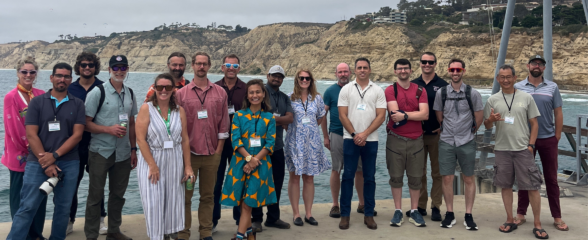
SECOORA Co-Hosts the 2026 WebCOOS Workshop In Person in La Jolla, CA
The 2026 WebCOOS Workshop convened in person on July 21-22, 2026 in La Jolla, CA. 45 attendees representing all 11 IOOS Regional Associations and national partners joined this collaborative workshop to discuss webcam-derived coastal products, stakeholder needs, and the network's transition into its next phase under IRA T2.

SET Webinar Series: Exploring Coastal Change: Digital Coast Resources
Join us on August 28, 2026, from 1:00 - 2:00 PM for the SECOORA SET Webinar Series, where we will explore coastal change using NOAA's Digital Coast resources. This webinar will bring together SET Community of Practice members and partners to learn how geospatial data and tools can support SET monitoring and place site-level observations within a broader landscape context.
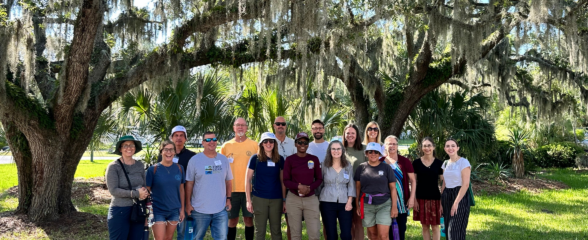
SECOORA Hosts the Second Surface Elevation Table (SET) Community of Practice Workshop In Person in Charleston
The 2nd SECOORA SET Workshop convened in person on July 16-17, 2026 in Charleston, SC. More than 30 Community of Practice members and stakeholders joined this collaborative workshop to discuss SET monitoring, coastal resilience, and data-driven decision making in the Southeast.