

Please join us in welcoming Tracy Buchman and Barbara Bischof to the SECOORA team.
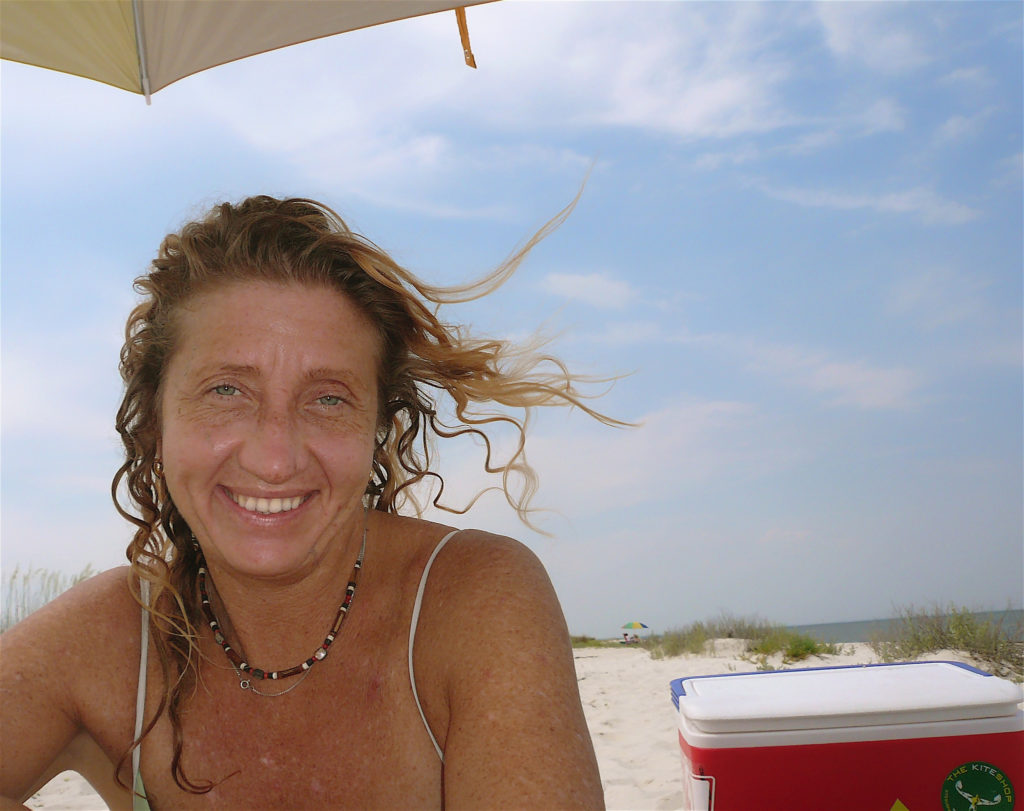
Barbara Bischof
Email: barbara@secooraorgpact.wpengine.com
Barbara Bischof holds a joint position as the new Director of the Southeast and Caribbean Disaster Recovery Partnership (SCDRP), a SECOORA affiliated program, and as SECOORA’s Coordinator.
Barbara’s will be dedicating half her time directing the growth of the SCDRP partnership and fostering its newly augmented geographic reach into the Caribbean region. She will work to strengthen its overall goal of expanding regional collaborative recovery and resilience activities as they align with national priorities. Within SECOORA, she will support our expanding organizational and outreach work through content development, meeting planning and related duties.
Barbara brings over 10 years combined experience in developing and managing collaborative academic projects and leading partnership program expansion, most recently as program manager of the National Oceanographic Partnership Program. Earning her Masters from the University of Miami in marine geology and geophysics, she has over 10 years of research experience on marine and coastal issues in the Southeast and insular Caribbean related to hurricanes, coastal processes, and dynamics of coastal fringe wetlands, beaches, and coral reefs. Along with her doctorate in geographies of marine and coastal systems from Florida State University, Barbara also has extensive training in emergency management and experience in both offshore and coastal disaster response and recovery operations and planning. She was part of the National Resource Damage Assessment science crew in the Gulf of Mexico as part of the Deepwater Horizon disaster recovery efforts and has helped recovery operations following major hurricanes in Florida. She continues to serve as an editorial board member for the Journal of Ocean and Coastal Management, specializing in interdisciplinary studies, resilience, and marine environmental geographies.
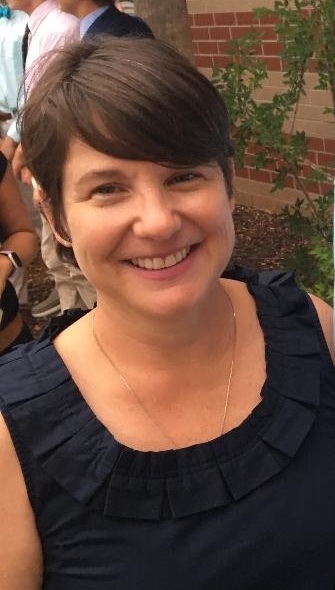
Tracy Buchman
Email: tracy@secooraorgpact.wpengine.com
Tracy Buchman is the lead account for SECOORA and will also be providing administrative services. Having always lived near water, Tracy is very excited to be working for SECOORA and for the opportunity to support stewardship of our precious coastal ecosystems.
Tracy is a CPA with over 20 years of accounting experience both in public accounting and as controller at a private K-12 school. Tracy’s experience is focused in nonprofit and governmental organizations. She grew up in the St. Petersburg/Clearwater, Florida area and obtained her accounting degree from the University of South Florida’s St. Petersburg campus. She also has a business degree from Florida State University. Tracy and her husband Mark live in Mount Pleasant, South Carolina with their two teenage children who are very involved with sports.
Related news

Dave Wells Joins SECOORA as Ocean Observing Systems Team Lead
SECOORA welcomes Dave Wells as Ocean Observing Systems Team Lead where he will oversee SECOORA's coastal observing system assets and data management.
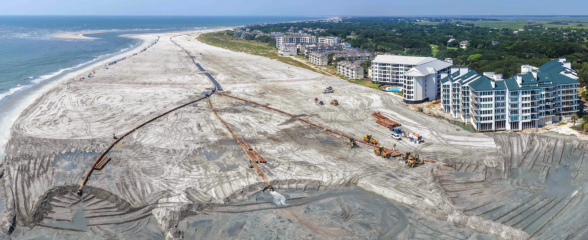
At the Water’s Edge: Lowcountry Coastlines in a Brave New World
A nor'easter's record storm tide. A stalled tropical storm. Two Lowcountry towns adapting to a new era of flooding, with SECOORA data in hand.

Above the High Tide: Water Level Sensors on the Front Line
SECOORA's Southeast Water Level Network has installed 100+ sensors across the Carolinas, Georgia, and Florida, giving communities real-time flood data.