

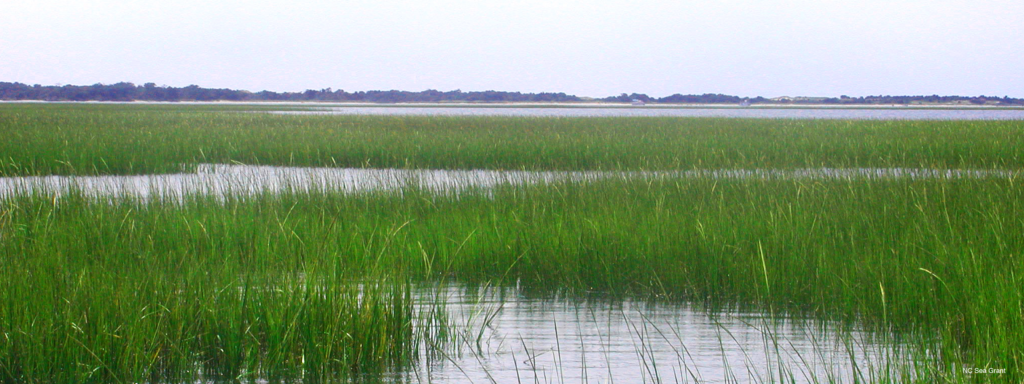
SECOORA is excited to announce that Dr. Eric Montie, Associate Professor of Biology at the University of South Carolina Beaufort, has received $30,000 to support his work in measuring sound in the marine environment. Dr. Montie’s proposal was selected for funding through the 2019 SECOORA mini-proposal opportunity.
Dr. Montie and his team from USC Beaufort work to understand how sounds in the marine environment affect marine species. Soundscape ecology studies the biological, geophysical, and anthropogenic sounds that are produced in or affect the marine environment. Dr. Montie’s project, Integrating Biological Sound and Noise Measurements into Regional Coastal Ocean Observing Systems (RCOOS) in Estuaries of South Carolina, will expand passive acoustic data collection in the May River, Charleston Harbor, and Winyah Bay, South Carolina.
University of South Carolina Beaufort
“Listening to soundscapes has the potential to provide insight into the response and resiliency of individual species and their behaviors in rapidly-changing environmental parameters, climate variability, ocean acidification, and human-generated noise,” said Montie, “so our work is a natural fit with SECOORA’s mission.”
With SECOORA’s support, Montie and his team will be able to service and continue operating the passive acoustic array systems in the May River and Charleston Harbor. The team will deploy more acoustic receivers within the North-Inlet Winyah Bay National Estuarine Research Reserve (NERR). This passive acoustic receiver array will allow the project team to compare the natural biological soundscape to levels of human-generated noise in estuaries and evaluate how specific human activities may affect these estuaries.
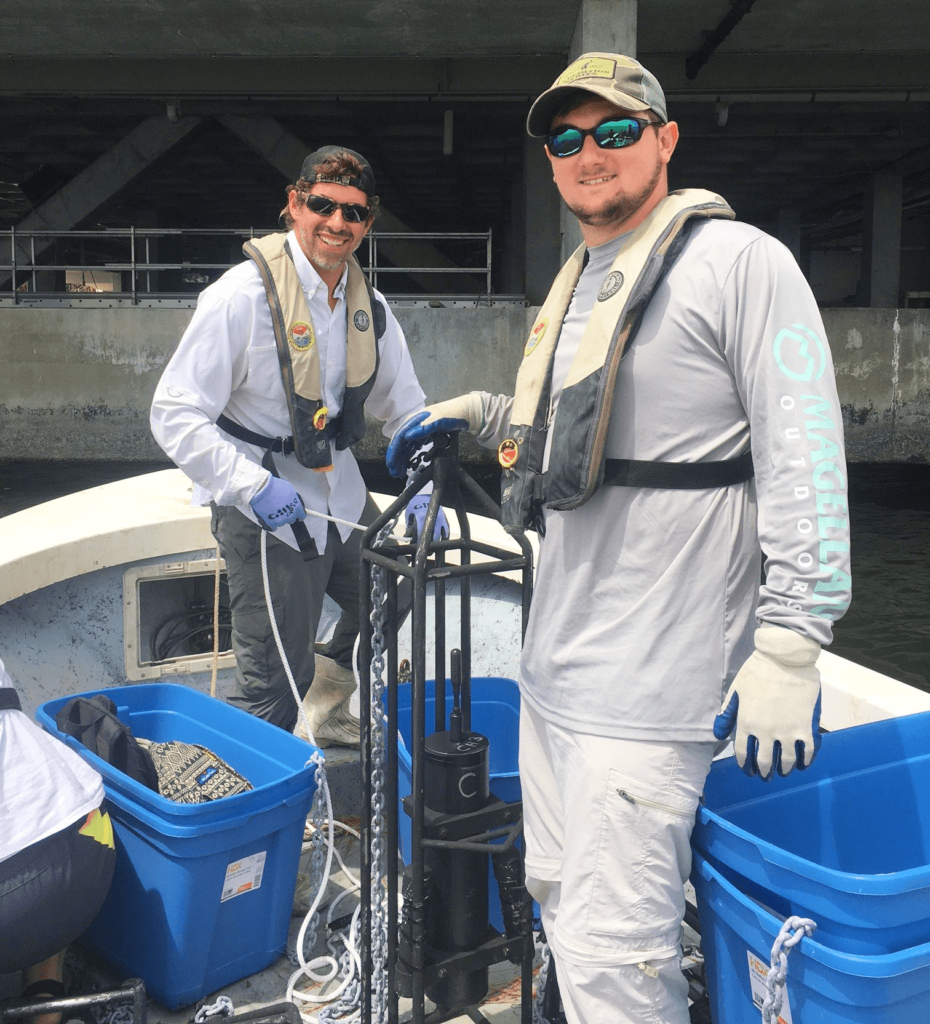
Dr. Montie and his team will also seek ways to correlate their bioacoustics data with ongoing fisheries monitoring studies conducted by the South Carolina Department of Natural Resources in Lowcountry estuaries. “Expanding beyond the May River is allowing us to correlate our soundscape data with other long-term monitoring studies, which is huge!” says Montie.
Montie and his team began work in 2013 to better understand the sounds fish make in courtship. That work has now evolved into monitoring the spatial dynamics and temporal cycles of noise-making creatures in South Carolina estuaries to better understand spatial relationships, species populations, and estuarine health.
By analyzing recordings made hourly with a passive acoustic array, Dr. Montie will be able to reconstruct the complex ecology and biodiversity of the marsh ecosystem.
Through tracking spatial and temporal variations in sounds, (such as snapping shrimp, soniferous fish, alligators, marine mammals, and noise from human activities) Montie and his team can document the natural rhythms of sound that identify key behaviors that include spawning, socializing, and foraging of estuarine organisms, and from these patterns, develop baselines from which to measure change.
Long term acoustic data collection can provide insight into how the acoustic behavior of estuarine species may respond to larger patterns of global change such as acidification, warming ocean temperatures, and sea-level changes.
Related news

Dave Wells Joins SECOORA as Ocean Observing Systems Team Lead
SECOORA welcomes Dave Wells as Ocean Observing Systems Team Lead where he will oversee SECOORA's coastal observing system assets and data management.
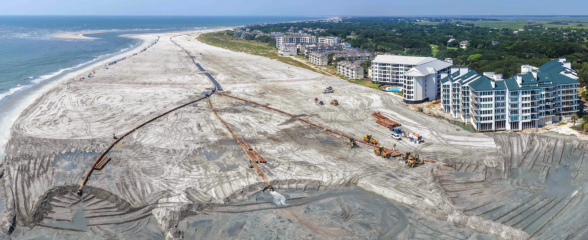
At the Water’s Edge: Lowcountry Coastlines in a Brave New World
A nor'easter's record storm tide. A stalled tropical storm. Two Lowcountry towns adapting to a new era of flooding, with SECOORA data in hand.

Above the High Tide: Water Level Sensors on the Front Line
SECOORA's Southeast Water Level Network has installed 100+ sensors across the Carolinas, Georgia, and Florida, giving communities real-time flood data.