

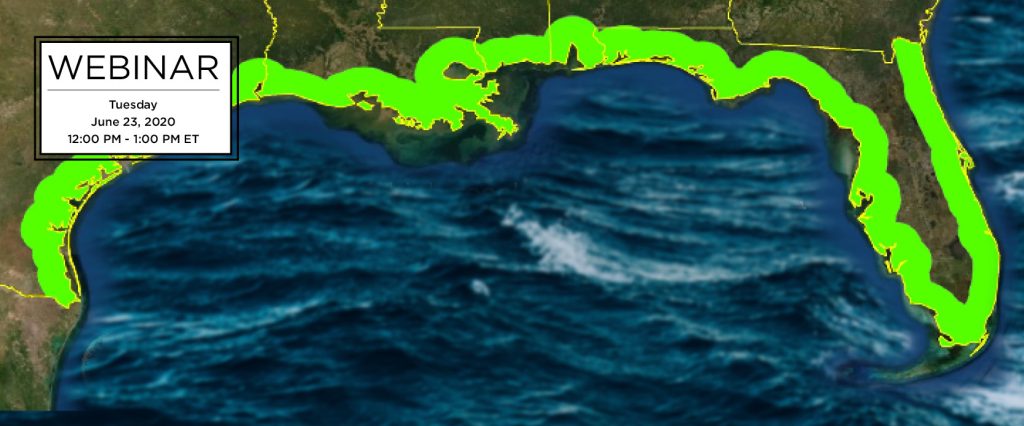
Join SECOORA on June 23 at Noon ET for a webinar led by Dr. Matt McCarthy from Oak Ridge National Laboratory. Dr. McCarthy will present on a fully automated method used to develop 3-D high-resolution land cover maps for the entire U.S. Gulf of Mexico coastline. Multiple products, including wetland maps and bathymetry, are output from this process and mosaicked for end-user applications.
Date: Tuesday, June 23, 2020
Time: 12:00 – 1:00 PM ET
Click here to reserve your spot!
Download the flyer and please share.
Abstract
Very high-resolution (i.e. < 5-meter pixel) satellite imagery has proven effective to map upland, wetland, and benthic ecosystems, but challenges in data acquisition and storage, algorithm training, and image processing have prevented efficient, large-scale and time-series mapping of these data until recently. Here I will describe the Spectral and Object-based Automated Land-cover Classification of High-resolution Imagery protocol that we developed and applied to 20,000 WorldView images run on supercomputers to map land cover across the entire US Gulf of Mexico coastline. The method is fully automated and completed the mapping 200 times faster than existing methods. Multiple products, including wetland maps and bathymetry, are output and mosaicked for end-user applications.
About the Presenter
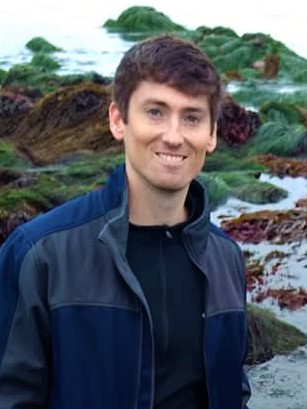
Dr. Matt McCarthy is a Research Scientist at Oak Ridge National Laboratory, home of the world’s fastest supercomputer, and earned his PhD working in remote sensing of coastal environments at the University of South Florida. He grew up in Gainesville, Florida fishing and boating on both Atlantic and Gulf coasts, and now conducts research using advanced satellite image data to map and monitor those coasts for changes caused by a variety of drivers.
Related news
SECOORA is Hiring a Grants Manager
SECOORA is hiring a Grants Manager to lead grant and subaward management across a four-state coastal ocean observing network. Based in the Southeast US. Apply now.

Meet the new 2026 SECOORA Board Members
SECOORA welcomes three new members to its Board of Directors, effective July 1, 2026 - bringing fresh expertise in marine science, coastal geomorphology, and ecosystem restoration to guide our work across the Southeast.
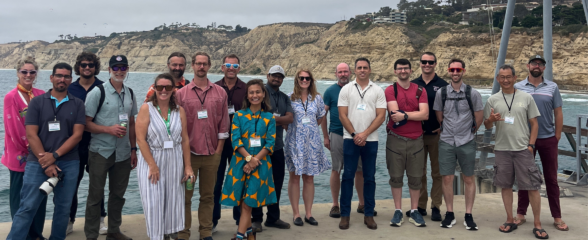
SECOORA Co-Hosts the 2026 WebCOOS Workshop In Person in La Jolla, CA
The 2026 WebCOOS Workshop convened in person on July 21-22, 2026 in La Jolla, CA. 45 attendees representing all 11 IOOS Regional Associations and national partners joined this collaborative workshop to discuss webcam-derived coastal products, stakeholder needs, and the network's transition into its next phase under IRA T2.