

The SECOORA Coastal Observing In Your Community Webinar Series will be hosting Dr. Phil Bresnahan from the University of North Carolina Wilmington on Thursday, February 22nd at 12 PM ET. He will lead a discussion on developing low-cost and open-source technologies for smart coastal communities. Click the link below to register for this webinar.
Read below for the webinar abstract and to learn more about Dr. Bresnahan.
Abstract
This talk will focus on the COAST Lab’s work on the development and distribution of low-cost sensors for water level and water quality, the operation and analysis of water quality data from the SeaHawk/HawkEye CubeSat satellite mission, and a sensor-equipped surfboard fin for coastal research named Smartfin.
About the Presenter
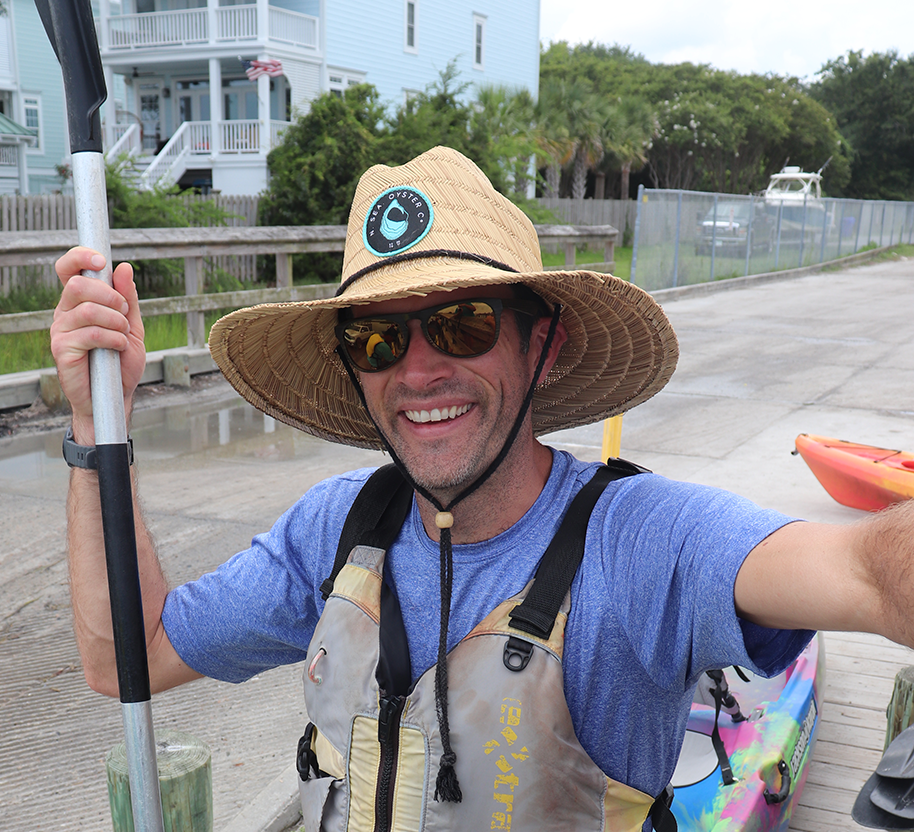
Dr. Phil Bresnahan is an Assistant Professor in the Department of Earth and Ocean Sciences at the University of North Carolina Wilmington and member of the Center for Marine Science. He also serves on SECOORA’s Southeast Ocean and Coastal Acidification Network’s (SOCAN’s) Science Working Group. His group, the Coastal Ocean Applied Science and Technology Lab (or COAST Lab) seeks to contribute to Smart Coasts by (1) inventing and deploying cutting-edge connected sensors and platforms, (2) engaging with coastal communities in the study and real-time dissemination of critical information, and (3) working toward improved ocean, climate, and coastal literacy for students of all ages. Our research is targeted toward inventing and applying novel sensing techniques and analytical approaches in the (mostly coastal) ocean in order to investigate natural and human-caused phenomena, especially sea level rise/flooding, ocean acidification, deoxygenation, and eutrophication.
Related news
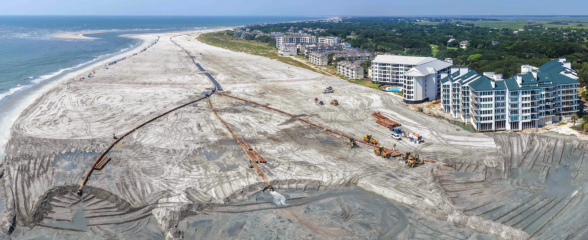
At the Water’s Edge: Lowcountry Coastlines in a Brave New World
A nor'easter's record storm tide. A stalled tropical storm. Two Lowcountry towns adapting to a new era of flooding, with SECOORA data in hand.

Above the High Tide: Water Level Sensors on the Front Line
SECOORA's Southeast Water Level Network has installed 100+ sensors across the Carolinas, Georgia, and Florida, giving communities real-time flood data.
SECOORA is Hiring a Grants Manager
SECOORA is hiring a Grants Manager to lead grant and subaward management across a four-state coastal ocean observing network. Based in the Southeast US. Apply now.