

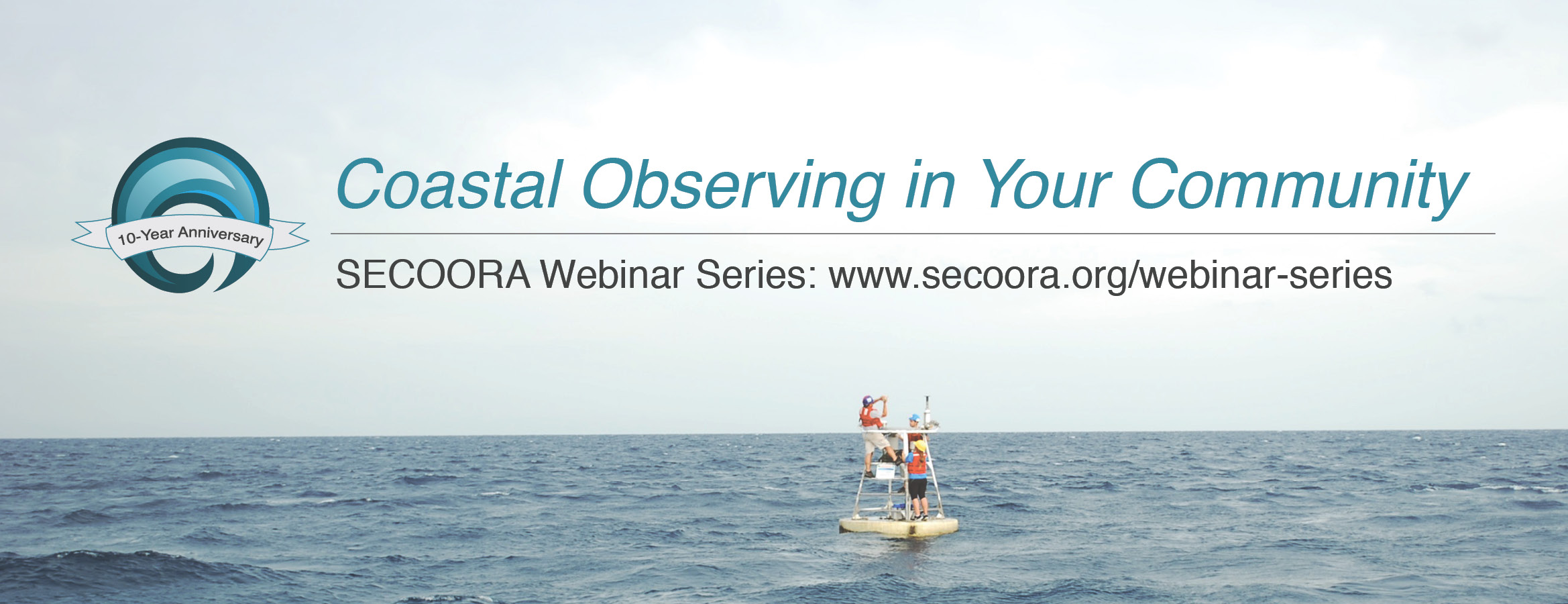
Join us for a webinar on Wednesday September 6, 12 PM ET. Dr. Rouying, North Carolina State University, will report on efforts in evaluating the performance of the coupled modeling system.
Reserve your spot now! Download Flyer
Webinar Information
Title: Predicting Marine Physical-Biogeochemical Variability in the Gulf of Mexico and Southeastern U.S. Shelf Seas
Date: Wednesday – September 6, 2017
Time: 12 – 1 PM ET
Presenter: Dr. Ruoying He, Distinguished Professor of North Carolina State University
An integrated marine environment prediction system is developed and used to investigate marine physical-biogeochemical variability in the Gulf of Mexico and southeastern U.S. shelf seas. Such variability stem from variations in the shelf circulation, boundary current dynamics, impacts of severe weather forcing, as well as growing population and associated land use practices on transport of carbon and nutrients within terrestrial systems and their delivery to the coastal ocean. We will report our efforts in evaluating the performance of the coupled modeling system via extensive model and data comparisons, as well as findings from a suite of case studies.
About the Presenter
 Dr. He is a Distinguished Professor of North Carolina State University and an Adjunct Scientist of Woods Hole Oceanographic Institution. His research expertise spans from coastal circulation dynamics, air-sea interaction, to biophysical interactions. As the director of the Ocean Observing and Modeling Group (OOMG), he conducts coastal ocean observations, remote sensing data analyses, and also leads the development of prediction models of ocean circulation, air-sea-wave interactions, physical-biogeochemical couplings, as well as data assimilation.
Related news

Reimagining the Deep: BioTrack and the Whitespotted Eagle Rays of Florida’s Indian River Lagoon
Join FAU researchers as they track endangered whitespotted eagle rays in Florida’s Indian River Lagoon using advanced BioTrack acoustic and video tags.
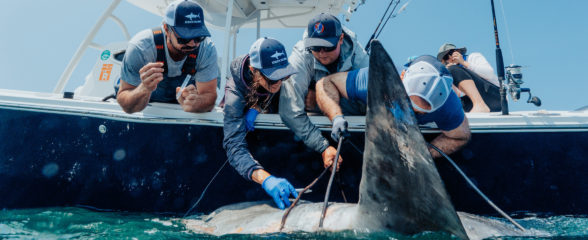
Reimagining the Deep: BioTrack’s Quest to Map Marine Biodiversity Hotspots
Discover how the BioTrack initiative uses advanced satellite and acoustic animal tracking to map marine biodiversity hotspots and protect endangered wildlife.
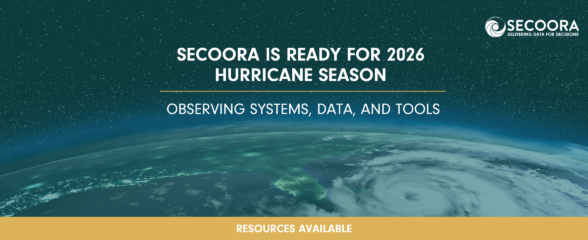
SECOORA Is Ready for the 2026 Hurricane Season
Hurricane season is here and SECOORA’s resources are available to help you stay informed. From real-time buoy data and live webcam feeds to ocean gliders and storm surge models, our network of observing systems is ready to support forecasters, emergency managers, researchers, and coastal communities throughout the Southeast.