

Integrating Data to Understand a Coastal Ocean Event
The Southeast Coastal Ocean Observing Regional Association (SECOORA) Data Challenge invites
undergraduate students, graduate students, and early career professionals to develop a project
that combines multiple Southeast datasets to understand a coastal and/or ocean
event or trend.
There are two $3,500 prizes available. Proposals are due Friday, October 6, 2023 via
egrants.secoora.org.
SECOORA is committed to building inclusive research, extension, communication, education and
outreach programs that serve people with unique backgrounds, circumstances, needs,
perspectives, and ways of thinking. We encourage applicants from all backgrounds to apply for
this competitive opportunity.
Overview
A coastal ocean observing system (COOS) is a combination of many components— from
hardware to humans — used to gather data and turn it into scientifically-sound products that
support human populations, coastal economies and a healthy, sustainable environment.
SECOORA is the COOS for North Carolina, South Carolina, Georgia, and Florida. A main goal of
SECOORA is to collect, discover, integrate and provide access to a variety of coastal ocean data –
biological, physical, and more – to meet the needs of stakeholders.
SECOORA is looking to our next generation of coastal and ocean scientists, managers, decision
makers, coders, and entrepreneurs to integrate COOS data to tell a meaningful story or to better
understand an environmental coastal ocean event (e.g., hurricanes, harmful algal blooms,
floods, dredging, etc.).
Eligibility
Category 1: Undergraduate Students
Applicants must 1) reside in and attend an academic institution in the United States, 2) have an advisor/mentor from the institution they attend, 3) be enrolled as an undergraduate student during the Fall 2023 semester, and 4) propose a project that incorporates at least one set of data downloaded through the SECOORA Data Portal or using SECOORA Data Services.
Category 2: Other
Applicants must 1) reside in the United States, 2) be a graduate student OR an early career professional (working less than five years from your most recent graduation date), 3) have an advisor/mentor, and 4) propose a project that incorporates at least one set of data downloaded through the SECOORA Data Portal or using SECOORA Data Services.
How to Apply
Each applicant or team must submit their proposal by 5:00 PM, Friday, October 6, 2023 through
egrants.secoora.org. All proposals will be evaluated based on the review criteria in the
announcement, and if chosen as the winning project, the successful applicant will have until
December 15, 2024 to complete the project. All winning projects will be featured on
secoora.org. Proposals can only be submitted in one category.
Questions
Questions regarding proposal submission may be submitted to communications@secoora.org.
Good-faith efforts will be made to answer as many questions as possible, but an answer is not
guaranteed for every question.
Related news
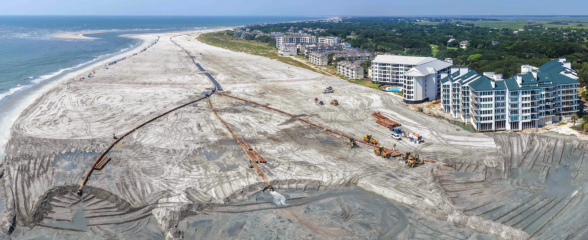
At the Water’s Edge: Lowcountry Coastlines in a Brave New World
A nor'easter's record storm tide. A stalled tropical storm. Two Lowcountry towns adapting to a new era of flooding, with SECOORA data in hand.

Above the High Tide: Water Level Sensors on the Front Line
SECOORA's Southeast Water Level Network has installed 100+ sensors across the Carolinas, Georgia, and Florida, giving communities real-time flood data.
SECOORA is Hiring a Grants Manager
SECOORA is hiring a Grants Manager to lead grant and subaward management across a four-state coastal ocean observing network. Based in the Southeast US. Apply now.