

Meet the Winners of the 2022 Vembu Subramanian Ocean Scholars Award
Congratulations to Mason Thackston, Florida Atlantic University, and Luis Sorinas Morales, USF College of Marine Science, for being our 2022 Scholars.
In remembrance of Vembu Subramanian – our friend, colleague and the SECOORA Data Manager – we established an award for the next generation of ocean experts to meet others in their field and present their work at meetings or conferences. The Vembu Subramanian Ocean Scholars Award gives the opportunity for undergraduate students, graduate students, and early career professionals to seek funding to facilitate their participation in their conference of choice.
Mason Thackston, Florida Atlantic University
Capturing Benthic Flux Es In Situ Via A Novel Autonomous Lander For Observing Harmful Algal Bloom Dynamics In Coastal Waters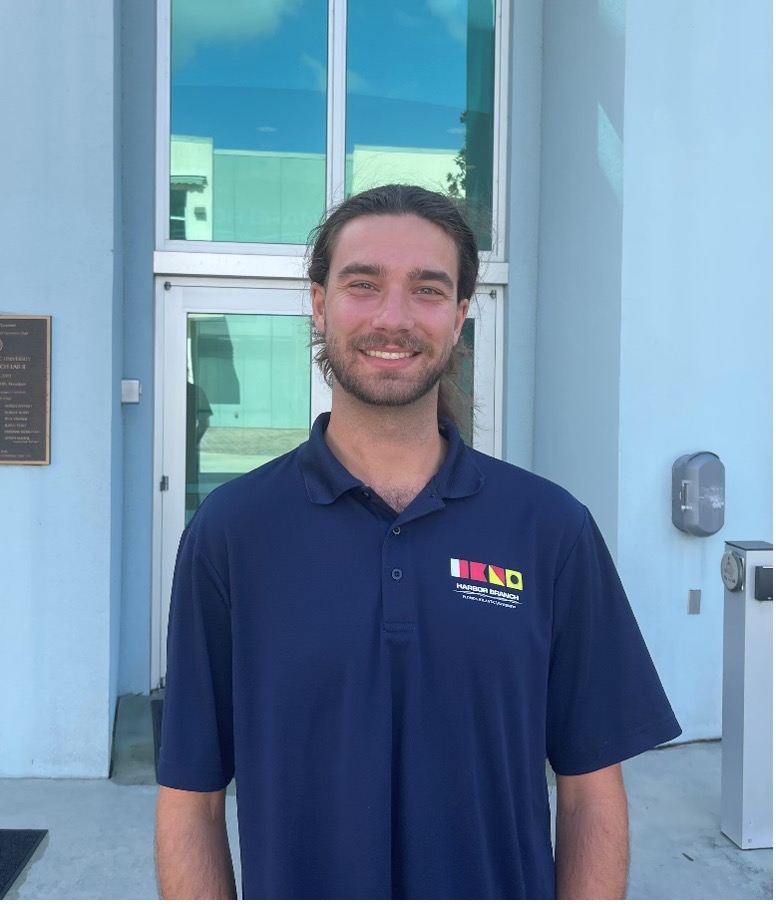
The goal of this project is to understand how sediment-derived nutrients may influence harmful algal blooms in Florida Bay using innovative technology capable of collecting high temporal resolution benthic flux data. This research investigates patterns of HAB dynamics in the context of their chemical ecology using data from existing water quality monitoring platforms and a custom-built autonomous benthic lander capable of conducting repeated, long-term, in situ measurements of sediment nutrient fluxes. Results will aid in the parameterization of predictive environmental models and guide water resource managers towards best practices by delivering key information about the drivers of HABs in coastal waters. Ultimately, we envision this technology as a critical component of modern coastal ocean observing programs, bolstering our understanding of marine ecosystem health and functioning.
“I am honored to have been chosen for the 2022 Vembu Subramanian Ocean Scholars Award. This will undoubtedly serve as a springboard for sharing my research with fellow ocean advocates, forming new connections, and networking with stakeholders. I would like to extend thanks to SECOORA and my advisor, Dr. Jordon Beckler, for this opportunity.”
Mason will be presenting his research at OCEANS Conference Gulf Coast , Mississippi in September.
Luis Sorinas Morales, USF College of Marine Science
Air Sea Heat Exchange and Stratification Seasonal Cycles on the West Florida Shelf Identified from Long – term Mooring Data
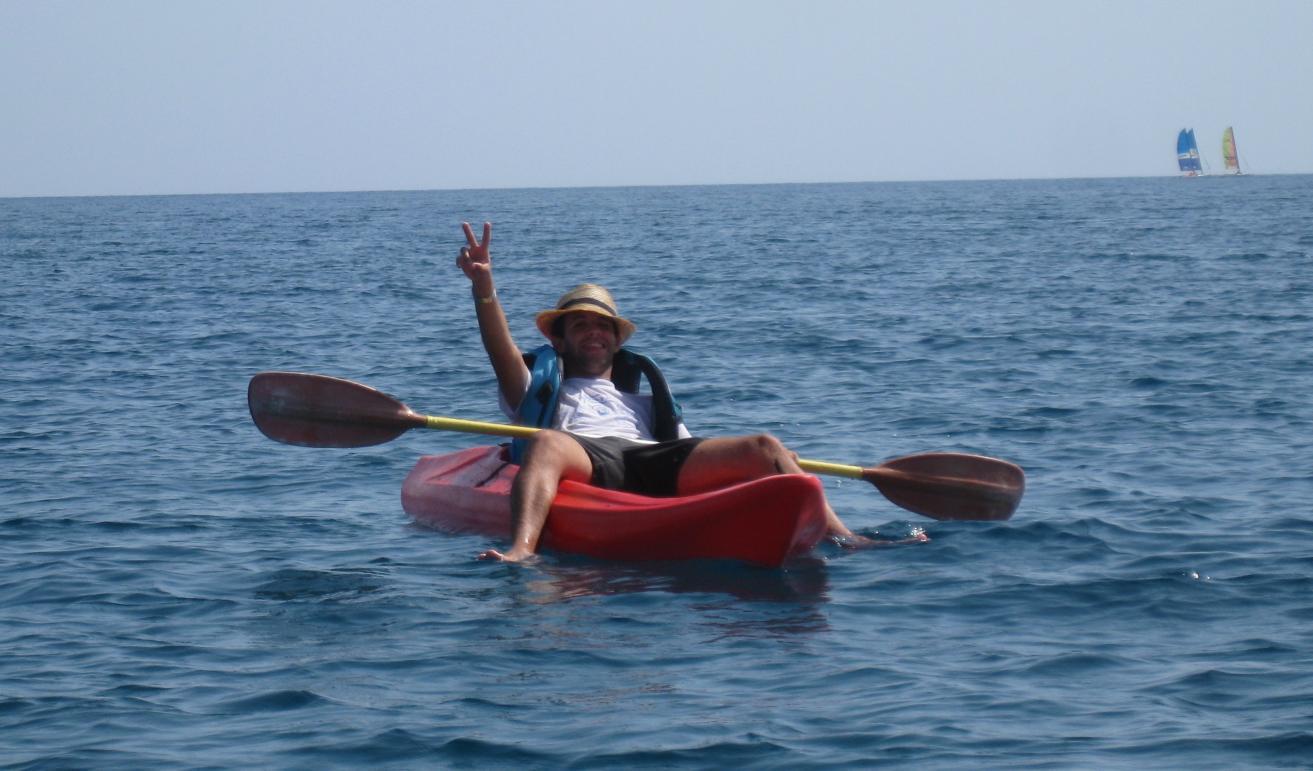
The researched studied seasonal cycles of heat fluxes between the ocean and atmosphere, seasonal cycles of temperature throughout the water column, and analyzed how annual heat fluxes cycle drives water temperature. The study uses 23 years of met/ocean data from two SECOORA-supported University of South Florida COMPS buoys on the West Florida Shelf. It explores the seasonal variation of air sea heat exchange and its influence in water temperature and stratification on the West Florida Shelf (WFS). Findings show heating from February to August, peaking in May, and cooling from September to January, most pronounced in October. Sea surface temperatures range from 18.42 to 30.37 °C at C10 and 20.14 to 30.26 °C at C12, lowest in February and highest in August. These variations correspond with net heat flux changes. The spring transition occurs in February when the net heat flux becomes positive and water temperature starts to gradually increase, while the fall transition occurs in August when the heat flux becomes negative, and temperature begins to drop. The water column shows stratification from March to September, peaking in June–July. Upwelling events shaped by Gulf of Mexico Loop Current interactions at the WFS “pressure point” near Dry Tortugas influence seasonal cycle stratification.
Luis will be presenting his research at American Geophysical Union (AGU) Fall 2022 meeting in San Francisco, California in December.
Related news
Claire McGrath Joins SECOORA as Program and Development Manager
SECOORA welcomes Claire McGrath as Program and Development Manager, supporting the Southeast & Caribbean Coastal Disaster Resilience Partnership and membership growth.

Spotlight: Mobilizing to Save Florida’s Coral Reefs
Learn how scientists are racing to save Florida's Coral Reef through coral rescue, gene banking, reef restoration, and innovative conservation efforts after disease and marine heatwaves devastated one of America's most important marine ecosystems.
From a Whale’s Song to an Ocean’s Symphony: How AI Decodes Underwater Sound
Explore how SECOORA-funded research is using AI and machine learning to decode ocean soundscapes, detect boat noise, and support coral reef restoration efforts.