

Improving the Safety of Beachgoers

Rip currents are powerful, channelized currents of fast-moving water nearshore. They are prevalent along the East, Gulf, and West coasts of the United States. NOAA’s National Ocean Service, in collaboration with National Weather Service and other stakeholders, is implementing a new Rip Current Forecast Model (RCFM) in the Weather Forecast Offices of Morehead City, North Carolina and Miami, Florida. Ocean data is needed to validate the RCFM model and expand the forecast area.
SECOORA is partnering with NOAA to collect wave observations and visual rip current observations for Emerald Isle, NC. In 2015, SECOORA will be funding a project to address these gaps and collect the absent data. SECOORA is in the process of reviewing proposals. Check back at a later date for more information.
"Strong rip currents are a significant hazard for beachgoers. Our partnership with SECOORA on this project to help validate our wave model and rip current predictions is a key step in improving our rip current forecasts." - Richard S. Bandy, Meteorologist-in-Charge, NWS, Weather Forecast Office Newport/Morehead City, NC
Rip current modeling is important to ensure the public can have a safe day to enjoy the beach.
Rip currents are powerful, channelized currents of fast-moving water nearshore. They are prevalent along the East, Gulf, and West coasts of the United States. NOAA’s National Ocean Service, in collaboration with National Weather Service and other stakeholders, is implementing a new Rip Current Forecast Model (RCFM) in the Weather Forecast Offices of Morehead City, North Carolina and Miami, Florida. Ocean data is needed to validate the RCFM model and expand the forecast area.
SECOORA is partnering with NOAA to collect wave observations and visual rip current observations for Emerald Isle, NC. In 2015, SECOORA will be funding a project to address these gaps and collect the absent data. SECOORA is in the process of reviewing proposals. Check back at a later date for more information.
"Strong rip currents are a significant hazard for beachgoers. Our partnership with SECOORA on this project to help validate our wave model and rip current predictions is a key step in improving our rip current forecasts." – Richard S. Bandy, Meteorologist-in-Charge, NWS, Weather Forecast Office Newport/Morehead City, NC
Rip current modeling is important to ensure the public can have a safe day to enjoy the beach.
Related news

Claire McGrath Joins SECOORA as Program and Development Manager
SECOORA welcomes Claire McGrath as Program and Development Manager, supporting the Southeast & Caribbean Coastal Disaster Resilience Partnership and membership growth.

Spotlight: Mobilizing to Save Florida’s Coral Reefs
Learn how scientists are racing to save Florida's Coral Reef through coral rescue, gene banking, reef restoration, and innovative conservation efforts after disease and marine heatwaves devastated one of America's most important marine ecosystems.
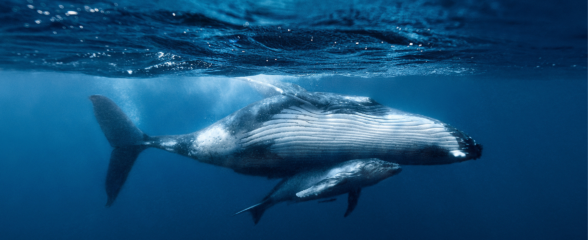
From a Whale’s Song to an Ocean’s Symphony: How AI Decodes Underwater Sound
Explore how SECOORA-funded research is using AI and machine learning to decode ocean soundscapes, detect boat noise, and support coral reef restoration efforts.