

We thank everyone who attended the SECOORA 2016 Annual Meeting at North Carolina State University! The three-day meeting focused on identifying opportunities for collaborations and highlighting SECOORA accomplishments. The conversation focused on big data and ecological interactions in the southeast (jump to meeting presentations).
Thank you to Ruoying He and Jennifer Warrilow for hosting the meeting at North Carolina State University.
Major Outcomes
Over 60 participants worked together to identify ways to take the productive step toward strengthening SECOORA. We are energized to work with volunteers to complete the below:
- Elect New Board Members
- Mitch Roffer (Roffer’s Ocean Fishing Forecasting Service, Inc.): Industry/Private Sector Seat
- Rick DeVoe (SC Sea Grant Consortium): Public Agencies/ Non-Profit/ Other Sector Seat
- Lisa Adams (Kennesaw State University): At Large Seat- GA Seat
- Quinton White (Jacksonville University): At Large Seat- FL Seat
- Michael Crosby (Mote): Sustaining Member Seat
- Design targeted member benefit packages for different user groups
- Establish a SECOORA student fellowship with the assistance of an Ad Hoc Committee
- Form an Ad-Hoc Committee to help plan a fundraising campaign in conjunction with the a the SECOORA 10-Year Anniversary celebration
- Develop a new RCOOS Plan with the assistance of experts in the our region
- Update the SECOORA Data Portal based on feedback
- Consider hosting a panel on Understanding Ecological Interactions in the Gulf of Mexico
Related news

Meet the new 2026 SECOORA Board Members
SECOORA welcomes three new members to its Board of Directors, effective July 1, 2026 - bringing fresh expertise in marine science, coastal geomorphology, and ecosystem restoration to guide our work across the Southeast.
SECOORA Co-Hosts the 2026 WebCOOS Workshop In Person in La Jolla, CA
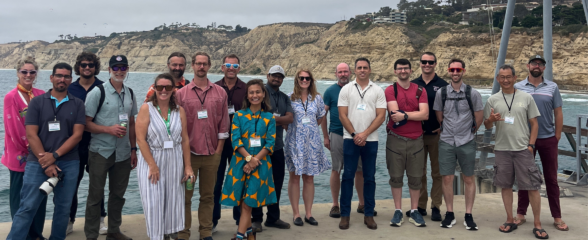
The 2026 WebCOOS Workshop convened in person on July 21-22, 2026 in La Jolla, CA. 45 attendees representing all 11 IOOS Regional Associations and national partners joined this collaborative workshop to discuss webcam-derived coastal products, stakeholder needs, and the network's transition into its next phase under IRA T2.

SET Webinar Series: Exploring Coastal Change: Digital Coast Resources
Join us on August 28, 2026, from 1:00 - 2:00 PM for the SECOORA SET Webinar Series, where we will explore coastal change using NOAA's Digital Coast resources. This webinar will bring together SET Community of Practice members and partners to learn how geospatial data and tools can support SET monitoring and place site-level observations within a broader landscape context.