

This free workshop will provide hands-on experience discovering, accessing, and analyzing coastal data in the Southeast US through the SECOORA Data System.
Participants bring your laptop and be ready to learn how to access over 2300+ datasets available on the SECOORA Data Portal.
Participants will explore tools for:• Creating ISO compliant metadata
• Sharing data with community partners
• Analyzing a simple dataset with Jupyter Notebooks
When
Thursday, June 20, 2019Where
NCSU Center for Marine Sciences and Technology – Room 205 Morehead City, NC 28557Register
Reserve your spot today. Workshop seating is limited.Workshop Materials
Bring a laptop to explore the SECOORA Data Portal and Research Workspace.
Workshop Agenda
| Time | Agenda item |
| 9:00 AM | Welcome and introductions –Jennifer Dorton, SECOORA |
| 9:15 AM | Overview: data tools & portal – Stacey Buckelew |
| 9:30 AM | Data access: hands-on portal demonstration – Stacey Buckelew |
| 10:15 AM | Break – Log-in to the Research Workspace |
| 10:30 AM | Research Workspace: Data Organization, Metadata, and ArchiveStacey Buckelew |
| 10:45 AM | Jupyter Notebooks: diving deeper into data applications – Kyle Wilcox |
| 12:00 PM | Session adjourns |
Related news

Dave Wells Joins SECOORA as Ocean Observing Systems Team Lead
SECOORA welcomes Dave Wells as Ocean Observing Systems Team Lead where he will oversee SECOORA's coastal observing system assets and data management.
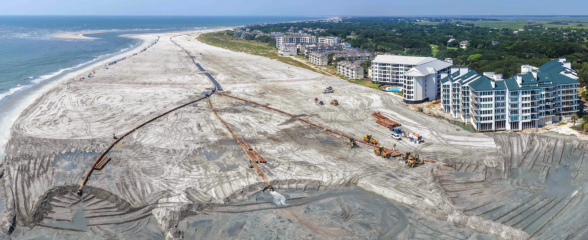
At the Water’s Edge: Lowcountry Coastlines in a Brave New World
A nor'easter's record storm tide. A stalled tropical storm. Two Lowcountry towns adapting to a new era of flooding, with SECOORA data in hand.

Above the High Tide: Water Level Sensors on the Front Line
SECOORA's Southeast Water Level Network has installed 100+ sensors across the Carolinas, Georgia, and Florida, giving communities real-time flood data.