

Join us for a free webinar on April 23 at 12 PM to learn about NOAA’s Phytoplankton Monitoring Network. It is a citizen science program in which volunteers are trained to look for the presence of organisms that could potentially cause a harmful algal bloom. Reserve your spot by clicking here.
Date: Tuesday, April 23, 2019
Time: 12:00 – 1:00 PM
Download and share the flyer here.
Abstract
Harmful Algal Blooms (HABs) have become more prominent in the public’s eye, as increases in the frequency and duration of HAB events have made national news. These HAB events, whether they are caused by freshwater or coastal organisms, are a trend that need regular monitoring to better predict where, when and potentially why they may occur so that their harmful effects, like fish and marine animal mortalities as well as human illnesses, can be better prevented and mitigated.
NOAA’s Phytoplankton Monitoring Network is a citizen science volunteer based program in which volunteers are trained to look for the presence of organisms that could potentially cause a harmful algal bloom.
This presentation will touch on methods used for training new volunteers, including smartphone applications, storyboards, digital microscopes, and advanced flow cytometry as well as how volunteer generated data are used by scientists to develop and refine new models of prediction for HABs and climate change.
Presenter
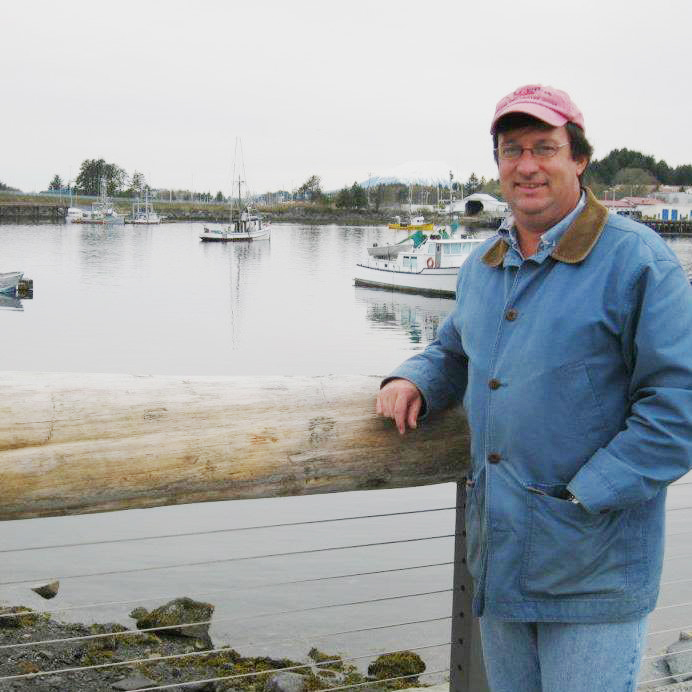
Steve Morton received his B.S and M.S. from Florida Institute of Technology in Biological Oceanography and his Ph.D. in Plant Biology from Southern Illinois University. He is currently a Research Oceanographer with the National Oceanic and Atmospheric Administration (NOAA) Harmful Algal Bloom Monitoring and Reference Branch. During his career, he has authored over 120 per reviewed manuscripts, serves on the editorial boards of three international journals, and serves as a technical expert for the United Nation’s International Atomic Energy Agency. Steve recently co-edited “Harmful Algal Blooms: A Compendium Desk Reference” published by Wiley-Blackwell press. Dr. Morton has been awarded the NOAA Administrator’s Award in 2016, the United States Department of Commence Bronze Award in Research in 2007, 2008 and 2015 and the United States Vice President’s Hammer Award in 2000.
Related news
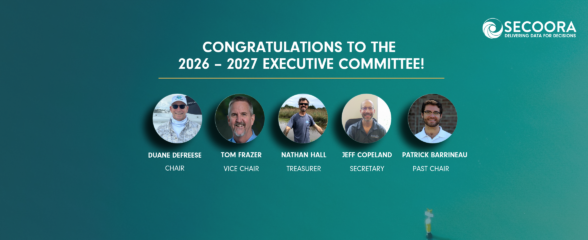
Meet SECOORA’s 2026-2027 Executive Committee
Meet SECOORA’s 2026-2027 Executive Committee, five leaders in marine science, coastal engineering, and weather who guide ocean observing in the Southeast.

Investing in People and Communities Across the Southeast
SECOORA begins its 4th five-year award from U.S. IOOS to continue coastal and ocean monitoring across the Southeast.
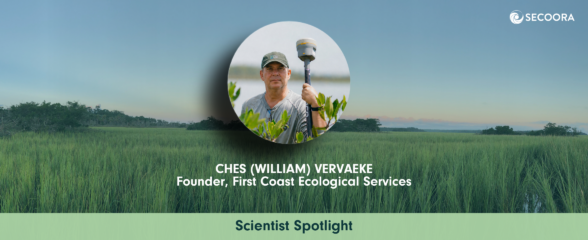
Meet the Scientist Helping Answer: Are Our Marshes Gaining Elevation?
Meet Ches Vervaeke, the scientist bringing 20+ years of Surface Elevation Table expertise to SECOORA's marsh elevation monitoring work in the Southeast.