

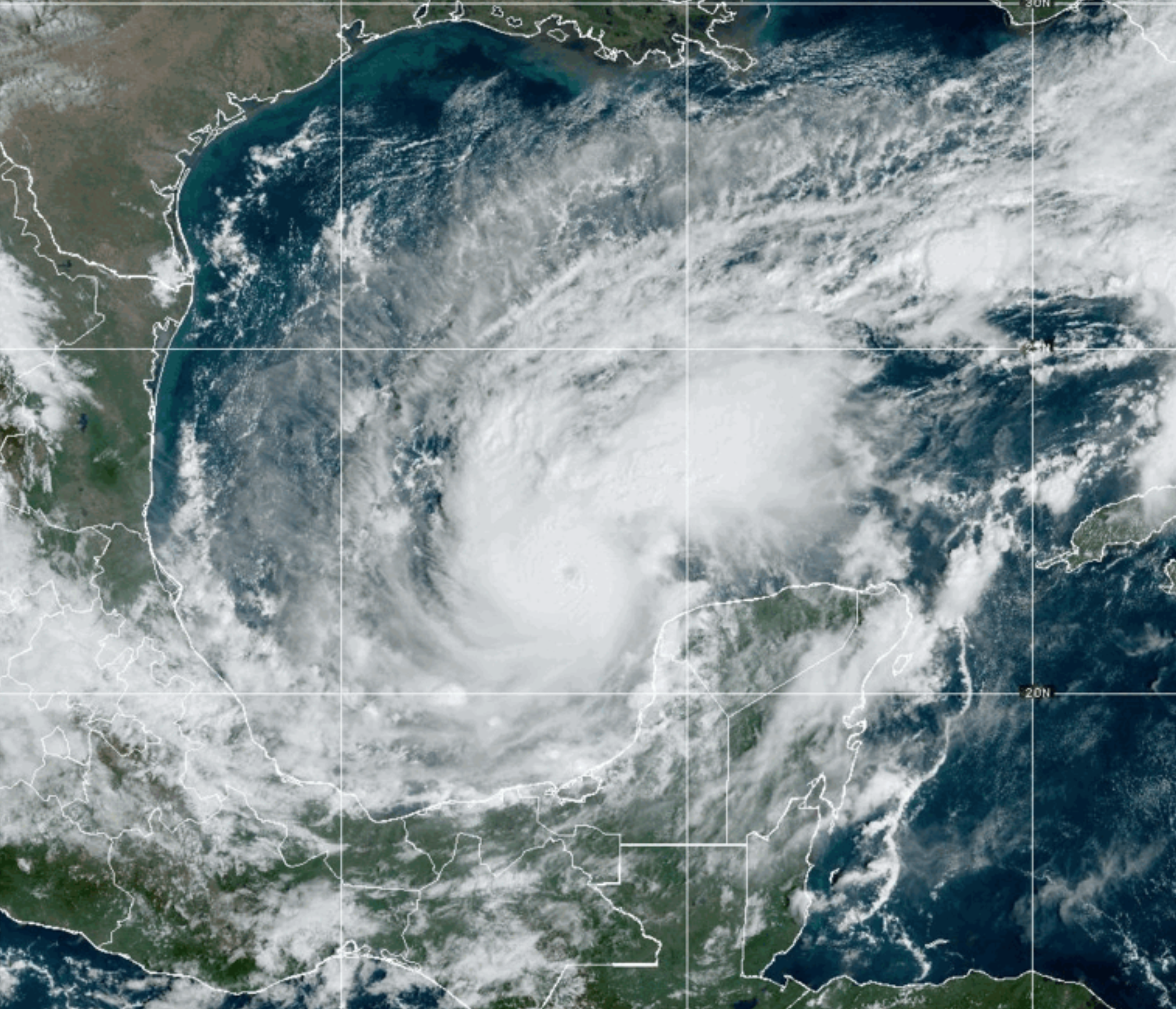
Hurricane Milton developed in the Western Gulf of Mexico and headed east towards the western coast of Florida. The storm was declared a Category 5 on Monday, October 7th, and made landfall in the central west coast of Florida on Wednesday, October 9th as a Category 3. This storm brought severe storm surge, hurricane-force winds, and flash and urban flooding across the state of Florida.
Click here to to view the NOAA National Hurricane Center updates on Milton.
View live camera feeds from the WebCOOS Network.
Access water level data from the Southeast Water Level Network here.
Access wind and wave data from SECOORA sensors in the path of Helene here.
Follow the Data
The SECOORA network has several resources to report out on relevant data that is crucial during active storms. Explore hurricane resources below or view the Hurricane Resources page.
Eyes on the Storm
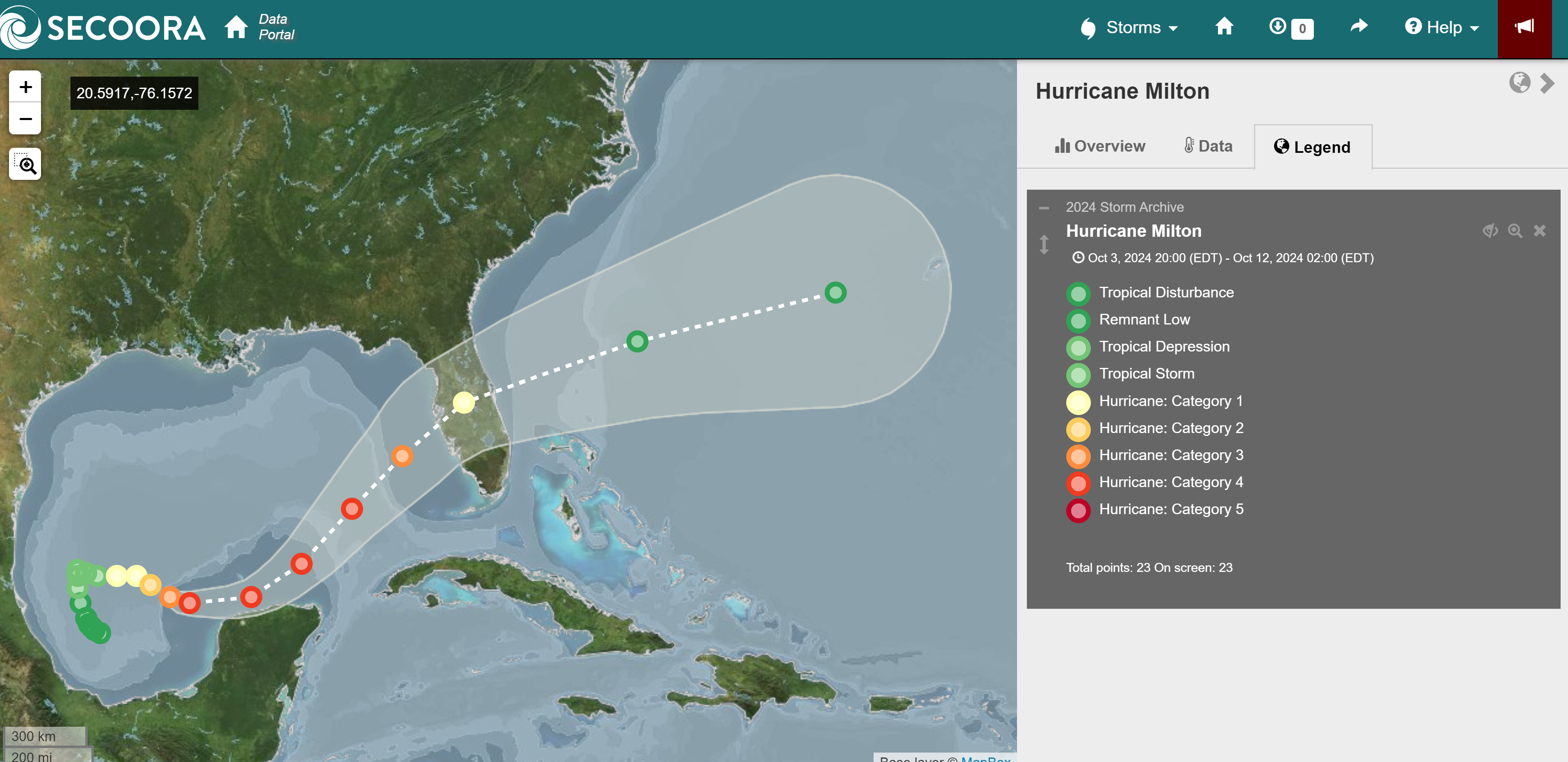
Eyes on the Storm on the SECOORA Data Portal pulls data from within 50 miles of Milton’s path. If you click on the colored dots on the path of Milton, you can access data from stations in the area.
Integrated View on the SECOORA Data Portal
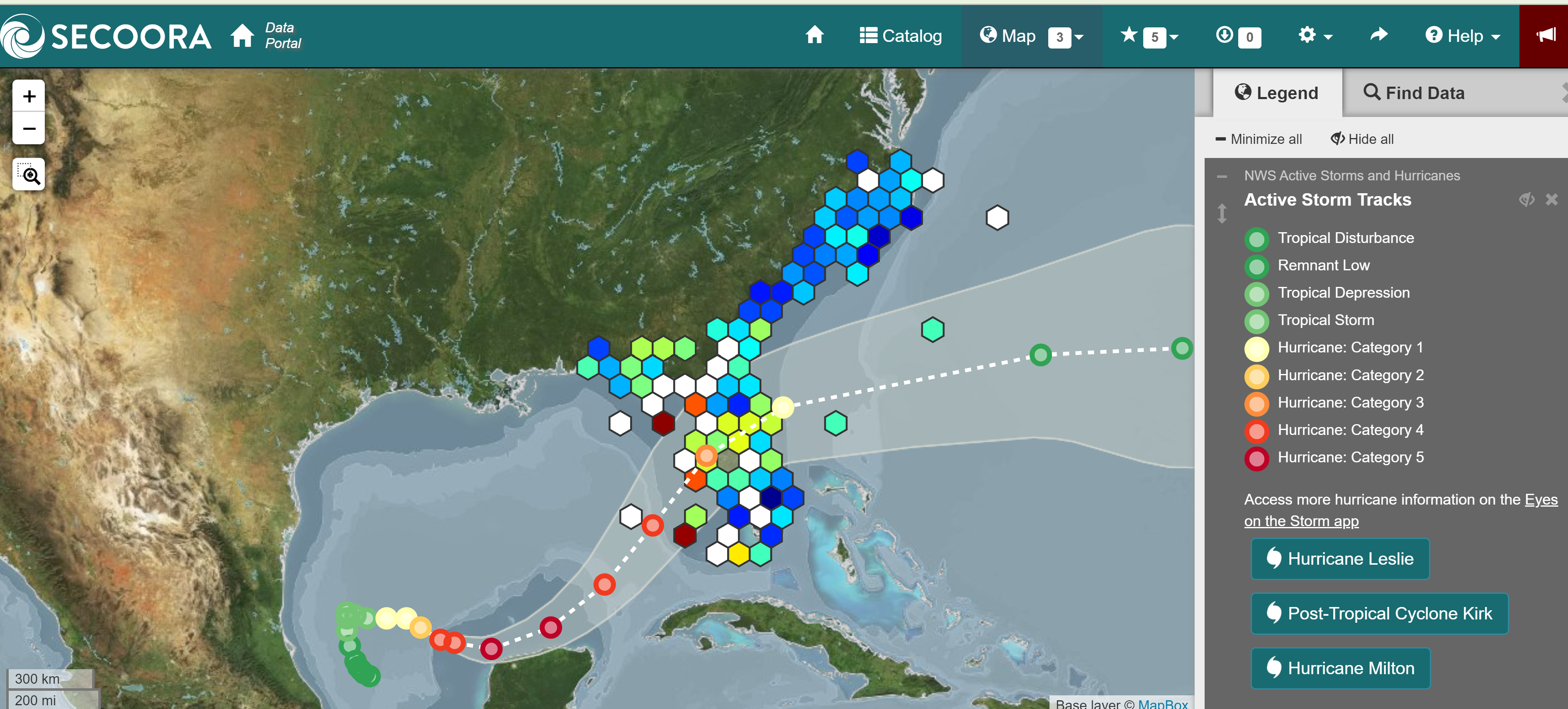
The Integrated View on the SECOORA Data Portal shows active storm tracks (Milton shown here) and the SECOORA sensors located within the storm path. Using the panel on the right-hand side, select the data variable you wish to see (i.e. wind speed and direction, wave height, etc.) then click on the colored hexagons that each represent a station.
SECOORA Water Level Portal
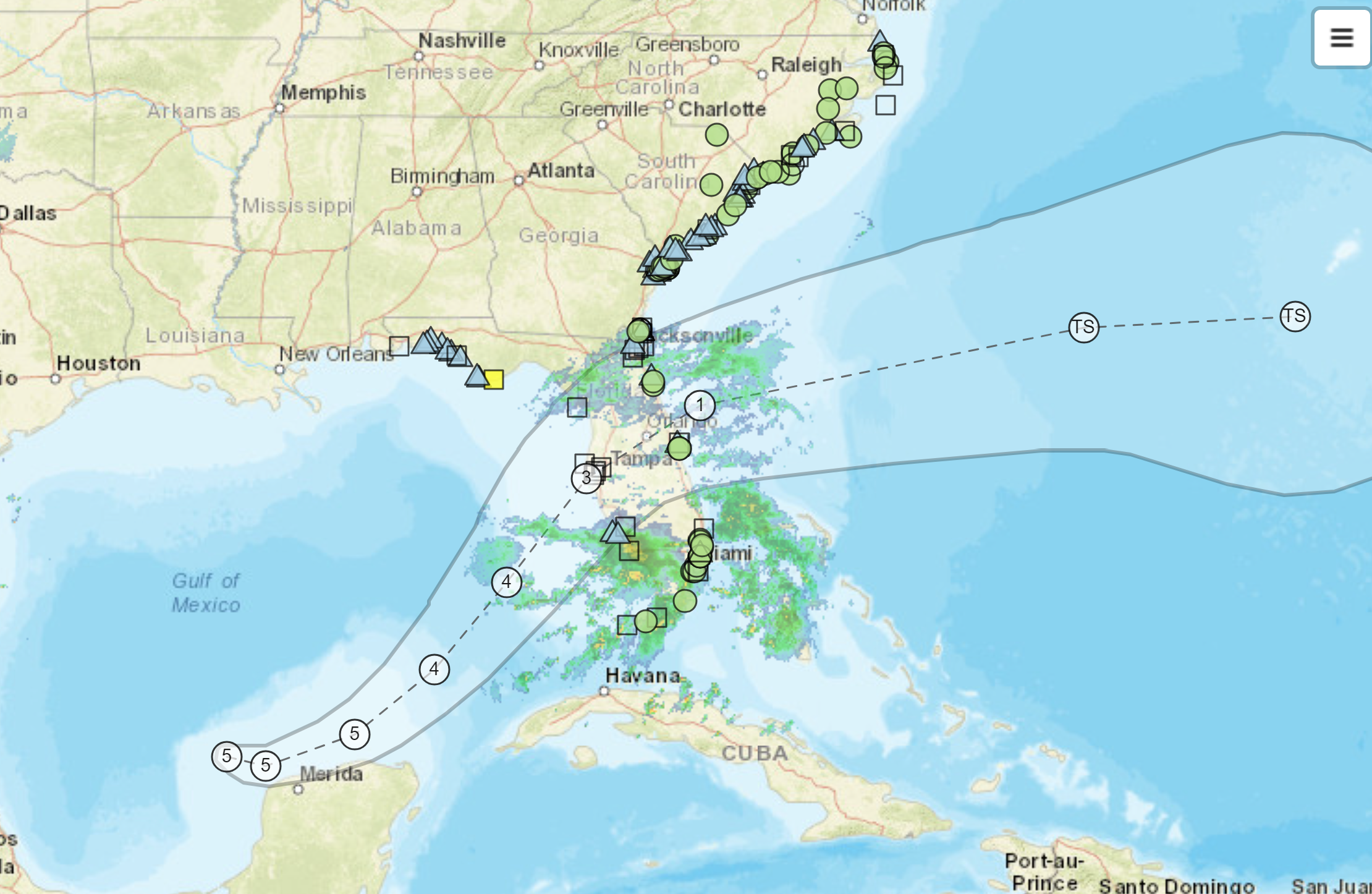
The SECOORA Water Level Data Portal shows SECOORA, NOAA, and partner stations within the Southeast Water Level Network. Click on the shapes to view station data within the storm’s path, which can be added using the right-hand panel titled “Additional Layers” along with the radar imagery.
Webcam Coastal Observation System (WebCOOS)
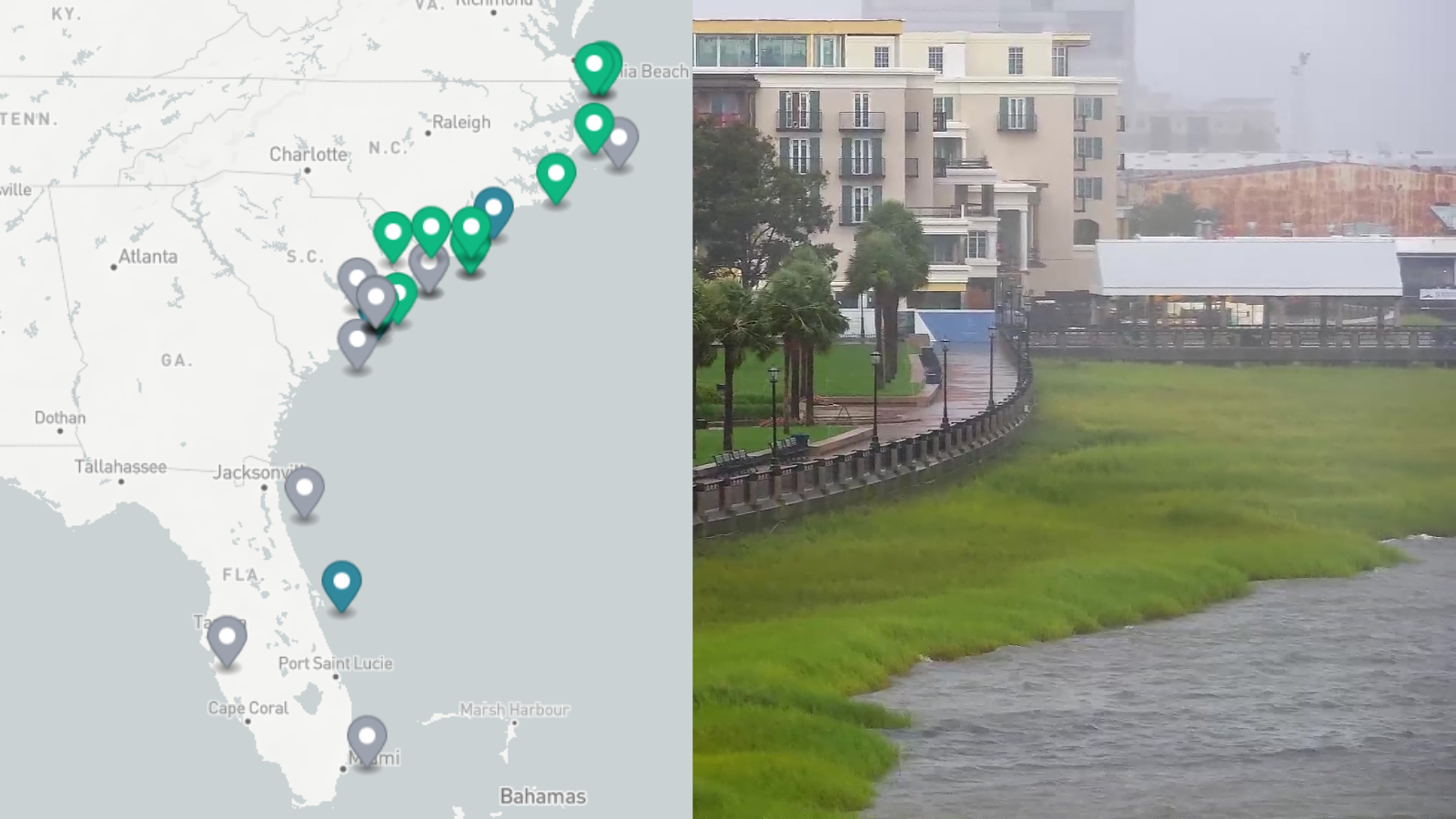
The Webcam Coastal Observation System (WebCOOS) allows users to stream live camera feeds in real-time as Milton impacts the Southeast. The cameras are being used to remotely monitor flooding, document the timing, duration, and extent of dune impacts, and predict rip currents.
Real Time Buoy Data
Milton’s projected path is expected to impact the west and east coasts of Florida this week. As the storm moves east, explore mooring stations in the Southeast supported by SECOORA. The information collected provides real time updates on the storm’s wind speed and more.
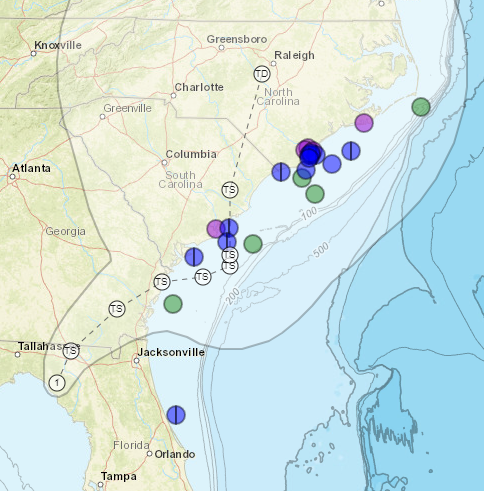
North Carolina and South Carolina buoys are operated by UNCW Coastal Ocean Research and Monitoring Program (CORMP).
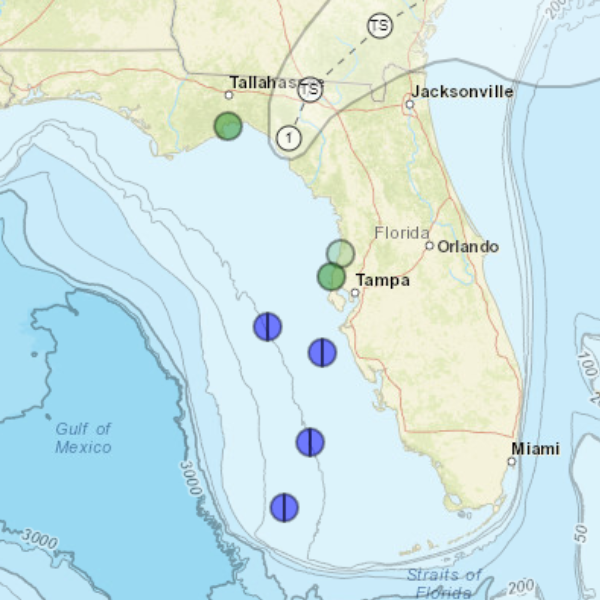
Florida buoys are operated by University of South Florida Coastal Ocean Monitoring Prediction System (COMPS).
Additional Resources
Explore additional hurricane resources for the Southeast on the SECOORA Hurricane Resources page on our website. Please email communications@secoora.org if you have additional resources to add to our list.
Related news
SECOORA is Hiring a Grants Manager
SECOORA is hiring a Grants Manager to lead grant and subaward management across a four-state coastal ocean observing network. Based in the Southeast US. Apply now.

Meet the new 2026 SECOORA Board Members
SECOORA welcomes three new members to its Board of Directors, effective July 1, 2026 - bringing fresh expertise in marine science, coastal geomorphology, and ecosystem restoration to guide our work across the Southeast.
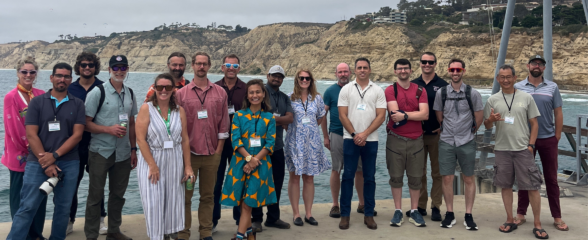
SECOORA Co-Hosts the 2026 WebCOOS Workshop In Person in La Jolla, CA
The 2026 WebCOOS Workshop convened in person on July 21-22, 2026 in La Jolla, CA. 45 attendees representing all 11 IOOS Regional Associations and national partners joined this collaborative workshop to discuss webcam-derived coastal products, stakeholder needs, and the network's transition into its next phase under IRA T2.