


Time: 11:00 AM ET – 12:00 PM ET
When: May 6, 2026
Register: Click here >
When a storm is approaching, having the right data matters. This webinar will show how our observing systems, data, and tools can support hurricane monitoring and informed decision-making that helps people and communities better understand conditions and prepare for what’s ahead.
Through a series of focused presentations, speakers will walk through how to access and use SECOORA’s integrated resources. It will also highlight how key observing assets (such as water level sensors, the WebCOOS network, buoys, and hurricane gliders) work together to monitor conditions across the Southeast.
Participants will gain practical insight into how these systems can be applied before and during storm events to support situational awareness, planning, and response.
Speakers
Debra Hernandez, SECOORA
Debra Hernandez currently serves as Executive Director of the Southeast Coastal Ocean Observing Regional Association (SECOORA), one of eleven regional partners in the U.S. Integrated Ocean Observing System. SECOORA is a nonprofit operating in the states of NC, SC, GA and FL to coalesce the efforts of multiple observing interests and deliver user defined products that save lives, conserve the coastal and marine environment, and support the economic vitality of our coastal regions. Since joining SECOORA she has been lead PI on several multi-year regional observing projects, and has served on related marine policy and science programs. Her experience includes coastal and ocean engineering, management, and policy. Prior to joining SECOORA, Ms. Hernandez led her own consulting firm and worked in state coastal management as an environmental engineer and coastal policy expert. Her professional interests include improving the linkages between scientists and decision-makers and facilitating discussions of public policy issues related to the coast and environment. She was also a licensed professional engineer for many years, and is a life-long resident of Charleston, SC.
Greg Dusek, Dusek Coastal Science & Consulting
Greg is a physical oceanographer and Principal at Dusek Coastal Science & Consulting. He also serves as Co-Executive Director of the U.S. Coastal Research Program, and is Adjunct Associate Professor at NC State University. His research focuses on advancing coastal hazard monitoring and prediction through data-driven methods. Recent projects include the development of an operational coastal webcam observing system and a probabilistic seasonal high-tide flooding model. Prior to consulting, Greg spent more than 14 years at NOAA, most recently as Chief Scientist for the Center for Operational Oceanographic Products and Services (CO-OPS) from 2015–2025, where he led numerous interagency and cross-NOAA efforts, including serving as Chair of the NOAA AI Executive Committee from 2020–2022. Earlier in his NOAA career, he was an oceanographer on the Coastal and Estuarine Currents Team, leading physical oceanographic field and data-driven research projects. He earned his PhD in physical oceanography from the University of North Carolina at Chapel Hill, where his research focused on coastal processes and rip currents.
Lynn Leonard, University of North Carolina Wilmington
Lynn Leonard currently serves as the Associate Director for Research & Innovation at the University of North Carolina Wilmington’s Center for Marine Science (CMS). Previously, Leonard served as interim Executive Director of CMS and Chair of the Departments of Earth and Ocean Science and Physics and Physical Oceanography. She is a marine scientist who specializes in coastal hydrology, marine geology, and ocean observation. Dr. Leonard is also the director of the Coastal Ocean Research and Monitoring Program (CORMP) housed at the UNCW Center for Marine Science. CORMP operates 17 offshore buoys that provide real-time observations of marine weather and oceanographic conditions along the coasts of North and South Carolina and the Florida east coast. CORMP is funded by the Southeast Coastal Ocean Observing Regional Association (SECOORA) through a grant from NOAA’s Integrated Ocean Observing System Program. In addition, Leonard is coprincipal investigator on an interdisciplinary team bringing the first drone observatory to UNCW and the southeast region as well as principal investigator on a Maritime Administration’s Maritime Environmental and Technical Assistance Program (META) study seeking to measure and model underwater radiated noise generated by ships in shallow water. Leonard holds an M.S. from Duke University and earned her Ph.D. at the University of South Florida.
Catherine Edwards, UGA Skidaway Institute of Oceanography
Dr. Catherine R. Edwards is a physical oceanographer and Associate Professor at the Skidaway Institute of Oceanography and in the Department of Marine Sciences at University of Georgia, where she is a fellow in the Institute for Artificial Intelligence and adjunct faculty in the College of Engineering. She earned a BS in Physics with highest honors from the University of North Carolina at Chapel Hill, and worked as an ocean modeler at the US Naval Research Laboratory before earning her PhD in Physical Oceanography at the University of North Carolina at Chapel Hill. With programs funded by the National Science Foundation, the Gulf of Mexico Research Initiative, the National Oceanic and Atmospheric Administration, the Office of Naval Research, and private philanthropic funding, Dr. Edwards’s research focuses on answering fundamental questions in coastal oceanography and fisheries sciences with autonomous underwater vehicles, developing novel ways to optimize their use with engineering principles and real-time data streams from models and observations. She was awarded a Senior Summer Faculty Fellowship by the Office of Naval Research in 2023, and has served as a member of the U.S. Integrated Ocean Observing System Advisory Committee, a federal advisory committee that provides guidance on ocean observation to the National Oceanographic and Atmospheric Administration Administrator and the Interagency Ocean Observation Committee, since 2021.
Related news

Meet the Scientist Helping Answer: Are Our Marshes Gaining Elevation?
Meet Ches Verveke, the scientist bringing 20+ years of Surface Elevation Table expertise to SECOORA's marsh elevation monitoring work in the Southeast.

Webinar | Powering Coastal Aquaculture: Demonstration of Paired Tidal Energy Harvesting and Water Quality Monitoring
Join us on October 20, 2026, at 11:00 AM ET to learn how a marine energy-powered sensor platform is helping North Carolina oyster farmers monitor water quality.
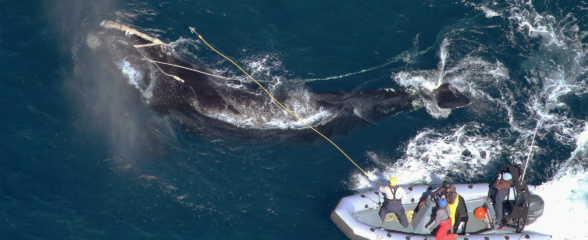
Saving the North Atlantic Right Whale: Underwater Gliders Join the Fight to Save a Species
Meet the SECOORA-funded scientists using underwater gliders and acoustic tech to protect critically endangered North Atlantic right whales.