

The University of South Florida College of Marine Science’s Ocean Circulation Lab (USF CMS OCL) executed a 3-day mooring and dive training cruise in the Gulf of Mexico aboard the Florida Institute of Oceanography’s R/V Hogarth. The cruise plan included the deployment and recovery of sensors used in circulation studies related to Harmful Algal Blooms (HABs) as well as numerous training dives for new student research divers.
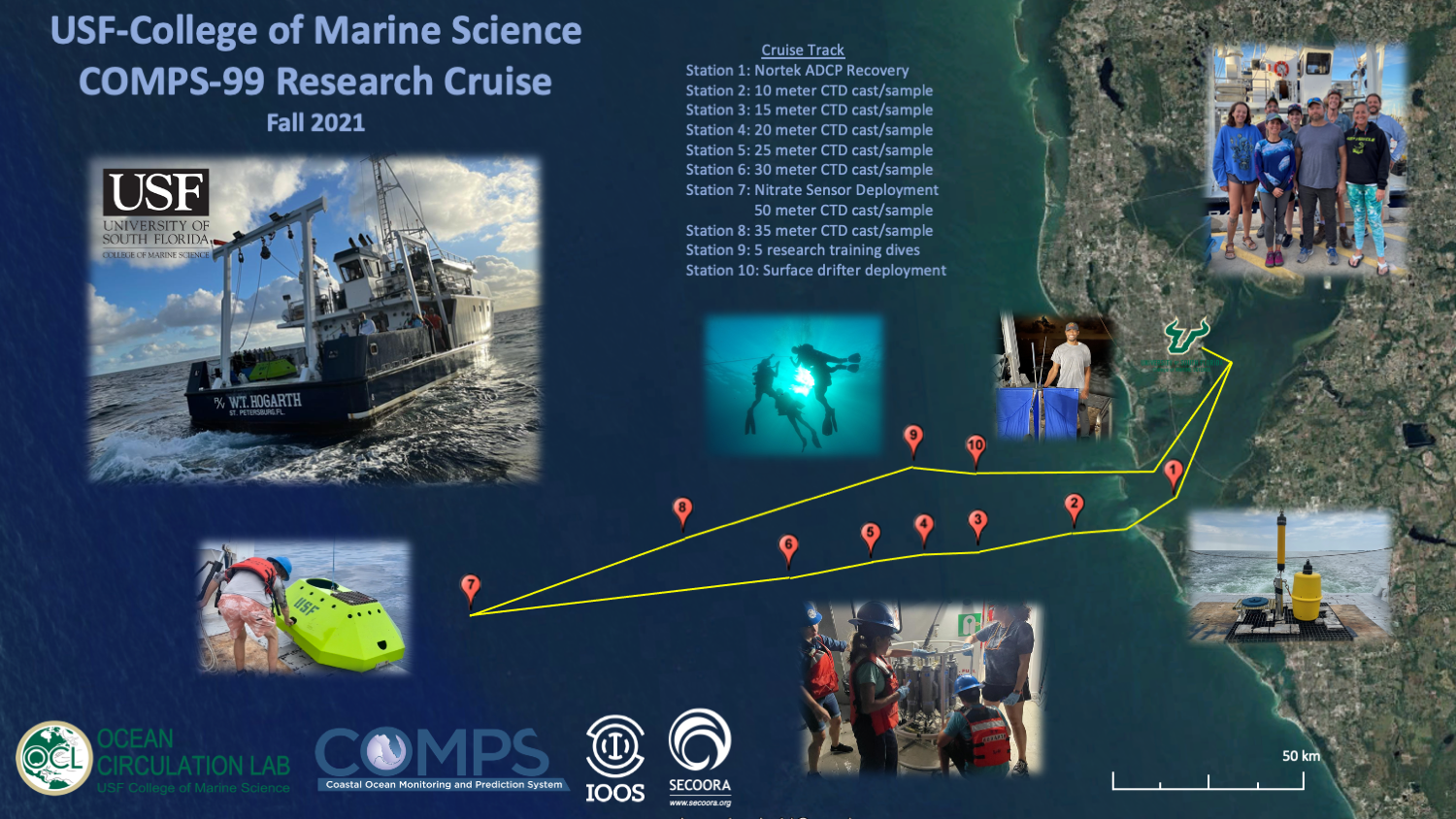
USF CMS OCL is headed by physical oceanographer Dr. Robert Weisberg, and the lab studies ocean circulation and its ecological impacts in the Gulf through direct observations and models. As part of SECOORA and OCL, USF Coastal Ocean Monitoring and Prediction System (COMPS) maintains a number of moored stations on the West Florida Shelf. The OCL uses data collected by COMPS buoys and bottom mounted sensors to validate and inform their numerical circulation models.
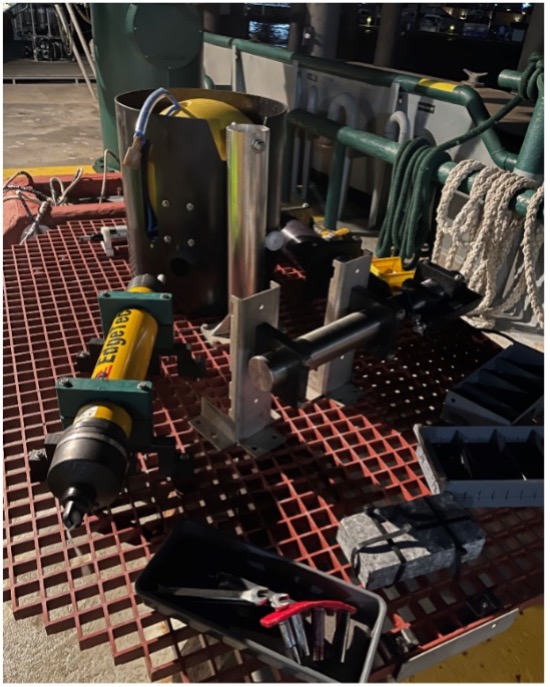
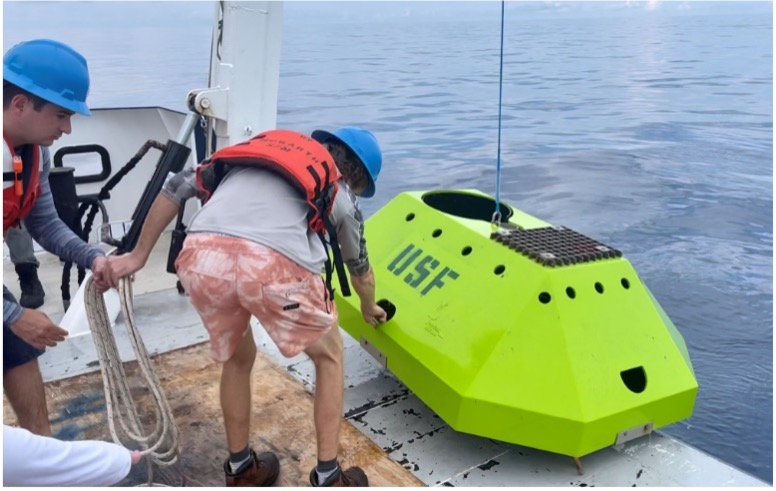
During the cruise, which took place October 25-27, scientists took nutrient and Red Tide (Karina brevis) water samples from 10 locations, conducted 7 CTD (Conductivity, Temperature, and Depth) sensor casts, and deployed bottom mounted sensor packages. The team also deployed one surface drifter for circulation model verification. Five research training dives, including night dives, were completed so that new scientific divers are trained and ready to work in the field.
The sensors are collecting data to measure nutrients and currents in a region where Red Tide commonly blooms. Researchers are investigating the links between mid-shelf K. brevis bloom generation and nutrients of deep-water origin brought onto the shelf by upwelling circulation.
This research cruise, conducted during rough weather, was made successful due to the exceptional teamwork and commitment of the professional research staff, cruise staff, graduate students and undergraduate students.
Related news

Investing in People and Communities Across the Southeast
SECOORA begins its 4th five-year award from U.S. IOOS to continue coastal and ocean monitoring across the Southeast.
Meet the Scientist Helping Answer: Are Our Marshes Gaining Elevation?
Meet Ches Vervaeke, the scientist bringing 20+ years of Surface Elevation Table expertise to SECOORA's marsh elevation monitoring work in the Southeast.

Webinar | Powering Coastal Aquaculture: Demonstration of Paired Tidal Energy Harvesting and Water Quality Monitoring
Join us on October 20, 2026, at 11:00 AM ET to learn how a marine energy-powered sensor platform is helping North Carolina oyster farmers monitor water quality.