

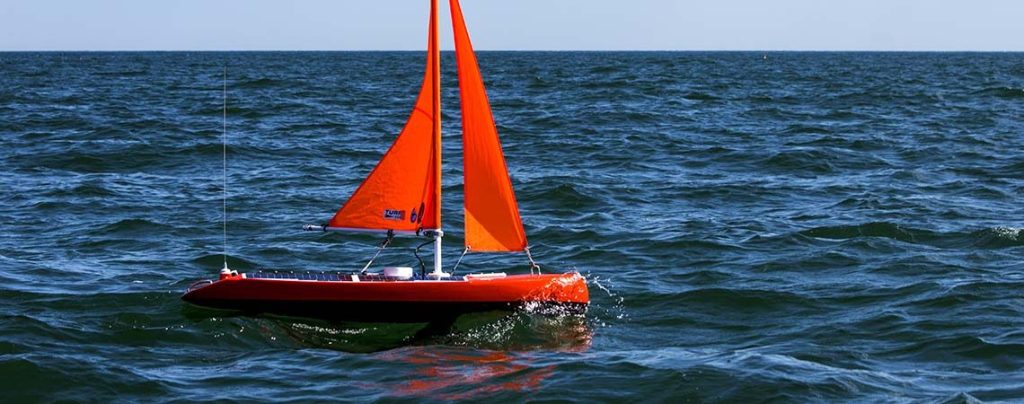
SECOORA is excited to welcome new member Navocean. Navocean is a small business that designed a “mobile buoy”, known as a Nav2 ASV, to provide persistent observations over large or small areas. The Nav2 ASV is a 2-meter self-navigating sailboat designed for versatility and easy logistics. It is equipped with a wide variety of sensor payloads and can perform short to long duration missions. Nav2s are small, efficient and safe to operate, making them well suited for lakes, estuaries, coastal or offshore areas. Click here to read about one of their projects monitoring algae in Lake Okeechobee.
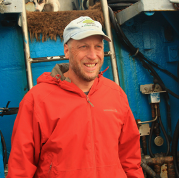
“Navocean is excited to join SECOORA and work with them to get our data into the hands of researchers and stakeholders. We are also looking forward to working with SECOORA and our regional science and research partners to ensure Quality Control / Quality Assurances on our data.” – Scott Duncan, Founder and President of Navocean (pictured right)
About SECOORA Membership
Our members influence and guide all our endeavors to help make us a trusted source for coastal ocean information in the southeast. With over 40 members, SECOORA is able to work towards our mission to observe, understand, and increase awareness of our coastal ocean – promoting knowledge, economic and environmental health through strong regional partnerships. Click here to learn more about membership.
Related news
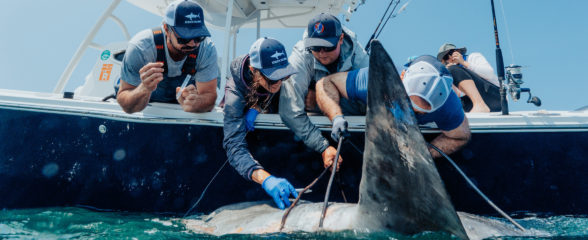
Reimagining the Deep: BioTrack’s Quest to Map Marine Biodiversity Hotspots
Discover how the BioTrack initiative uses advanced satellite and acoustic animal tracking to map marine biodiversity hotspots and protect endangered wildlife.

SECOORA Is Ready for the 2026 Hurricane Season
Hurricane season is here and SECOORA’s resources are available to help you stay informed. From real-time buoy data and live webcam feeds to ocean gliders and storm surge models, our network of observing systems is ready to support forecasters, emergency managers, researchers, and coastal communities throughout the Southeast.

Species Spotlight: Trichodesmium
Discover the remarkable role of Trichodesmium, a microscopic cyanobacterium that helps fuel life across the ocean. In this Species Spotlight, explore how researchers supported by the Marine Biodiversity Observation Network (MBON) are using imaging technology, genomics, and eDNA to better understand this “shape-shifting” organism and its influence on marine ecosystems, ocean health, and coastal economies.