

Join us for a webinar on Tuesday – October 3, 2017, 2 PM ET. Dr. Ian Walsh, Sea-Bird Scientific, will provide a perspective on how the sources of nutrients and high flow events change the environment in the St. Lucie Estuary.
Webinar Information
A year and a Hurricane Apart: Nutrient Loading in the St. Lucie Estuary in the Summers of 2016 and 2017
Date: Tuesday – October 3, 2017
Time: 2 – 3 PM ET
Presenter: Dr. Ian Walsh, Director of Science and Senior Oceanographer, Sea-Bird Scientific
The recent history St. Lucie Estuary has included a devastating harmful algal bloom crisis in 2016 and the passage of Hurricane Irma in 2017. SECOORA member Florida Atlantic University broadcasts real time data from the estuary through the Indian River Lagoon Observatory Network of Environmental Sensors (IRLON). The IRLON network includes nutrient and biogeochemical sensors that provide data on the response of the base of the food chain to the mixing and flows of water in the estuary. This presentation will provide a perspective on how the sources of nutrients and high flow events change the environment in the estuary.
About the Presenter
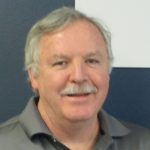 Ian Walsh, Ph. D. received his B.S. from Case Institute of Technology at Case Western Reserve University, M.S. from the College of Oceanography at Oregon State University, and Ph.D. from Texas A&M University. His research interests are particle dynamics, including the use of the particle field to understand basic biogeochemical processes and the influence of physical forcing on those processes, carbon fluxes and fates including predictive modeling, and the development of imaging tools (hardware and software) for in-situ measurements of particle abundance and size distribution.
Related news
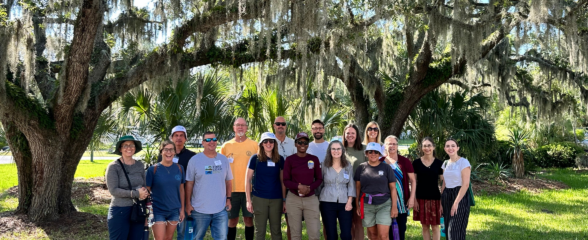
SECOORA Hosts the Second Surface Elevation Table (SET) Community of Practice Workshop In Person in Charleston
The 2nd SECOORA SET Workshop convened in person on July 16-17, 2026 in Charleston, SC. More than 30 Community of Practice members and stakeholders joined this collaborative workshop to discuss SET monitoring, coastal resilience, and data-driven decision making in the Southeast.
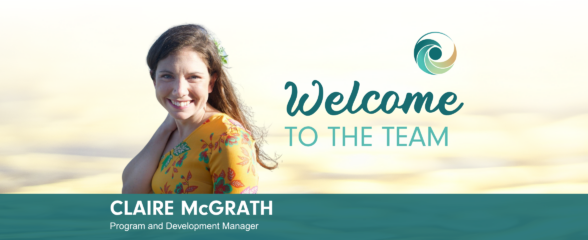
Claire McGrath Joins SECOORA as Program and Development Manager
SECOORA welcomes Claire McGrath as Program and Development Manager, supporting the Southeast & Caribbean Coastal Disaster Resilience Partnership and membership growth.

Spotlight: Mobilizing to Save Florida’s Coral Reefs
Learn how scientists are racing to save Florida's Coral Reef through coral rescue, gene banking, reef restoration, and innovative conservation efforts after disease and marine heatwaves devastated one of America's most important marine ecosystems.