

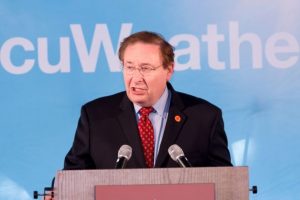
Wednesday October 11, 2017 President Donald Trump nominated Barry Myers, the CEO of AccuWeather, to lead the U.S. National Oceanic and Atmospheric Administration (NOAA) as Administrator.
If confirmed by the Senate, Barry Myers would officially become President Trump’s Under Secretary of Commerce for Oceans and Atmosphere. Barry Myers holds a Bachelor’s degree in Business Administration and Economics, a Master’s degree in Business from Pennsylvania State University and a Law degree from Boston University School of Law.
The previous Under Secretary was Dr. Kathryn D. Sullivan, who assumed the role on March 6, 2014 and ended her term on January 20, 2017 and Benjamin Friedman is the current Acting Administrator.
The nomination of Meyers comes a week after Rear Admiral Timothy Gallaudet was confirmed by the Senate on October 4th as Assistant Secretary of Commerce for Oceans and Atmosphere. Admiral Gallaudet has a PhD from Scripps Institution of Oceanography, and has over 32 years of service in the U.S. Navy, including serving as Navy Meteorology and Oceanography Command. Rear Admiral Timothy Gallaudet will be NOAA’s second in command.
Related news

Dave Wells Joins SECOORA as Ocean Observing Systems Team Lead
SECOORA welcomes Dave Wells as Ocean Observing Systems Team Lead where he will oversee SECOORA's coastal observing system assets and data management.
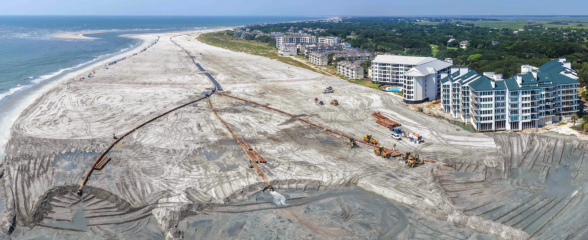
At the Water’s Edge: Lowcountry Coastlines in a Brave New World
A nor'easter's record storm tide. A stalled tropical storm. Two Lowcountry towns adapting to a new era of flooding, with SECOORA data in hand.

Above the High Tide: Water Level Sensors on the Front Line
SECOORA's Southeast Water Level Network has installed 100+ sensors across the Carolinas, Georgia, and Florida, giving communities real-time flood data.