

SECOORA Hosts the Second Surface Elevation Table (SET) Community of Practice Workshop In Person in Charleston
The 2nd SECOORA SET Workshop convened in person on July 16-17, 2026 in Charleston, SC. More than 30 Community of Practice members and stakeholders joined this collaborative workshop to discuss SET monitoring, coastal resilience, and data-driven decision making in the Southeast.

The SECOORA Surface Elevation Table (SET) Workshop returned July 16–17, 2026, this time bringing the Community of Practice together in person at the South Carolina Department of Natural Resources’ Marine Resources Research Institute (MRRI) in Charleston, SC. Practitioners, stakeholders, and partners from across the Southeast gathered for two days of presentations, discussion, and hands-on connection focused on SET monitoring, salt marsh health, and the people and partnerships that make long-term coastal data possible.
This workshop brought together attendees to:
- Reconnect the SET Community of Practice in person for the first time, strengthening relationships between researchers, practitioners, and stakeholders across the Southeast.
- Celebrate the work of SET station teams and hear updates from South Carolina Department of Natural Resources (SCDNR), The Citadel, Port Royal Sound Foundation, Bald Head Island Conservancy, and University of North Carolina Wilmington (UNCW).
- Explore the SECOORA SET Data Visualization Platform and discuss how it can better serve practitioners and decision-makers.
- Dig into the practical realities of collecting, managing, and sharing SET data, from sediment delivery to metadata standards.
- Bring stakeholders and practitioners together in a working panel and breakout format to identify shared challenges and new opportunities for collaboration.
Workshop Overview
Day one opened with a welcome from Debra Hernandez, SECOORA Executive Director, and Dr. Nisse Goldberg, SET Community of Practice Coordinator, who set the stage for the two days ahead. Attendees then heard updates from SET station teams, including South Carolina Department of Natural Resources geologists Will Doar and Katie Luciano, Scott Curtis of The Citadel, Courtney Kimmel of Port Royal Sound Foundation, Beth Darrow of Bald Head Island Conservancy, and Lori Sutter of UNC Wilmington.
The morning’s keynote came from Dr. Jim Morris, Distinguished Research Professor at the University of South Carolina, who shared insights from roughly 36 years of SET monitoring at North Inlet, South Carolina. Dr. Morris’s talk, “What’s to Gain from Comprehensive, Long-Term Data on Primary Production, Sea Level, and Surface Elevation,” walked through decades of elevation, plant production, and sediment data, showing how belowground marsh grass growth plays a major role in helping marshes keep building elevation over time, and how the placement of monitoring stations shapes what that data can tell us.

Following a coffee break, Dr. Josh Breithaupt of Florida State University led a CoP Writers Group session on “End-of-Life Case Studies from SET Stations,” sharing lessons learned from stations across the Southeast that have been lost, submerged, or buried over time, and what those experiences teach the community about resilient monitoring design.
After lunch, James Doyle and Andy Nguy of Tetra Tech introduced the SECOORA SET Data Visualization Platform, giving attendees a live demonstration and space for discussion and Q&A. Dr. Kathryn Smith, Research Ecologist with USGS, followed with a presentation on net sedimentation tiles and how they complement long-term SET data in understanding marsh sediment delivery. Katie Luciano, Geologist III with SCDNR, then walked attendees through best practices for SET data and metadata, a topic substantial enough to continue into an extended session the following morning.
The afternoon closed with a panel discussion moderated by Lora Clarke of The Pew Charitable Trusts and the South Atlantic Salt Marsh Initiative, featuring Matt Slagel (S.C. Sea Grant Consortium), Erin Rogers (Audubon South Carolina), and Katie Finegan (Weston & Sampson). Introduced by Christina Thompson, SET Data and Engagement Specialist, the panel gave stakeholders and practitioners a chance to talk directly about how SET data connects to on-the-ground restoration and resilience work.
Attendees then moved into breakout groups, led by Nisse Goldberg and Christina Thompson, designed to surface real barriers to data use and generate new ideas for collaboration.
Main takeaways from the breakout session included:
- The need for SET stations in marsh types beyond those dominated by Spartina;
- The importance of the SECOORA SET Data Visualization Platform and the need for more practitioners to share their data;
- The value of educating others about and promoting SET data collected across the SECOORA region, including the need for elevation and inundation data at SET stations; and
- The potential for the SECOORA SET CoP to grow into a SET leader at the regional, national, and even international level.
Day one wrapped with a social gathering at California Dreaming, giving the Community of Practice informal time to connect.
Day two began with breakfast and an extended session from Katie Luciano on data and metadata best practices, followed by an optional field trip aboard SCDNR’s Marine Education Vessel, The Discovery, a 50-foot steel platform catamaran.

Workshop Resources
Additional resources can be found on the SET Community of Practice Resource Hub.
Presentations, Documents, and Other Resources
- SET Awardee Presentations
- Will Doar, South Carolina Department of Natural Resources (SCDNR) & Katie Luciano, South Carolina Department of Natural Resources (SCDNR)
- Scott Curtis, South Carolina – The Citadel
- Courtney Kimmel, South Carolina – Port Royal Sound Foundation
- Beth Darrow, North Carolina – Bald Head Island Conservancy
- Lori Sutter, University of North Carolina Wilmington (UNCW)
- Dr. Jim Morris: What Long-Term Elevation Data Reveal about Coastal Marshes
- Dr. Josh Breithaupt: Case Studies & Lessons Learned from “Lost” SET Stations
- Introduction to the SECOORA SET Data Visualization Platform Demo
- James Doyle, Project Manager – Software & Systems Engineering, Tetra Tech
- Andy Nguy, Principal Software Engineer, Tetra Tech
Please contact Nisse Goldberg (ngoldbe@ju.edu) with questions regarding the SET Workshop, or if you are interested in joining the Community of Practice.
Related news

SET Webinar Series: Exploring Coastal Change: Digital Coast Resources
Join us on August 28, 2026, from 1:00 - 2:00 PM for the SECOORA SET Webinar Series, where we will explore coastal change using NOAA's Digital Coast resources. This webinar will bring together SET Community of Practice members and partners to learn how geospatial data and tools can support SET monitoring and place site-level observations within a broader landscape context.
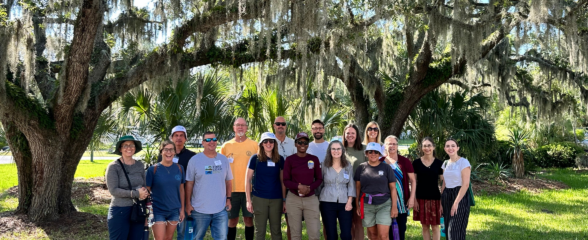
SECOORA Hosts the Second Surface Elevation Table (SET) Community of Practice Workshop In Person in Charleston
The 2nd SECOORA SET Workshop convened in person on July 16-17, 2026 in Charleston, SC. More than 30 Community of Practice members and stakeholders joined this collaborative workshop to discuss SET monitoring, coastal resilience, and data-driven decision making in the Southeast.
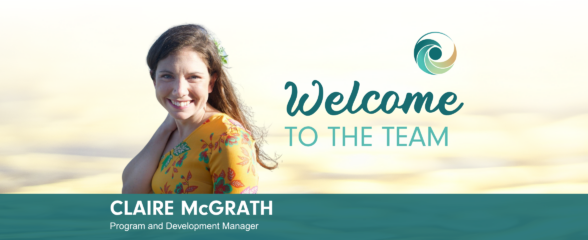
Claire McGrath Joins SECOORA as Program and Development Manager
SECOORA welcomes Claire McGrath as Program and Development Manager, supporting the Southeast & Caribbean Coastal Disaster Resilience Partnership and membership growth.