

A new wave buoy was deployed by the U.S. Army Corps of Engineers on April 1, approximately 30 miles east of Key West, Florida.
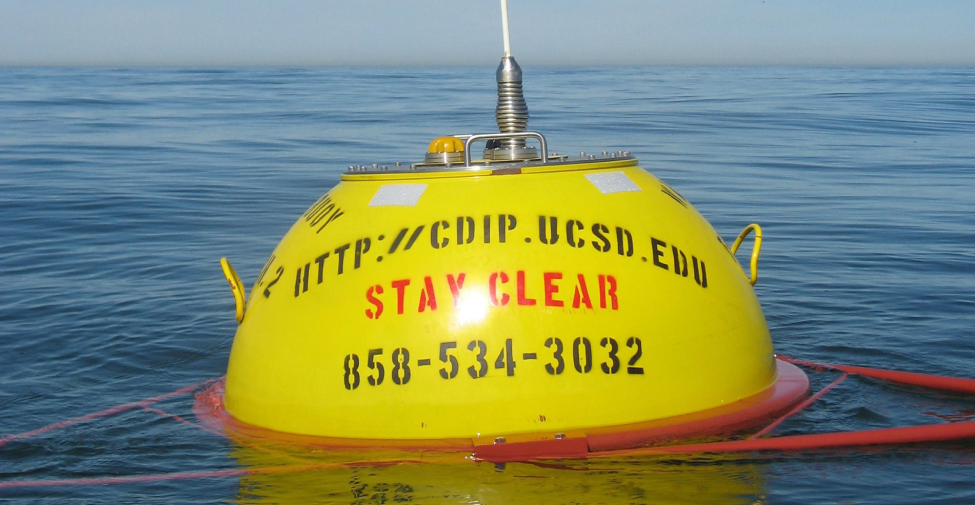
Picture of a wave buoy. Image Credit: Coastal Data Information Program (CDIP)
“This new wave buoy is filling data gaps in Florida Keys coastal waters. Located about 10 nautical miles south of Bahia Honda State Park, the buoy is providing data that will improve both the quality and value of our marine weather warnings and forecasts, and this will help keep boaters both informed and safe.” – Chip Kasper, Senior Forecaster-Marine Program Meteorologist, NOAA/National Weather Service Key West Florida.
This buoy will report local wave conditions such as wave height, wave period, wave direction, surface current and temperature every 30 minutes.
The data provided by this buoy is an important safety component to recreational as well as commercial boaters. Mariners need to know the true local conditions before heading out to sea. Access the buoy data on the SECOORA Marine Weather Portal (provided by SECOORA and Second Creek Consulting).

The buoy is operated and maintained by Scripps institution of oceanography as part of a nationwide Coastal Data Information Program (CDIP) located in La Jolla, California. Questions may be directed to www@cdip.ucsd.edu. SECOORA has partnered to help maintain the wave buoy.
Related news

Claire McGrath Joins SECOORA as Program and Development Manager
SECOORA welcomes Claire McGrath as Program and Development Manager, supporting the Southeast & Caribbean Coastal Disaster Resilience Partnership and membership growth.

Spotlight: Mobilizing to Save Florida’s Coral Reefs
Learn how scientists are racing to save Florida's Coral Reef through coral rescue, gene banking, reef restoration, and innovative conservation efforts after disease and marine heatwaves devastated one of America's most important marine ecosystems.
From a Whale’s Song to an Ocean’s Symphony: How AI Decodes Underwater Sound
Explore how SECOORA-funded research is using AI and machine learning to decode ocean soundscapes, detect boat noise, and support coral reef restoration efforts.