


Time: 12:00 PM ET – 1:00 PM ET
When: November 5, 2026
Register: Click here >
What if we could hear ecosystem health? For over a decade, the Estuarine Soundscape Observatory Network in the Southeast (ESONS) has been recording the underwater soundscape of estuaries in South Carolina —capturing everything from snapping shrimp to fish spawning choruses to dolphin echolocation as well as the rising hum of human activity. These acoustic records reveal the natural rhythms of coastal life, expose disruptions from climate extremes and coastal development, and connect land-based changes to marine behavior. This talk highlights how sound is transforming our ability to monitor, understand, and communicate estuarine ecosystem health in a rapidly changing world.
Speakers
Eric W. Montie, Department of Natural Sciences, University of South Carolina Beaufort, Bluffton, SC
Dr. Eric Montie is the Director of the Marine Sensory and Neurobiology Lab and The Lowcountry Dolphin Conservation Program. He earned a BS in Zoology at the University of Rhode Island in 1993, and then embarked upon post-baccalaureate studies in Biochemistry at Harvard University. He received a MS degree in Environmental Toxicology at Clemson University in 1999, then worked from 1999 to 2000 as a marine mammal field biologist at the National Ocean Service in Charleston, SC. Dr. Montie completed his PhD in September 2006 in the Massachusetts Institute of Technology / Woods Hole Oceanographic Institution Joint Program in Biological Oceanography. He accepted a faculty position at the University of South Carolina Beaufort in 2011, where he now is an Associate Professor. He is also an adjunct faculty member in the Graduate Program in Marine Biology at the College of Charleston, where he mentors graduate students. Prof. Montie has made significant scientific and research contributions in the field of marine bioacoustics and has built a strong research program in soundscape ecology of marine ecosystems. In 2013, he was selected as a Breakthrough Rising Star (15 selected of 2000 faculty throughout the USC System). In May 2021, he was the recipient of the Governor’s Award for Excellence in Scientific Research at a Predominately Undergraduate Institution. At USCB, Dr. Montie teaches Fish Biology, Marine Mammal Biology, Neurobiology, and Biological Principles II.
Alyssa Marian, Department of Natural Sciences, University of South Carolina Beaufort, Bluffton, SC
Alyssa Marian is the lab manager of the Marine Sensory and Neurobiology Lab and Lowcountry Dolphin Conservation Program. She obtained her bachelor’s degree in biology from Nebraska Wesleyan University before attending CofC and joining the lab at USCB in 2017. She completed her master’s in marine biology in 2020 with a focus on baseline acoustic behavior, abundance, and distribution of dolphins in the May River. Alyssa is currently in charge of all lab and field work including driving boats, conducting dolphin photo-ID surveys and maintaining the photo-ID catalog, as well as collection and analysis of passive acoustic data associated with ESONS. This is done with the help of multiple graduate and undergraduate students, which she assists in mentoring.
Related news
SECOORA is Hiring a Grants Manager
SECOORA is hiring a Grants Manager to lead grant and subaward management across a four-state coastal ocean observing network. Based in the Southeast US. Apply now.

Meet the new 2026 SECOORA Board Members
SECOORA welcomes three new members to its Board of Directors, effective July 1, 2026 - bringing fresh expertise in marine science, coastal geomorphology, and ecosystem restoration to guide our work across the Southeast.
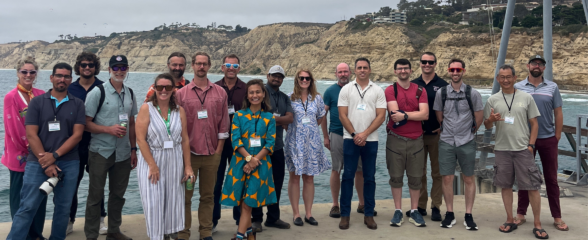
SECOORA Co-Hosts the 2026 WebCOOS Workshop In Person in La Jolla, CA
The 2026 WebCOOS Workshop convened in person on July 21-22, 2026 in La Jolla, CA. 45 attendees representing all 11 IOOS Regional Associations and national partners joined this collaborative workshop to discuss webcam-derived coastal products, stakeholder needs, and the network's transition into its next phase under IRA T2.